urban forestry
Tree Care
Colorado Trees
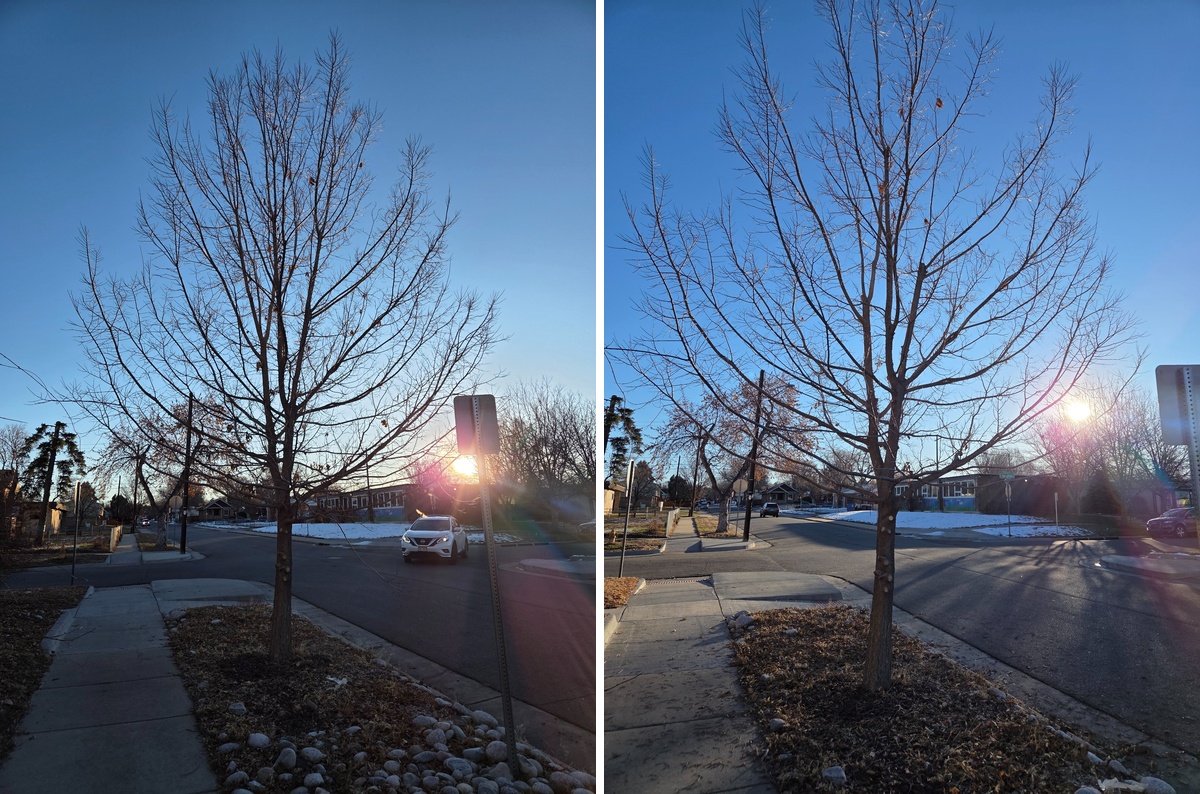

Contrary to the famous musical line, “The first cut is the deepest,” structural pruning cuts require more care. We might trust Cat Stevens, Rod Stewart, and Sheryl Crow with music, but not our municipal trees.
We work with many municipalities that prune sporadically as part of routine maintenance or wait until issues arise before making corrections. Yet structural pruning is essential for healthy, thriving trees and a major cost saver for tree maintenance and care.
Quick Links:
Not all pruning jobs are the same, and not every pruning cut serves the same purpose.
When we talk about pruning, most folks assume we mean routine tree pruning, removing dead, damaged, or unwanted branches to improve the tree's overall condition and appearance. That’s part of it.
But there’s also clearance pruning, which removes branches that interfere with structures and infrastructure, from sidewalks and stress points to buildings and utility lines.
And then, there’s structural pruning, which is a bit more intentional. Structural pruning seeks to mitigate issues before they happen. It’s not about which branches are in the way; it's about how we want the tree to grow and how we can support a mature tree's structural integrity.
Simply put, structural pruning guides a tree as it develops by anticipating future problems caused by weaknesses or conflicts in its structure.
While structural pruning looks different depending on species and site, it often means removing or reducing:
This difference matters because a tree can look neatly trimmed but still have serious structural problems. Reactionary pruning can improve a tree's appearance, but it won't correct growth patterns that can lead to failure as the tree grows.
Structural pruning is one of the most important long-term tree care strategies. Thoughtful early cuts and monitoring can help a tree grow stronger, with a more predictable canopy that meets your goals without creating more work, maintenance, or resource drain.
 Why Structural Pruning Matters in Municipal Forestry
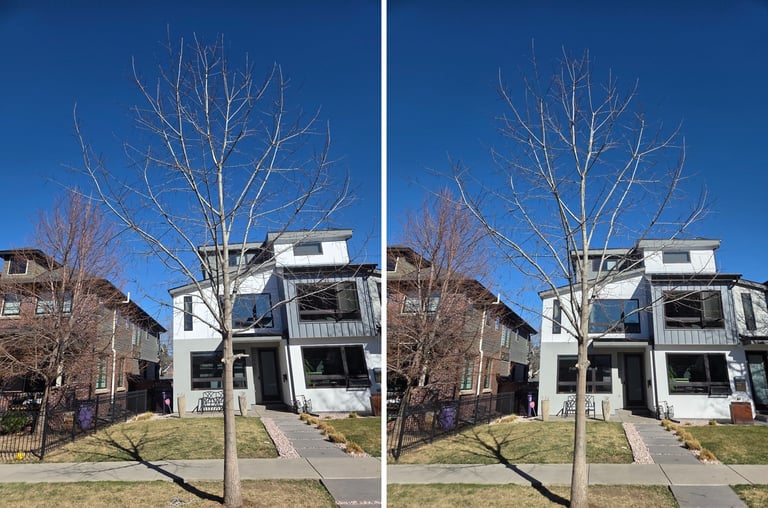
The key word here is municipal. These are urban trees with growth concerns we don’t see in forests. These trees must contend with streets and sidewalks, utilities, and other public spaces. Structural pruning keeps trees from growing in ways that become much bigger problems later.
Pruning a young tree is far easier than removing a mature branch that becomes a hazard or obstacle.
When cities ignore structural pruning, they inevitably face larger, more costly, and more complex tree care later. This can mean removing much larger branches, paying more for extensive storm-cleanup damage, or even paying for early tree removal and replacement.
While costs vary widely by project, one Idaho city found that pruning a tree under 6 inches in Diameter at Breast Height (DBH) cost roughly $300, while a larger tree ranges from $800–$1,500. And for severe issues? Removal was estimated at $ 1,500 – $3,000.
Although pruning costs money, the U.S. Forest Service found that delaying pruning and tree maintenance often resulted in lower-quality, lower-value trees.
Structural pruning may not solve every potential problem, but it may save municipalities from complicated, costly corrections later.
The corrections noted above (removing competing leaders, etc.) can also affect tree growth and health. Concretely, research from the U.S. Forest Service suggests young American elms with poor structures were more likely to fail or take severe damage from storms at a rate 2-3 times higher than other nearby trees.
While this research is very localized to the elms and the city (St. Paul, Minnesota), it’s not a big leap to infer that similar problems would occur elsewhere if structural pruning were ignored or delayed.
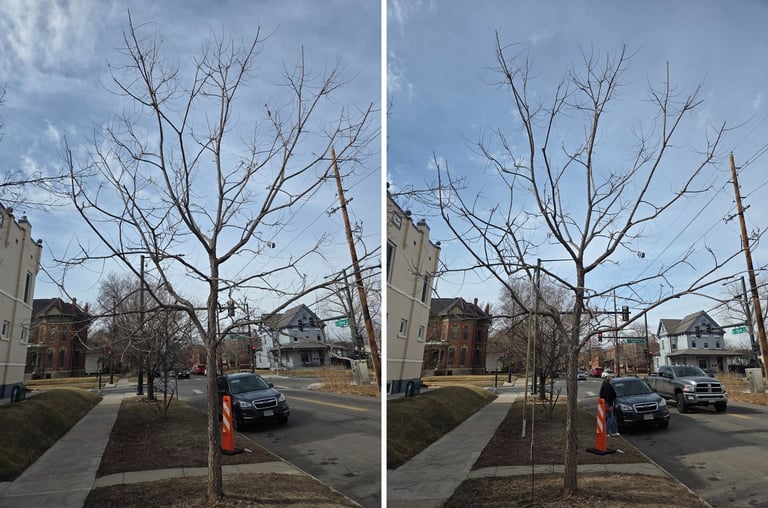 Which Municipal Trees Need Structural Pruning?
As you might imagine, large shade trees benefit most from structural pruning, but urban trees planted along streets, sidewalks, parking lots, and busy areas also need attention. Left unchecked, they can damage structures and infrastructure or become dangerous to pedestrians and property.
Besides the cost savings noted above, structural pruning has the greatest long-term impact when branches are small and trees are young.
Early structural pruning allows teams to:
And all of this work can be handled from the ground. The same doesn't apply to pruning and pruning large shade trees. Basic pruning equipment replaces lifts, climbing gear, traffic concerns, and large-branch removal that requires safety and logistical support.
That said, young trees require ongoing monitoring rather than a single pruning visit. As they grow, structural pruning should happen over several cycles to keep enough foliage for healthy growth while shaping the tree's long-term structure.
While most trees need some initial structural pruning, some need more attention. In particular, Elms, ornamental pears, some maple trees, and shade trees with upright branching habits need monitoring. Also monitor conifers, as damage to the central leader can cause multiple new leaders to develop.
What should you look for?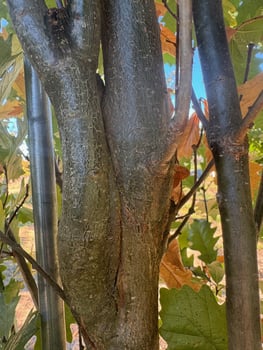
Rather than making trees look uniform, structural pruning actually supports a tree’s natural growth while accommodating its municipal setting.
We talk a lot about pruning timing because it can affect healthy growth. Life stage and season matter equally.
Start when trees are young, after establishment, and stop when the canopy develops. More specifically, start structural pruning after a tree is established (usually 2-3 years) and repeat it every 2-5 years. Once a tree is about 10-15 years old, it’s much more difficult to meaningfully affect its structure.
Structural pruning is part of dormant season pruning, so think late winter or early spring. Without foliage, teams can see a tree’s branch structure more clearly, and it's ready to rebound in spring when new growth begins.
That said, being mindful of species, condition, climate, and pest/disease concerns can help you time pruning better.
Also inspect trees after storms for leader damage. Many species will start competing new leaders or vigorous growth to make up for damage or loss. Inspections help teams address problems early, while branches are smaller.
 How to Assess a Tree Before Structural Pruning
The first tool you’ll use for structural pruning isn’t a saw, but your eyes. Start with an assessment, including walking around the tree and viewing it from different angles and distances. It might look great from the street, but a different angle can reveal competing stems, crowded branches, or other issues.
You’ll also want to:
After you inspect, before you make any cuts, determine your goal. Are you trying to establish a dominant leader? Subordinate a competing stem? Improve spacing? Prepare for future clearance? Address a structural issue? You may need to address multiple concerns, but prioritize and address one at a time if you can.
The dominant leader is the primary vertical stem that will eventually form the main trunk. In species that naturally develop a central leader, it will be noticeably taller and grow more vigorously than nearby branches.
Start at the base and follow the trunk up through the canopy. While it’s natural to assume the tallest shoot is the best candidate, you’ll want to assess for these characteristics:
Now, identify branches that are nearly the same height or diameter as the intended leader; they may be competing for dominance, and you’ll want to subordinate them by reducing their length.
Removing a good portion of a branch's foliage (especially from the tips, reducing its length) will "stunt" or subordinate that limb partly because the leaves/foliage are what "pull" water up the branch through the xylem. With less foliage, that branch gets less water and nutrients, so it grows more slowly and becomes smaller relative to the main stem (which is what we want!).
If the competing stem is small, you may remove it, but removing a large codominant stem often creates a significant wound that takes time to heal and could create vulnerabilities. It’s better to subordinate it over several pruning cycles than to make one major cut.
Species also trumps everything here. Some ornamental trees or multi-stemmed species have different growth habits. That is why teams should have basic data from a tree inventory on species, site, and the tree’s function before making any cuts.
Another structural issue that can cause problems later, especially with larger branches, is codominant stems. This is when two or more stems of a similar size grow from the same point. Instead of one clearly subordinate branch growing from a larger trunk, they compete to serve as the main trunk. 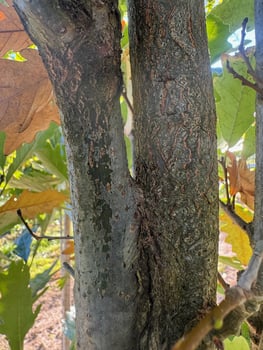
Look for:
A brief note on bark inclusion (see photo): This is bark that becomes trapped and compressed between two closely joined stems. As they grow, they press against one another, weakening the connection and, later, creating a serious structural problem.
This issue is fairly common in columnar species or cultivars. For example, people often select the Kindred Spirit® Oak for its columnar structure. They’re appealing for smaller spaces that still need shade trees, but because they're upright and don't have a wide canopy, bark inclusion is common.
They’re not a hard no, but municipalities should know they may need more frequent pruning and monitoring. That said, the Regal Prince® Oak is very similar, but its canopy grows to about 8 feet wide (the Kindred Spirit® is about 5 feet wide), and just that extra room means more space between branches.
This is one reason a municipal tree master plan matters. Understanding your city's tree needs, as well as the tree's needs, is equally important.
Tight codominant unions are labeled "V"-shaped, whereas ideal unions are "U"- shaped. These matter because issues arise when stems develop a strong wood-to-wood connection.
This is another situation where you want to make one subordinate by shortening it over successive pruning cycles. If the tree is still young, it’s less of a problem. On a mature tree, the cut will likely leave a significant wound, so consult a certified arborist.
Teams should evaluate branch size relative to the trunk at the point of attachment, not just the diameter. More specifically, a branch nearly half the trunk diameter risks becoming too big to stay subordinate.
Look at the major branches and ask:
Once you know what to cut and where, avoid removing every low or crowded branch at once. Prioritize your cuts and temporarily leave any branches that will provide foliage to support tree health and growth. You can always shorten or remove these later. Often, the first branch you prune is 12 feet tall. Anything below that is often temporary.
Always prune with long-term tree health in mind.
Finally, prioritize removing dead and broken branches. If you'll remove a large portion of the canopy, leave major wounds, or need more complex equipment or climbing, consult an arborist.
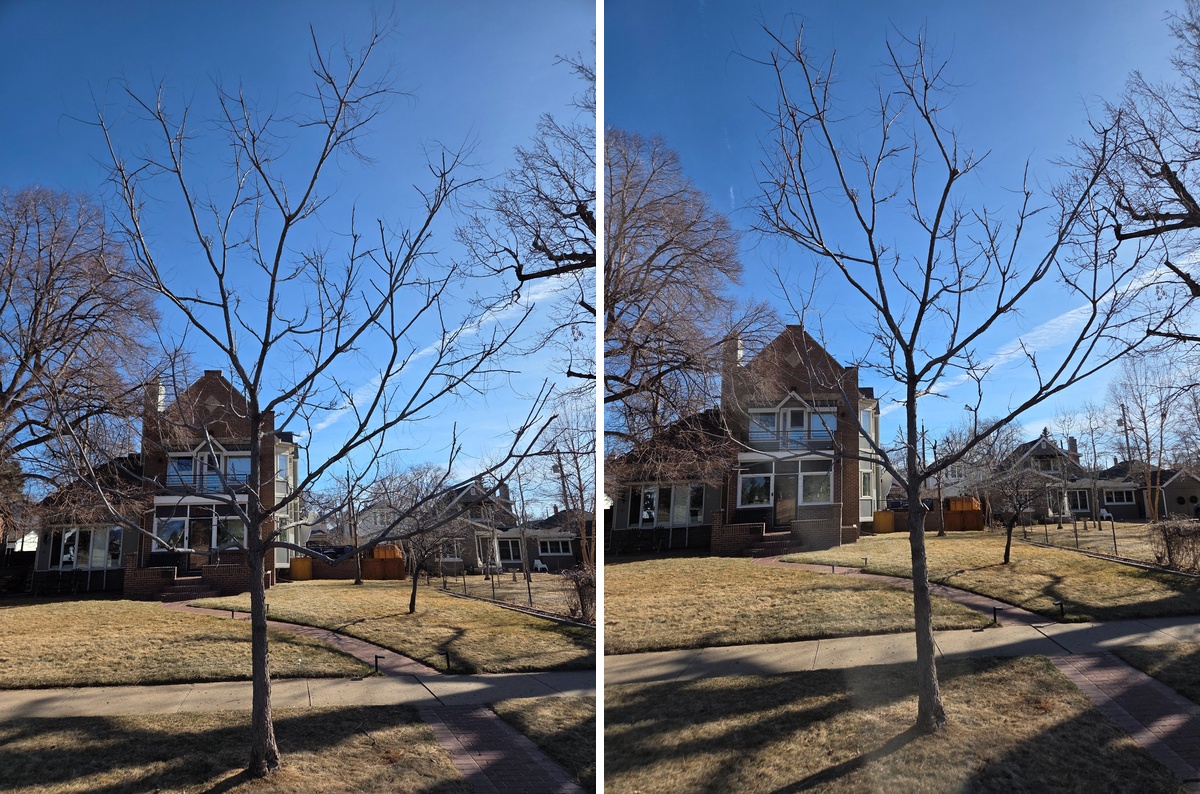 Step-by-Step Structural Pruning Process
Since we’ve already covered identifying leaders, co-dominant stems, and what to do with oversized branches, let’s move into action.
After you’ve assessed the tree:
1. Set your objective: What structural issue are you addressing in this pruning cycle?
2. Remove dead, broken, damaged, or diseased limbs.
3. Select the dominant leader and reduce or remove competition.
4. Manage existing or developing structural defects, including weak attachments, crossing branches, and branches too large in comparison to the trunk.
5. Improve spacing, favoring permanent branches that are distributed vertically and around the trunk.
6. Assess clearance and shorten low temporary branches without completely removing them.
7. Reassess the canopy, looking for enough live foliage to sustain healthy growth.
8. Document your work and add to your existing tree inventory so you can effectively revisit during the next pruning cycle.
Structural pruning isn’t a one-and-done job; it’s a process. Don't try to fix every issue in one visit; focus on guiding the tree’s growth and development over time.
It’s normal to feel some apprehension when you have pruners in hand, since pruning mistakes can create long-lasting problems. If you’re new to structural pruning or want help, contact a certified arborist.
Common mistakes to avoid:
Again, if you’re not sure what to remove, reduce, or save, your safest bet is to make no cuts and call a certified arborist.
Just as each tree has unique needs, municipalities also have different requirements. City forestry teams should be familiar with these prior to beginning any pruning program:
These requirements should clearly distinguish structural, clearance, and routine pruning so crews and contractors understand the goals. Resolve any conflicts by prioritizing public safety and existing laws, and have a municipality’s urban forestry manager or a city-contracted certified arborist review pruning decisions.
We’ll stress this again: structural pruning isn’t a one-time job; it’s most effective when it’s part of a city’s regular tree care routine or part of contracted tree services.
If you’re pruning only when problems show, it’s likely costing you more than you think in terms of resources and assets (the trees themselves).
Your tree inventory is your best tool for identifying where you have young trees, monitoring and tracking pruning cycles, budgeting for work, and documenting what each tree needs. Keeping that document up-to-date is essential.
Training is also vital. Consistent pruning and consistent assessments across the urban forest mean knowledge and experience don’t leave if you lose a team member. Regular pruning cycles develop stronger trees and reduce avoidable conflicts, including clearance issues, large corrective cuts, and long-term costs.
SuperTrees' certified arborists bring extensive experience working with urban forests and municipal forestry teams across the West.
Whether your city is just starting to assess structural pruning needs, developing a program, or coordinating practical training to build your crew's knowledge and confidence in their pruning decisions, we’re here to help.
Contact our team today to chat about how we can support your structural pruning!