urban forestry
Tree Inventory

You’ve heard the phrase “If these walls could talk,” but what if trees could? Some might have amazing, long stories to tell. After all, they’ve shaded our streets, in some cases, since before they were paved.
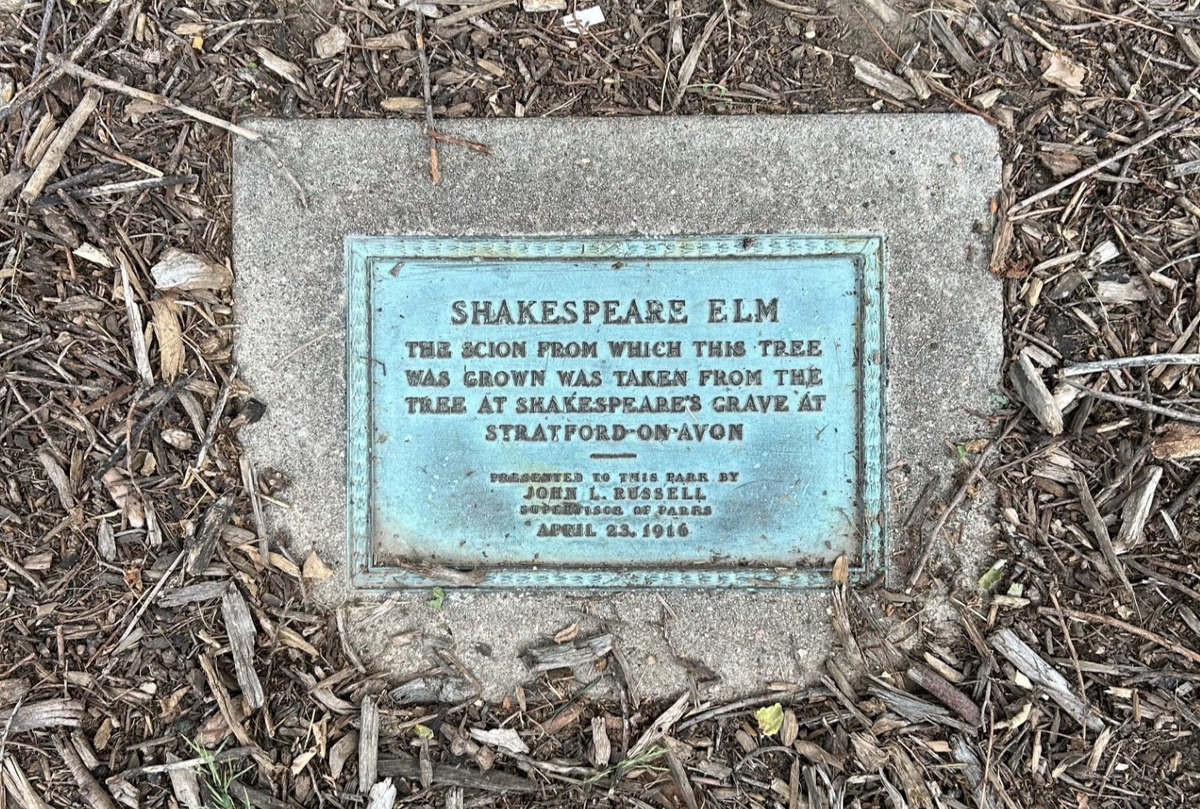
Trees that connect us to our past, to special events, to significant people or places are called heritage trees and, perhaps more than any others, hold stories worth saving. Some trees might even tell the story of a sea voyage, as with Denver’s Shakespeare Elm.
Protecting these trees requires more than a plaque; that won’t protect roots. A good story won’t provide healthy soil or skilled care. Caring for heritage trees requires planning, documentation, and certified arborists.
Quick Links
Heritage trees are single trees identified often for their cultural, ecological, or historical value. They may also be champion trees, recognized for their size, age, or a particular trait or characteristics.
Often, a tree’s unique history, location, or community relevance leads cities or governments to pass ordinances to protect it, along with efforts to continue its lineage.
Because heritage trees vary by species, no single type of tree meets “heritage tree” criteria. Instead, they’re often designated for protection based on:
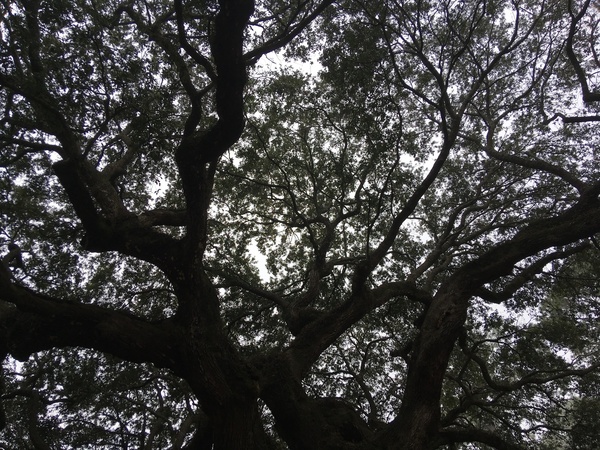
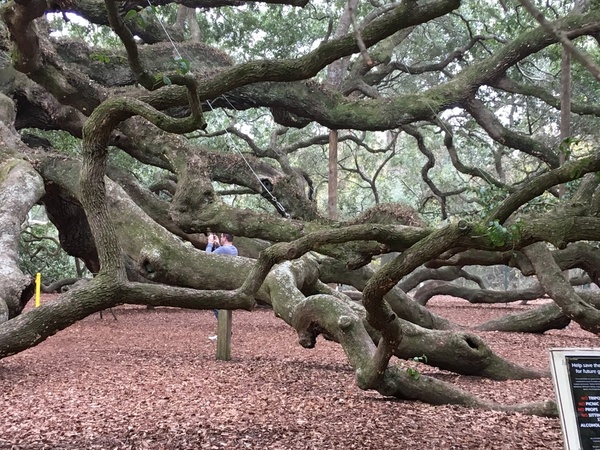
In some cases, a heritage tree is deemed important for a variety of factors, like the Angel Oak outside Charleston, SC. In some cases, the tree’s age or size isn’t remarkable, but the story or community around it has deemed it significant.
Each city or community sets the criteria for designating a tree as a heritage tree, so we may not see shared characteristics or species, but what stays consistent is the protection that ensures it’s cared for and, in many cases, that its lineage continues.
 Heritage Trees, Historic Trees, and Champion Trees: What’s the Difference?
There’s some overlap here, as heritage trees may be historic or champion trees, but being a historic or champion tree doesn’t necessarily make a tree a heritage tree. So, to be clear:
Heritage trees are officially recognized for their exceptional age, size, arboricultural, or community and cultural significance.
Historic trees often have a well-documented connection to a historically important person, place, event, or period of history.
Champion trees are documented examples of exceptional characteristics of their species, often within a specific region. This may include trunk circumference, height, or crown spread,
An exceptionally large tree, or even one your community loves, is often not enough to designate a tree as heritage. For heritage trees, certified arborists and historians often collaborate to identify their characteristics and condition alongside historical records and community knowledge.
Together, arborists and historians can help document why a tree deserves recognition and how best to protect it.
When documenting a heritage tree, teams should be sure to include the following information:
All tree documentation should include assessment dates and information about the assessor or arborist who assisted. Documentation should create a historical record of changes to the tree and its growing site.
Provenance is the documented history of origin, including where it came from, when it was planted, and its connection to the community, people who planted it, or the event when it was planted. Ongoing documentation strengthens provenance, firmly grounding a tree’s connection in history rather than urban legend.
However, establishing provenance for anything, including a tree, can be challenging. Often, when we plant a tree, we don’t think to document it because we may not understand what significance it may have later. Sometimes planting records are missing, photos are undated, and the tree’s history is part of an oral tradition that has, in some cases, changed over time.
In some cases, clear documentation is also needed to connect a tree to the famous specimen it descended from, and it must be specific; knowing they are the same species is not enough. Historians and arborists need to connect either a seed or a cutting to the source.
To establish provenance, documentation must be confirmed, and estimates or unverified accounts (stories) should be noted. While a gap in history doesn’t erase the historical or cultural value, a realistic reflection of what is known should shape the tree’s history and story moving forward.
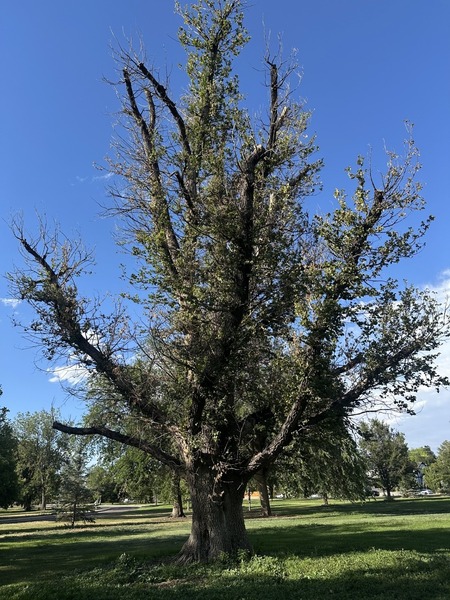 Denver’s Shakespeare Elm: Working with a Local Heritage Tree
This brings us to a current SuperTrees project: propagating Denver’s Shakespeare Elm, a wych elm (pronounced “witch”). Located near 17th Ave in City Park, the tree was originally planted by John Russel, the Denver Parks Supervisor, on April 23, 1916, to mark the 300th anniversary of Shakespeare’s death.
And here’s where provenance matters. Local accounts and the commemorative plaque connect the tree’s scion, the shoot used for propagation, to a tree at Shakespeare’s grave. The problem is that Shakespeare is buried inside Holy Trinity Church in Stratford-upon-Avon, England; so, no tree actually grows on his grave.
One can assume the original tree is on the church grounds, though no clear documentation establishes the tree's exact location or identity. And this is where provenance becomes challenging. Documentation is sometimes lax or lost, but that doesn’t mean it doesn't exist.
In fact, we do have documented history of the tree in Denver itself. 50 years after the planting, a publication from the Denver Botanic Gardens called The Green Thumb documented the planting, noted its Stratford origin, and the April 23, 1916 planting date. This gives us some information on the tree’s history, but not the exact English provenance we’d hope for.
Still, this documentation, along with oral tradition, provides some history and reinforces why preserving both the tree and its history are essential. Even without direct provenance, the wych elm, or Shakespeare Tree, in Denver still carries immense value for the landscape, its history, and the commemorative purpose of its planting.
For historical reasons, however, it’s also important to clearly document the uncertainty of its lineage.
Currently, the SuperTrees team has been monitoring the tree as well as gathering both bud wood scions and cuttings for propagation. The cuttings, thus far, have been unsuccessful, but the buds are showing promise.
Those buds have been grafted to another tree which will act as root stock and allow the the wych elm to grow. As the root stock works to push growth of the elm, eventually, the rest of the other tree will be cut off so only the elm remains. This becomes increasingly more important as the original tree completes its lifecycle.
.jpg?width=450&height=600&name=IMG_5549%20(1).jpg) Other notable Historic Heritage Trees
Other notable Historic Heritage TreesBecause cities may use different criteria to determine whether a tree is a heritage tree, there’s no national registry. However, the US isn’t without plenty of them, some with storied histories, and some with great stories for history– check out the Treaty Oak in Jacksonville, Florida below.
General Sherman- this giant sequoia, found in Sequoia National Park in California, is known as the world’s largest living tree by trunk volume. In other words, its trunk has more wood than any other tree on Earth.
Burnside Sycamore/Witness Tree- this sycamore found at Antietam National Battlefield appeared as a sapling in Civil War photographs taken by photographer Alexander Gardner just days after the Battle of Antietam.
But, like the Shakespeare Elm, not every heritage tree is on National Park land.
The Treaty Oak- this Jacksonville, Florida oak tree is located in what is now Jessie Ball duPont Park. Threatened with possible removal in the 1930s, a local woman and newspaper reporter concocted a story about peace treaties signed in the shade of the tree to rally the city around preservation efforts. The land it sits on was donated to the city by the duPont family in the 1960s.
The Washington Elm- this tree found on Cambridge Common in Cambridge, Massachusetts, is the scion of a famed tree, with a plaque reading “Under this tree Washington first took command of the American Army, July 3rd, 1775.” However, that history is dubious, and even historians acknowledge it’s more a symbol of a significant historical event.
Moreton Bay Fig- this massive fig tree, reportedly planted in 1877, can be found near Santa Barbara, California’s historic train station. It’s a city landmark and much loved by residents and visitors.
.jpg?width=450&height=600&name=IMG_5556%20(1).jpg) Building a Heritage Tree Preservation Plan
Building a Heritage Tree Preservation PlanWhy the Shakespeare tree now? It shows how and why we need heritage tree preservation plans. This wych elm in Denver is nearing the end of its lifecycle, but its current health and condition suggest now is the time to propagate it to preserve the tree's lineage.
The preservation plan isn’t only about lifecycle, but should also reflect the tree’s significance, ongoing care, site concerns, funding for its preservation, and documentation of each step taken to preserve the tree.
Here’s a solid framework for heritage tree preservation that should outline the priorities cities and arborists need when planning for preservation.
No plan exists without an initial assessment. An arborist should assess the tree's health, structure, root health, and surrounding soil environment. For trees like the Shakespeare Elm, this provides a starting point and lets a team set inspection intervals based on current tree health.
At this point, teams can also assign responsibility and resources for any required work, though they should complete additional assessments after storms, harsh seasonal changes, or nearby construction or site disruptions.
The 9/11 Survivor Tree is an excellent example of how professional care can sustain heritage trees. Discovered buried under soot and ash, this Callery pear tree had only a stump and a single branch remaining. Recovery workers described it as “burned, torn, splintered, and almost dead.” New York City’s Department of Parks and Recreation transported it to a nursery in the Bronx, where local arborists nursed it back to health.
Today, it’s nearly 30 feet tall and grows near the World Trade Center site. While its recovery took years, it has withstood several harsh winters and is now shared across the country through the Survivor Tree Seedling program.
We can also see how much effort goes into preservation by looking at the efforts to save Lahaina’s Banyah trees after the Maui wildfires.
In short, preservation is a long game and requires ongoing commitment from cities, arborists, and historians.
Cities change. Landscapes change. One core component of tree preservation must address what happens around the tree and its planting site. Cities must ensure a plan is in place for excavation, equipment access, soil compaction, and any drainage changes.
To do so, arborists should define a protection area before any nearby work begins and include restrictions in development plans, especially when cities use contractors or outside vendors.
One excellent example is South Carolina’s Angel Oak, where experts testified that developing land adjacent to this majestic tree could damage its roots and limit its access to water, leading to an overall decline in its health. This work led to changes in environmental law and shows that tree preservation is about more than the physical tree itself.
As much as preserving the tree, heritage trees need their story preserved as well. That means maintaining any historical records, photos, inspection esports, and propagation records in a central location.
Propagation also helps continue the linear and both cuttings and grafting are suitable ways to preserve heritage trees. In the case of the Shakespeare Elm, SuperTrees is assisting in the propagation, preserving the history and the lineage as well as creating new records that link any new trees to the original, and the original story.
For example, the 9/11 seedling project tracks where the lineage has been continued, with seedlings being sent to communities affected by tragedies. Those trees also symbolize healing and regrowth as the Survivor Tree in New York City does.
Preservation plans must be supported by city policies. For trees like the Shakespeare Elm, the Survivor Tree and others like it, there’s a framework to establish who is responsible for the tree as well as guide development, care, and funding.
1. Establish clear criteria for identifying significant trees and keep a record. What will the destination require? Who will review the guidelines before work is done near the tree or in adjacent areas that might jeopardize tree health?
2. Develop ordinances to protect the tree. What protections will be in place for the tree and the area around it? What will permits for that work require? Who will enforce the protections? How will the city handle emergencies, especially if a tree cannot be saved?
3. Include a tree review in development and construction plans on city property. Before starting projects, cities should identify any historic trees before finalizing plans. Require planning teams to consult an arborist, map protected areas, and include details on how excavation, equipment, and drainage will be managed.
4. Include easements for land sales and conservation. Historic and heritage trees were often planted well before a city popped up or expanded around them. New development, expansion, and even selling adjacent lots can jeopardize a heritage tree. And, as we learned from the Angel Oak, it’s not just above ground; consider root zones and water diversions before building.
5. Dedicate funding and resources to stewardship. Your normal tree budget may not cover what it takes to care for a heritage tree. From inspections and maintenance to historical research and record-keeping, heritage trees need more. And, in the case of an emergency like storm damage, set aside funds outside of the municipal budget. Who will be responsible for stewardship?
6. Create community. Heritage trees tell a story about places, people, and history. Working with preservation and historical societies, arborists, community groups, and travel or tourism boards can help build coalitions and act as champions for the tree. Signs, public records, tours, articles, and more can help keep the tree’s story alive.
Tools like this help ensure heritage trees are cared for in the future, securing both the tree’s needs and its significance.
 Preserving Heritage Trees Requires Planning, Documentation, and Skilled Care
Every tree is an asset. Every tree is an investment. Heritage trees double down on that. They connect your community to its past and its future. They also connect your community to the landscape that municipal forestry and parks teams have been tasked with caring for.
To protect them, start with documentation– their history, their health, their needs, and the resources required to ensure their health and longevity.
At SuperTrees, we’re not only working to help Denver with its Shakespeare Elm, but also looking for ways to help cities across the West preserve their historic trees.
With our certified arborists’ expertise and custom propagation capabilities, we’re prepared to care for heritage trees or, when necessary, propagate new trees from the original.
Documenting these trees is essential to preserving their lineage, history, and provenance. Looking to discuss preservation, care, or other propagation needs? Reach out to our team today