
urban forestry
Nursery
Tree Inventory
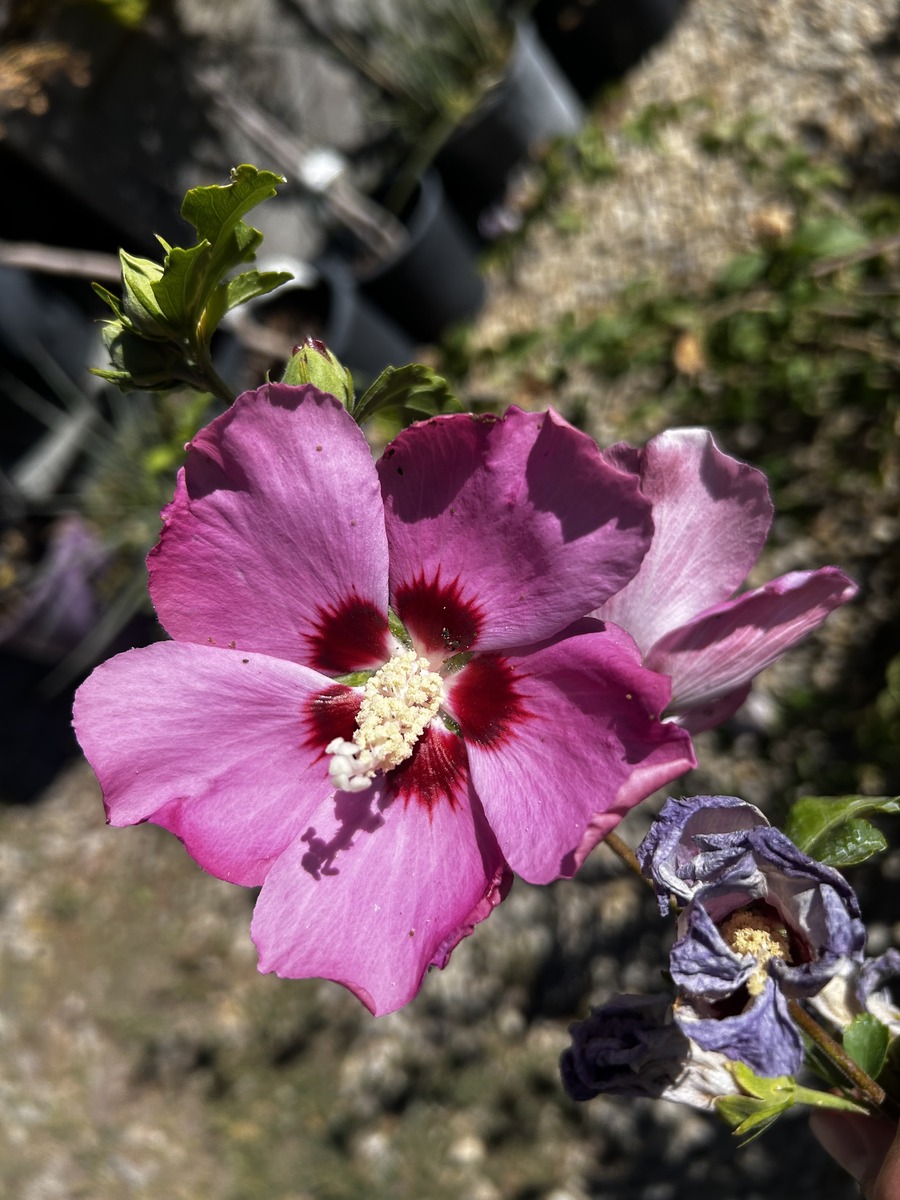

 “I thought hibiscus were tropical. What’s it doing here?” If you’ve ever asked this, then you’ve seen Rose of Sharon. It features bold hibiscus flowers on a compact and cold-hardy tree form. A few extra traits make this tree form special, including months of bright summer color, flexibility and adaptability in the urban forest, and a big impact in tight planting spaces.
Quick Links:
Two important things to know about the Rose of Sharon. First, it’s not a rose. It’s actually part of the hibiscus family; Hibiscus syriacus, to be specific. This family is large and includes other notable species like hollyhocks, cotton, okra, and linden.
As one might guess, it’s also related to the tropical hibiscus, and this relationship is quite clear when looking at its flowers. It’s the flower that helps it get its name, though the biblical reference probably does not refer to the modern hibiscus. However, the passage refers to a showy flowering shrub in a region called Sharon, and thus we have the Rose of Sharon.
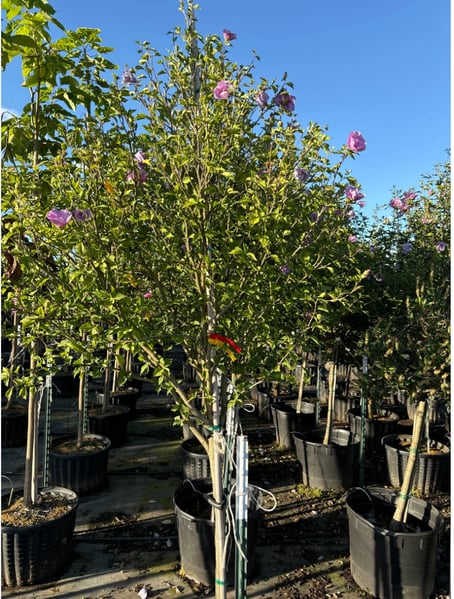
The second thing to know is that this is a tree form. The Rose of Sharon is a multi-stemmed deciduous shrub, but you can train it into a single-trunk tree form through careful pruning as it grows. The result? A stunning compact ornamental tree with an elevated canopy that’s ideal for smaller spaces.
We’ve already mentioned the blooms, and this is the Rose of Sharon’s showstopping trait. Better news? All of it comes in a compact size.
The tree form, unlike the shrub, features an exposed trunk and a rounded canopy that's striking as a focal point, whether in a courtyard, along walkways or paved trails in parks, or as an anchor in a flower bed.
Wherever you place it, its large, hibiscus-like flowers appear and open across its canopy in summer; it continues blooming throughout the summer, even after other flowering ornamental trees have finished, often lasting for months. The blooms are beautiful and come in a wide range of colors, including white, pink, lavender, purple, and blue.
But hold on, the Rose of Sharon isn’t just about summer. In spring, it’s lush with abundant foliage. In summer and even into the start of fall, its flowers are stunners. Then, in fall, the leaves yellow before they drop, and attention turns to the trunk and its branching structure, which create both shape and texture in your winter landscape.
Beyond the flowers, a standout feature of the Rose of Sharon is its size. It’s got a fairly small footprint, which makes it versatile and useful in urban landscapes. Small yards? Walkways? Patios? Limited space on commercial properties? Streetscapes? Any area with limited space for either a canopy or a root system will work.
But you need not squeeze it into tiny spaces either. On its own, as a focal point, it will grab attention. Want something spectacular? Consider planting it in a group to create rhythm through repetition and fireworks all summer.
Check out a few of these standout cultivars: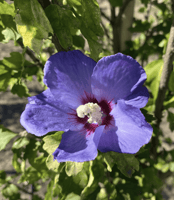 Azurri Blue Satin® Rose of Sharon Tree Form- Looking for a real standout? Its rich blue-purple flowers with white centers and reddish purple “eyes” bloom from midsummer into fall. This blue color is an eye-catcher because it’s unusual, making it an excellent specimen tree and a focal point in any landscape. Bonus? It’s a seedless cultivar!
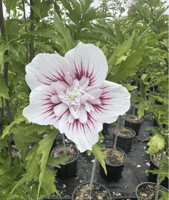 Starblast Chiffon® Hibiscus Tree Form- Brilliant white flowers with fluffy, doubled centers and hot pink starbursts make this one a standout. Another reason it stands out is that this cultivar starts flowering before the others and still continues for an extended season.
Flamingo Hibiscus Tree Form- This one gets its name from its large, bright pink flowers, which contrast with deep red centers against the rich green leaves. It's also naturally compact. It’s also sterile and seedless, and develops a tight, rounded canopy. 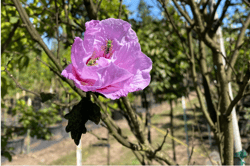 Lavender Chiffon® Hibiscus Tree Form- Again, the name here reveals why it’s distinctive. Large, soft-lavender flowers with ruffled, doubled centers look almost like layers of lavender chiffon. It features dense branching and an upright structure. And, you guessed it, also a seedless cultivar. All of the beauty, none of the cleanup.
If you’re getting the sense that each of these has something special to offer, then you’re understanding why we love them! Reach out to our team to find out what we have in stock, especially if you’re looking to fill a tight space.
We don’t want you to think the Rose of Sharon is just small and pretty. In fact, one reason we love it in the Intermountain West is its heat and drought tolerance and its ability to withstand a variety of soil conditions. It’s pretty and practical.
So let’s take a look at some quick facts and details:
Let’s start with this: when we say urban-ready, we mean a tree that delivers on a few factors essential to urban forestry teams and municipal stakeholders. We’re often looking for trees that are versatile and fit a variety of urban spaces, from streetscapes to parks.
We hope they’ll deliver beauty while also tolerating and thriving in conditions that can make urban spaces challenging. Rose of Sharon can meet many of these demands.
One of the biggest challenges urban teams face is limited space, which calls for compact trees. Rose of Sharon doesn’t grow very tall, nor does it spread out too far. That narrow form makes it great for a variety of urban spaces, including parks, courtyards, commercial parcels, and streetscapes.
Urban environments can challenge trees. Whether it’s heat, snow, drought, or soil challenges, Rose of Sharon can tolerate it all after establishment. As with any tree, the establishment period is crucial. It also needs good drainage, but overall it’s a pretty adaptable tree, even on less-than-ideal sites.
Let’s be honest: high-maintenance trees are not necessarily urban-friendly or what urban forestry teams are looking for. They may look beautiful, but cleanup and care require resources whether it’s staff, time, or money; often, these are limited.
The tree form does require some pruning to keep a single clear trunk and canopy, but this can be part of yearly pruning. Also, teams should consider low-seed or seedless cultivars, as some seed readily and create unwanted tree maintenance demands.
Many urban forestry teams want to ensure food for pollinators and beautify the landscape. Thankfully, these two often go hand in hand, and Rose of Sharon demonstrates that. With blooms that help the landscape transition from summer to fall, both residents and wildlife will appreciate the addition.
In short, when considering versatile and tolerant trees for small spaces that bring immense value, Rose of Sharon should be high on the list!
 The Strategic Role of Rose of Sharon in a Diverse Tree Plan
One thing we often discuss with the municipalities we work with is that a master tree plan is essential. It lets you develop a real strategy for selecting trees and identifying substitutions when what you want isn’t available.
One consideration here is that a truly diverse urban forest includes more than big canopy or shade trees. Small ornamental species are not only necessary for species diversity, but they also fill a unique niche, especially in challenging locations and when seasonal interest and ecological value are concerns.
Rose of Sharon's compact form makes it incredibly valuable for urban forestry teams looking to fill difficult planting sites and add variety without competing with other trees for space. In difficult, often hard-to-plant places, Rose of Sharon provides height, structure, and shade on a smaller scale, which can help reduce the chance of conflicts with infrastructure.
Additionally, Rose of Sharon fills a landscape gap between summer and fall with blooms that last longer than other ornamentals. Staggering flowering periods across your landscape not only increases visual appeal but also extends the season for pollinators.
In short, Rose of Sharon adds a layer to a diverse canopy and planting plan, a layer that fills gaps that other trees often cannot. It’s a compact, late-bloomer that opens up planting at sites previously left unfilled.
Looking for early blooming ornamentals?
A compact footprint, adaptable nature, and plentiful blooms make Rose of Sharon a great addition to your landscape. A wide choice of colors and plenty of character make it exceptional in small places where a standard or larger ornamental won’t fit or thrive.
It’s an asset in a diverse tree plan and works whether it’s in a park, courtyard, planting bed, or streetscape. It’s also a great substitute if the ornamental you originally requested isn’t available. In fact, with a variety of cultivars offering different colors and characteristics, it may even be a better fit!
Wondering what we’ve got in stock? Sign up for our availability list below and stay on top of what we have in stock at our nurseries. You can also contact our team of certified arborists to help work on your master tree plan and see where Rose of Sharon might fit.
The SuperTrees team's grower knowledge and arboricultural experience can help you evaluate sites, compare cultivars, and identify the best trees to meet your needs, while supporting design, diversity, and long-term tree goals. Reach out to our team today!