tree health
Tree Care
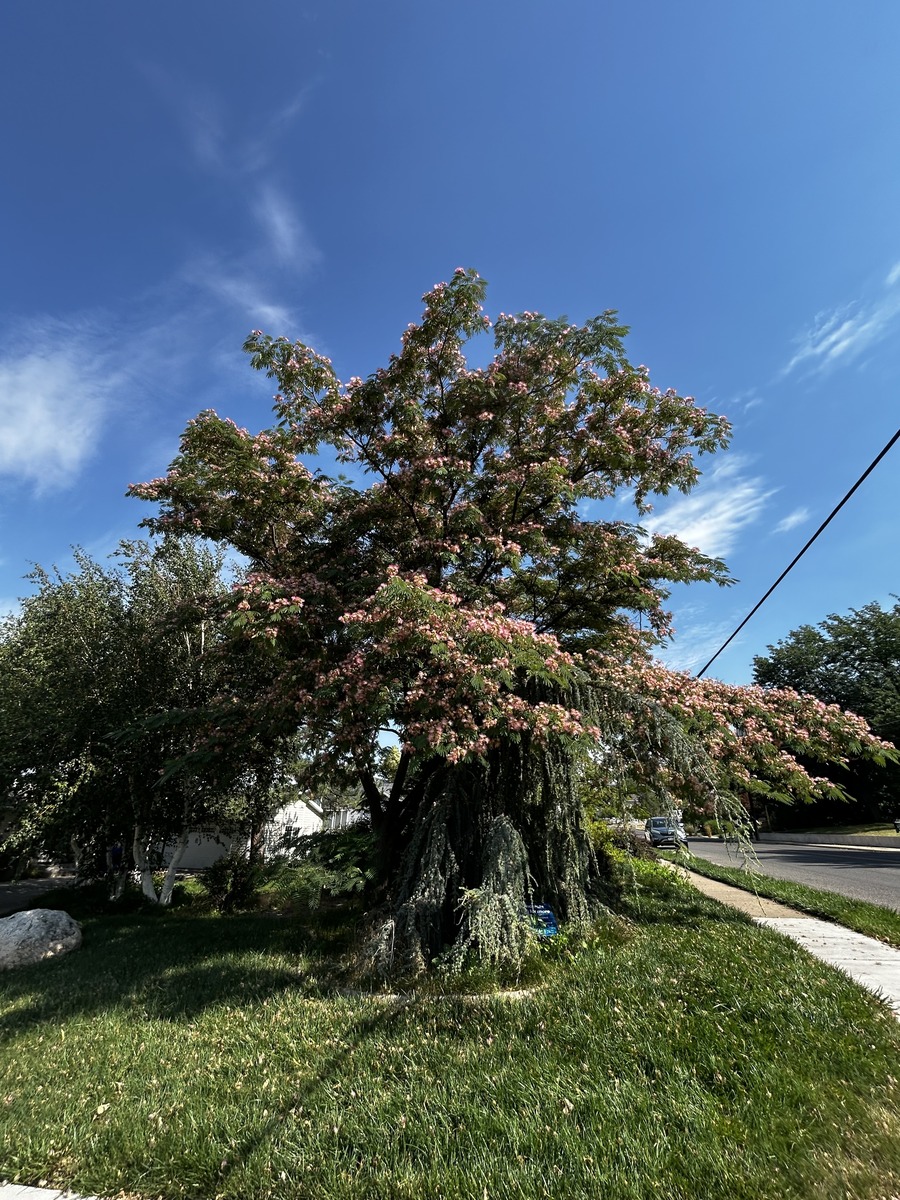

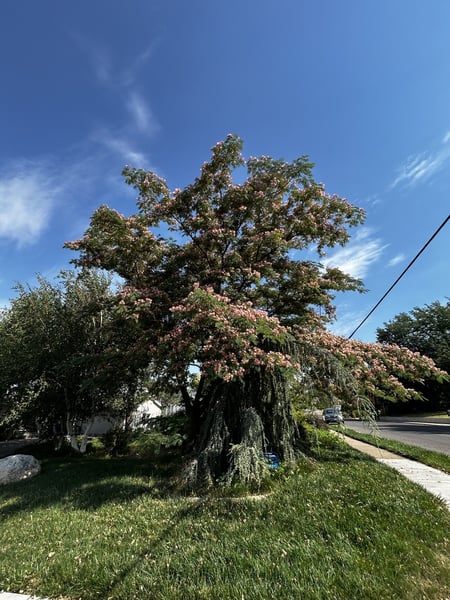 Some trees have names that fit. The albizia, more commonly known as the mimosa tree, is one. When you think mimosa, you think airy (bubbly) and bright. The mimosa tree is both of those, and distinctive and elegant in the same way.
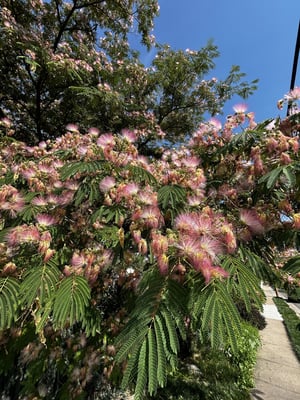
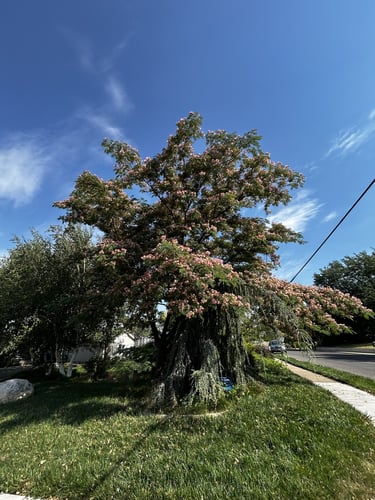
From its breezy, airy canopy and delicate-looking, fern-like leaves to its powder-puff pink blooms, it’s an eye-catching centerpiece in any landscape. But don’t let these traits fool you. It’s also adaptable to a variety of soils and, as with the E.H. Wilson cultivar, capable of handling colder climates.
Quick Links:
The Albizia genus is known mostly or Albizia julibrissin, which is also known as the mimosa tree or silk tree. It earned this name not because it’s actually in the Mimosa genus but because it has feathery foliage and flowers that look like silky pom-poms that look very similar to true mimosa plants.E.H. Wilson Mimosa Tree
They may look alike because they do come from the same family (Fabaceae) which also includes redbuds, Kentucky coffeetrees, acacias, and honeylocusts. While they may not look alike, many of the trees in this family produce seed pods after they have flowered.
Similarly, many trees in this family are valued for their fast growth and broad canopies. The Albizia also offers summer blooms with wildlife attracting value– bees, butterflies, and other pollinators love the mimosa tree’s fragrant flowers.
As cultivars are selected, Albizia are increasingly known for their cold hardiness and unique colors. As an ornamental tree in your landscape, it’s both eye-catching and distinctive.
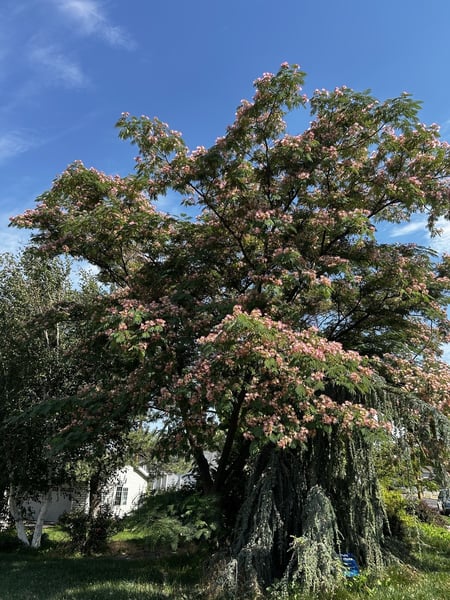 A Standout Specimen: Albizia or Mimosa Tree
Growing 20-40 feet tall, the classic Albizia julibrissin is a popular ornamental which provides a tropical appearance with airy, eye-catching summer blooms. It’s broad canopy branches out but its fern-like foliage creates filtered shade and dappled light. By mid to late summer, its branches fill with silky pink flowers that look like powder puffs or something from a Dr. Seuss story. This later bloom means they’re often providing food for pollinators after early blooming trees have stopped flowering.
It’s also a fast growing tree and tolerant of heat; some cultivars have also really boosted its cold hardiness. These characteristics make it an excellent choice in residential and managed landscapes as well as city parks.
The Albizia has several cutlivars as well, each selected for standout characteristics that make it a versatile tree suitable for most locations in the Intermountain West and Pacific Northwest.
If you’re looking for a hardy version of the mimosa tree, this is your cultivar, especially if you are in a region with cold winters. With improved cold tolerance, it still maintains its profile, airy and light, and its pink flowers of the standard mimosa but it’s still able to handle colder winters.
This cultivar typically grows 20-30 feet with a broad, umbrella-shaped canopy, and offers a unique tropical aesthetic. The E.H. Wilson Mimosa is among the best choices for the Pacific Northwest and parts of the Intermountain West.
There are, of course, several other albizia cultivars that might be suitable in the Pacific Northwest as well as parts of Colorado and Utah. These include:
The most important part of choosing a cultivar is knowing what you need for your region and which trees will thrive. Working with a wholesale nursery grower can help you make those choices.
Albizias are loved for the texture, color, and feel they create in a landscape; they add not only elegance given their form, but also tropical character.
 Albizia or Mimosa Tree: Growing Details and Quick Facts
The albizia is often selected for landscapes based on its structure, appearance, and recognizable flowers. If you’re looking to “lighten” your landscape, they provide a broad canopy with an airy feeling and light, filtered, shade.
While certainly suitable for warmer regions, cultivars like the E.H. Wilson Mimosa have been selected and cultivated for their cold hardiness. In other words, they’re a great addition to parks and managed landscapes looking to add a little flair and canopy diversity.
Albizia or Mimosa Tree Quick Facts
Botanical Name: Albizia julibrissin
Common Names: Albizia, Mimosa Tree, Silk Tree
Mature Size: 20–40 ft. tall × 20–40 ft. wide (variety dependent)
Growth Rate: Fast
Form: Broad, spreading, umbrella-shaped canopy
Foliage: Fine, fern-like bipinnate leaves with a soft, tropical appearance
Flowers: Fragrant, silky pink flowers that bloom in mid- to late summer
Fruit: Flat seed pods that grow flowering and often last into fall
Sun Requirements: If you want the best flowering, plant where it gets full sun
Soil Preferences: Well-drained soils; adaptable to sandy, loamy, and moderately clay soils
Water Needs: Moderate during establishment; moderately drought tolerant once established
Cold Hardiness: Generally USDA Zones 6–9 (hardier cultivars such as E.H. Wilson can perform into Zone 5 with proper siting)
Wildlife Value: Excellent nectar source for bees, butterflies, hummingbirds, and other pollinators
Landscape Uses: Specimen tree, residential landscapes, parks, managed landscapes, pollinator gardens, and light-shade plantings
If you’re looking to add a focal point in your landscape, and one that adds a distinctive “feel” while attracting pollinators, this just may be the tree for you. As with all trees, proper siting (right tree, right place) is essential, so working with a trusted wholesale tree nursery partner is the right choice.
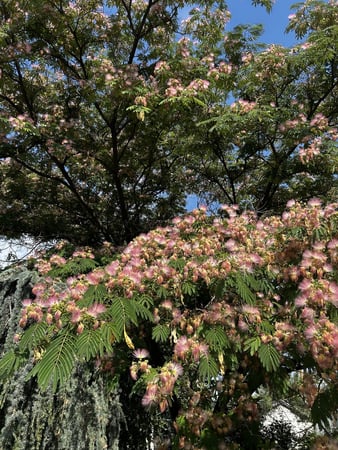 Traits That Make Albizia Urban-Ready
Because the albizia, especially cultivars like the E.H. Wilson, offers both performance and beauty, it’s a great addition to any property whether a home, a park, or a managed landscape. That said, it has several characteristics that make it a great addition to an urban setting.
Key urban-ready traits include:
Fast growth- Mimosas grow quickly, providing shade and visual impact even shortly after being planted.
Stunning summer blooms- Albizia’s are trees that stop folks in their tracks to ask “What’s that?” They’re also blooming well after may other ornamentals have stopped.
Pollinator-friendly- If you’re looking to attract butterflies, hummingbirds, bees, and other pollinators, they’re an excellent choice!
Dappled light and filtered shade- The airy canopy of the mimosa is distinctive. You get cooling shade and filtered light which means understory plantings can thrive.
Unique texture- The mimosa is easily recognizable from its fern-like foliage. It’s a soft contrast to more solid and dense trees like conifers.
Moderate drought-tolerance- After establishment, it needs minimal supplemental watering.
Soil adaptability- As noted above, it is able to grow and thrive in a variety of soil types while tolerating periods of bot heat or dryness.
Eye-catching specimen tree- If you’re looking for a tree to make a focal point of your landscape, the mimosa adds flair and drama.
Expands canopy diversity- Not only does the albizia add visual variety, but it also add species variety as well.
Cultivar availability- Given it’s “tropical” flair, cultivars have helped expand the region where alibizias can thrive.
The albizia is often an underused specimen in Western landscapes, but its a really interesting combination of beauty, wildlife value, and elegance can make it not only an attention getter but a focal point of your landscape.
Not every tree belongs in every landscape, but the right tree, in the right place, is the foundation of a healthy and resilient urban forest or managed landscape. There is no finer example than the mimosa tree or albizia as it’s not ideal everywhere, but where it works, it can play an important role in a diverse tree plan.
Often, when it comes to planning a landscape, continuity matters. In other words, throughout the year, you’re looking for trees that offer visual interest and allow the landscape to move from season to season and still be appealing. Albizia fills an important gap here as a late summer bloomer.
For homeowners, the albizia is a centerpiece around which you can build the rest of your landscape, including the understory, without creating a dense, heavy profile.
In city tree plans or managed landscapes, the mimosa tree can be paired with spring flowering trees, large canopy species, evergreens and native trees to provide:
As with any tree, selection should be considered and careful based on regional climate, microclimate, and canopy needs. Again, working with a wholesale nursery, on a developed tree plan that spans years, can help ensure a thriving urban canopy.
The alibizia is an amazing addition when paired with earlier bloomers, larger trees with dense canopies, and evergreens.
 A Cold, Hardy Ornamental: The Albizia or Mimosa Tree
While it’s airy tropical appearance and unique blooms bring the alibizia or mimosa tree the most attention, it has other great traits that might make it an excellent addition to your managed property or landscape. From its fast growth to late summer blooms, and it’s cold hardy cultivars like E.H. Wilson, it can thrive in a variety of sites across the Pacific Northwest and Intermountain West.
As with any ornamental tree, the right tree in the right place really matters. While they’re resilient and capable of handling or adapting to a variety of growing conditions, a number of factors can influence whether the albizia is the best choice.
That’s where working with a wholesale nursery grower makes a difference in not only understanding how and where the tree was propagated and produced, but also how it will perform in your area.
Whether you’re a homeowner looking for a one-of-a-kind specimen tree, a property manager looking to add a focal point and some flair, or a municipality looking to diversify your urban forest and add some drama, we can help.
From our retail nursery in Riverton, Utah to our wholesale nursery which works with cities throughout the West, our team is ready to help you answer questions about tree choices and selection, tree plans, canopy diversity, and whether the alibizia is the right choice for your site.
Contact us today to learn how high quality nursery stock and expert guidance from our certified arborists can set you up for landscape and tree success.