tree health
Tree Care

 It’s the A student who sits in the back. It’s the athlete who comes off the bench to save the game. It’s the co-worker who will always come in to cover a shift. In other words, it’s strong, resilient, reliable, and sadly, often overlooked.
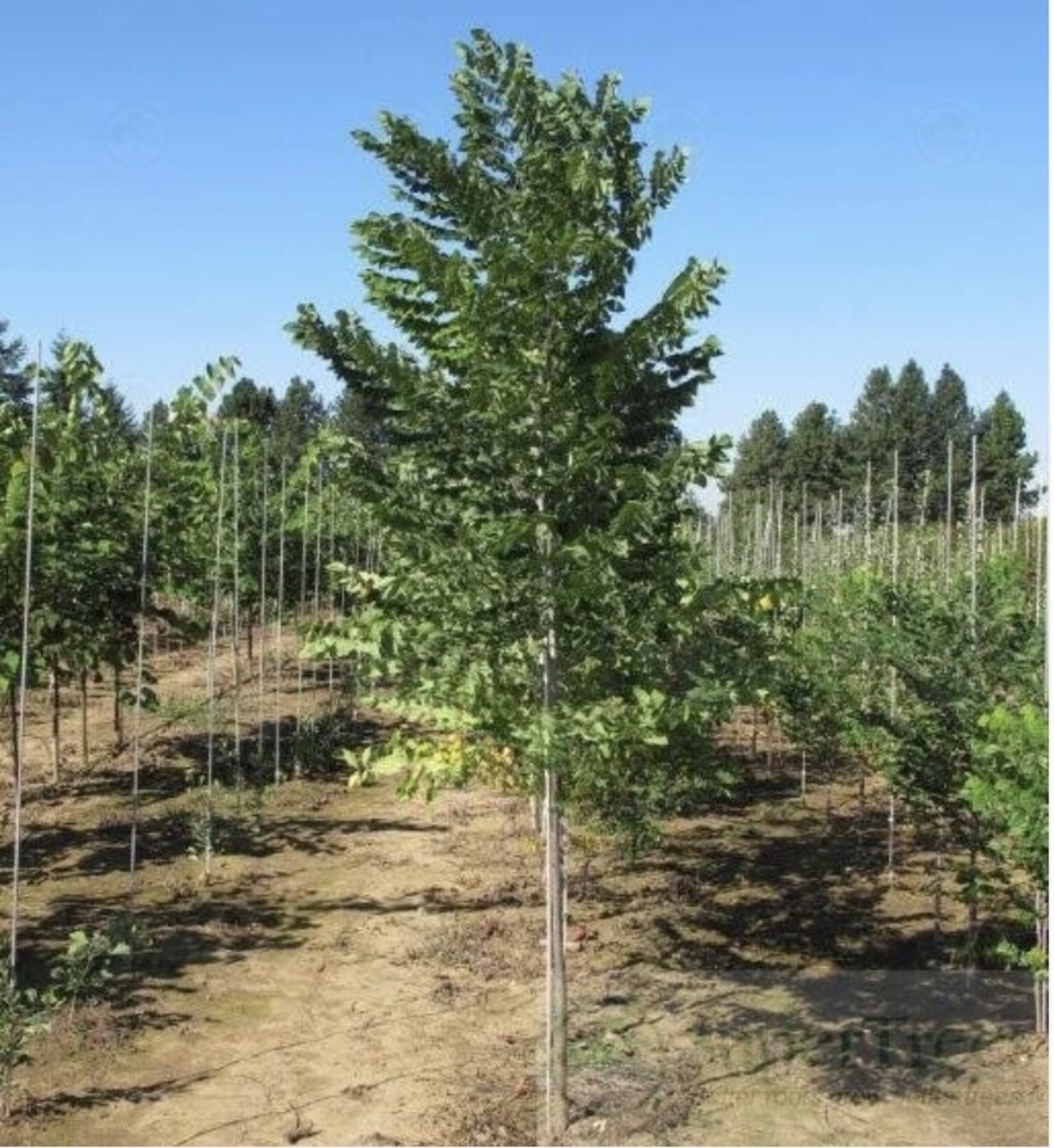
The Kentucky coffeetree is often underutilized in urban settings and managed landscapes, but with increasing challenges, especially out west, this drought-tolerant, urban-ready, shade provider should be taking center stage.
Quick Links:
Got shade? If not, let’s meet the Kentucky Coffeetree (Gymnocladus dioicus), one of North America’s best and most underutilized native shade trees.
While it’s most recognized for its thick and well-spaced branches, which create a large canopy and tons of shade, property managers and arborists also know it as a reliable performer, even in challenging landscapes (Intermountain West, anyone?).
It’s native to the central US, but over time has been cultivated and evolved to handle a variety of extremes, including heat, drought, challenging soils, and urban stressors. As a result, it's been gaining attention for performing well nearly everywhere, from parking lots and streetscapes to parks and residential properties with room (and a need for shade).
The straight species does particularly well in areas where there’s plenty of room, but newer cultivars, like the Espresso™ and Decaf®, have been selected for better form and branching. They do exceptionally well in managed landscapes. Regardless of species, they’re recognized for their resilience, adaptability, unique appearance, and strong canopy performance.
Unlike ornamental trees, which often stand out for their flowers, Kentucky Coffeetrees stand out because, when it comes to shade trees, you want durability and character. Not every shade tree offers both.
From its branching structure and compound leaves to its durability and adaptability, it makes it a great choice for any landscape that’s looking for a long-term investment.
The Kentucky Coffeetree offers more than a large open canopy, though. It’s got a distinctive bark and a stunning silhouette from late fall through early spring. In short, it’s not just durable, but it’s got visual appeal as well.
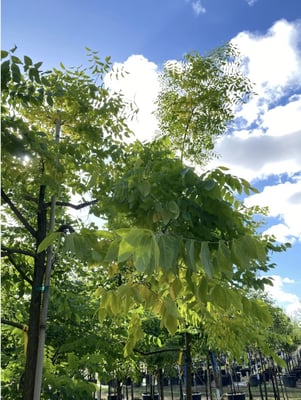 Espresso™ Kentucky Coffeetree
While the Kentucky Coffeetree is known for its bold branching structure, the Espresso™ Kentucky Coffeetree is a bit more refined. Growth on this cultivar is typically more uniform with a strong central leader and more consistent branching. This means it’s more likely to fit better in structured landscapes or urban plantings.
This cultivar is just as tough as its namesake, but as the name implies, it’s a bit more polished, a bit more ready for a refined audience and setting.
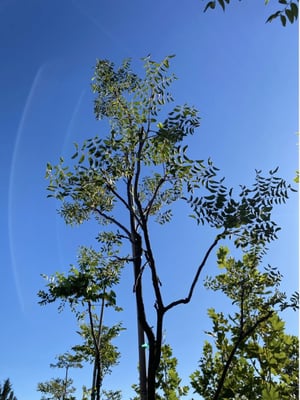 The Decaf® Kentucky Coffeetree was specifically cultivated to address seed production. The female Kentucky Coffeetree is recognized for its large seed pods, which, while they add visual interest, may increase maintenance and cleanup needs. Enter the seedless male Decaf® Kentucky Coffeetree.
This cleaner version is often more appealing to everyone, from municipalities and HOAs to commercial and residential settings, where reduced maintenance is often a huge bonus. It delivers all the same resiliency, drought tolerance, and toughness as the Kentucky Coffeetree.
While there are meaningful differences between the cultivars and the straight species, these growing details focus on the core characteristics they all share. After all, it’s what makes this species so desirable, and variations are largely related to size, branching structure, and seed production.
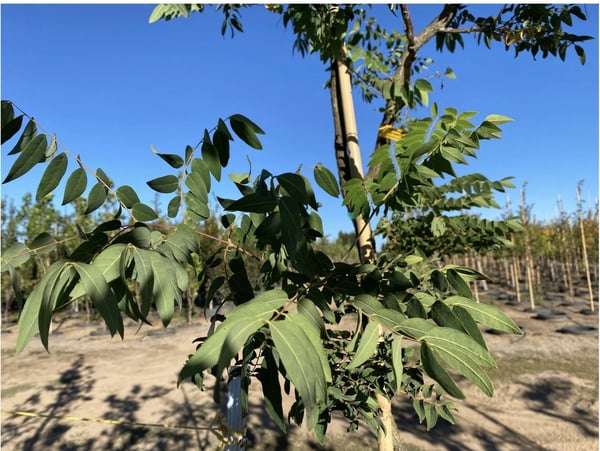
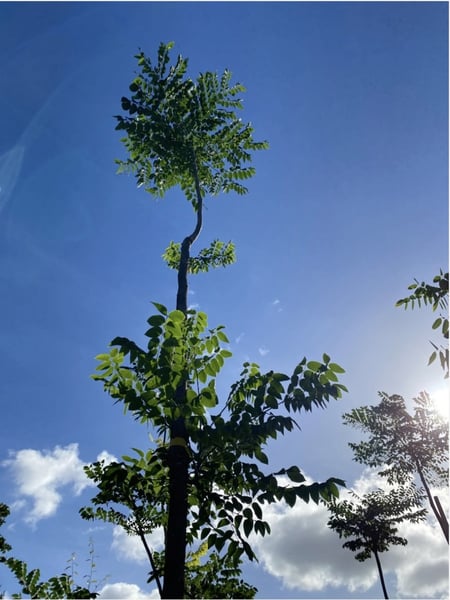 Traits That Make Kentucky Coffeetree Urban-Ready
Not every tree is cut out for urban conditions. From compacted soils and heat islands to inconsistent irrigation and restricted rooting zones, many large shade trees struggle to truly thrive in urban settings. The Kentucky Coffeetree consistently handles these challenges while boosting overall canopy size.
A few of the urban-ready traits of the Kentucky Coffeetree:
When it comes to urban forestry, canopy diversity is a top priority. When the forest's resilience is prioritized, it also means prioritizing diversity and seeking out trees that provide durable canopy cover while minimizing urban risks. Not only do Kentucky coffeetrees offer that kind of durability, but they also reduce maintenance and replacement costs.
To start, they’re big trees that mature into high-impact shade trees capable of carrying everything from parks and campuses to larger residential landscapes. In short, you need fewer trees to deliver the shade you need.
Managing an urban forest means tracking and conducting regular maintenance. Trees that require fewer interventions, whether that be pruning, irrigation, or tree pest management, are cost savers in the long run and can help stretch a city's forestry or managed landscape budget. Similarly, they’re resilient, which means fewer replacements and lower replacement costs.
If your goal is to expand canopy coverage with drought-resilient trees that can meet urban challenges, the Kentucky Coffeetree can offer long-term value. They’re not space fillers but rather anchors in a stronger, more sustainable landscape.
Regardless of whether you’re a property manager, homeowner, or city forester, modern landscaping has a lot of demands. The good news? For many years, the Kentucky coffeetree has been overlooked, despite its ability to check all the boxes for urban needs.
✔️ Drought-tolerance
✔️ Urban resilience
✔️ Adaptability
✔️Longevity
✔️Strong canopy value
✔️Wildlife value
✔️Strong shade provider
These are all great traits and a great opportunity. The Kentucky coffeetree is a practical solution for these challenges without compromising visual interest or performance. And, in western landscapes where these challenges are increasingly impacting the urban canopy, it’s an ideal fit.
If this sounds like what you’re looking for, now’s the time to start planning for fall planting. Large shade trees are often best sourced well before planting timelines, so we hope you’ll take a look at the Kentucky coffeetree or its cultivars, the Decaf® Kentucky Coffeetree or the Espresso™ Kentucky Coffeetree.
If you have any questions, please reach out to our team. We’re happy to discuss your current or future needs, availability, cultivar selection, customer propagation, and more!