tree health
Tree Care

Everyone wants healthy trees. From homeowners and property managers to landscapers and city foresters. The best part of healthy trees is that they’re naturally more resistant to pest infestations and better able to handle the recovery if they do happen.
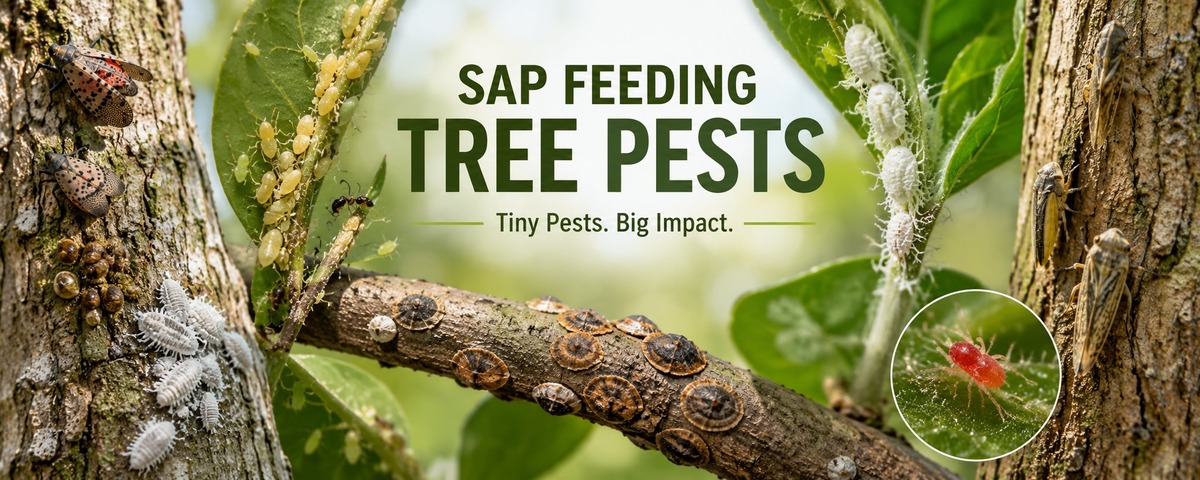
Some tree pest problems are easier to spot than others, and among the more challenging are the sap-feeding pests, mostly because they’re typically very small (aphids and mites). Still, as they work to extract nutrients and water from your trees, they can, over the long term, create problems for a healthy canopy.
Learning to identify them and what to do if you see them is an important part of keeping your trees healthy.
Quick Links:
Sap-feeding tree pests, including mites and aphids, feed on trees by piercing the leaves or needles, stems, or twigs and pulling out the sap. While leaf-feeding tree pests chew on the leaves and wood-boring pests tunnel through the bark, sap-feeders have a proboscis designed for piercing.
While these insects may be small, they are mighty and move in numbers that can weaken trees by removing nutrients and water, impairing new growth, and creating stress that not only reduces vigor but also makes trees more susceptible to tree diseases and other pests.
Sap-feeding tree pests are not new to the West, but many cities, urban forests, and managed landscapes are experiencing more pest pressure as environmental stressors increase. In western states like Colorado and Utah, in particular, warmer temperatures and drought are placing stress on expanding urban canopies. That we’re planting and expanding urban forests is great, but when combined with the environmental stressors, the conditions are favorable for sap-feeding pests.
The temperature changes, including warmer growing seasons and shorter winters, mean some pets are able to survive winters more successfully, remain active longer, and increase their populations more quickly.
Why is this particularly important in the West?
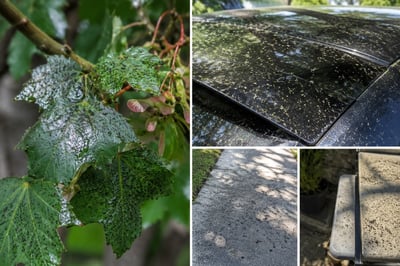 Honeydew creates secondary concerns- Sap-feeding tree pests sometimes create a substance called honeydew, a sticky substance that can leave black mold on everything from leaves and branches to cars, sidewalks, and other structures. In managed landscapes with significant sap-feeding tree pest problems, this can create a larger community problem.
While wood-boring tree pests may kill a healthy tree, sap-feeding pests aren’t likely to do this on their own. Unfortunately, they’re still dangerous, as repeated infections can create significant problems for new growth and tree health, ultimately making trees more vulnerable to other issues.
One of the things that makes sap-feeding tree pests so challenging is their size, so they sometimes go unnoticed until their numbers are significant and damage is clear. That damage can include distorted growth (due to nutrient deficiencies), discoloration, honeydew buildup, and general signs of stress.
That said, let’s take a look at the more common sap-feeding tree pests in the west, who they are, and what they do.
Small and soft-bodied, they can be a variety of colors (brown, black, yellow, or red) and often cluster on new growth or the underside of leaves. They do create honeydew, but they might also cause leaf curling or distorted growth.
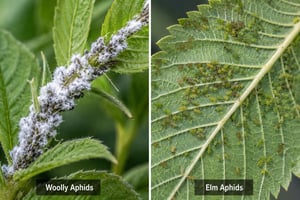 Woolly Aphids & Elm Aphids- Woolly aphids often look like a tiny walking piece of cotton. This sometimes makes it easier to spot them as clusters are clear. Elm aphids feed predominantly on elm trees and can cause leaf curling or galls. Both of these create honeydew.
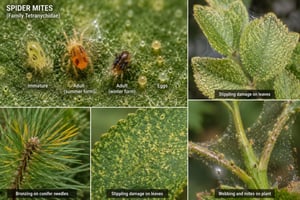 Spider Mites- Mites are tiny arachnids and are very difficult to spot due to their size. However, the damage they cause includes stippling, leaf discoloration, and leaf drop. You might also notice webbing if the infestation is severe enough.
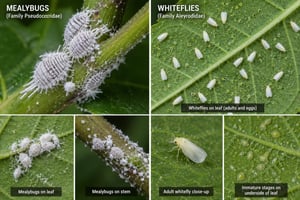 Mealybugs & Whiteflies- Mealy bugs, like woolly aphids, may appear like cotton (you’re going to sense a theme here that suggests if you see cotton on a tree that shouldn’t have it, check for pests!). Whiteflies, on the other hand, are tiny white moths that, when disturbed, will flutter. Both of these pests produce honeydew.
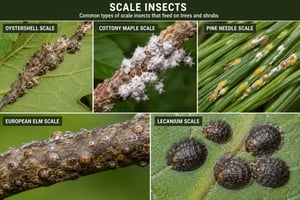 These are tricky as they are almost camouflaged, as they often look like bumps or growth on the tree itself, whether that’s on the bark, twigs, stems, or leaves themselves.
Oystershell Scale- Easy to identify, as its name suggests, there’s an oyster shell-shaped covering. Typically, they attack ash, maple, willow, lilac, and other deciduous trees. When infestations are severe, they can cause significant decline and branch dieback.
Cottony Maple Scale- Again, white cotton appearance, but this time on the eggs, which are often found in clusters on twigs and branches. They typically affect maples and other hardwood trees.
Pine Needle Scale- Found on, you guessed it, pine needles, it appears as small white scales. Severe infestations often result in thinning foliage, yellowing, and reduced tree health.
European Elm Scale- Commonly found on elm trees, European elm scale creates a lot of honeydew. So if you’ve got elms, and you’re noticing black sooty mold on trees, vehicles, and structures, this may be the culprit.
Lecanium Scale- These are brown scales, rounded, and normally found on twigs and smaller branches of a wide variety of deciduous trees.
 Leafhoppers & Treehoppers
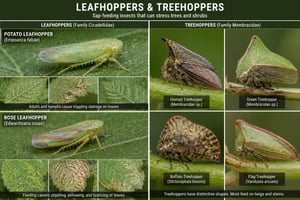
While the name might conjure up images of grasshoppers, these sap-feeding tree pests are quite a bit smaller and wedge-shaped. When this group attacks, they cause stippling and other discoloration, increased tree stress, and reduced growth.
Potato Leafhopper- While the primary host is potato plants, they’ll also go after most landscape trees and shrubs. They cause leaf curling and browning as well as a condition known as ‘hopper burn,’ where the leaves look yellow, brown, or have small “burn’ spots at the margins and tips.
Rose Leafhopper- Here, roses are the primary host, but they will also feed on other ornamentals. They cause stippling and leaf destruction, ultimately impairing the tree's ability to produce healthy leaves and resulting in weak, vulnerable ornamental trees.
 Spittlebugs
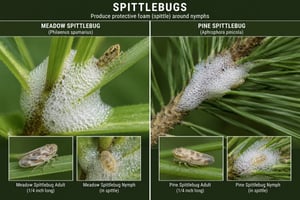
They’re named for, you guessed it, spittle. During their immature stages, they produce frothy masses that help protect the young from environmental and predatory threats, allowing them to safely mature.
Meadow Spittlebug- These are fairly common across the US, not just in the Intermountain West, where they feed on a wide variety of plants. While they don’t do major damage, it is noticeable when you’ve got an infestation.
Pine Spittlebug- As the name implies, they predominantly feed on pine shoots and needles. Heavy infestations can impair growth and significantly alter the appearance of young pine trees.
.jpeg?width=300&height=200&name=psyllids%20(1).jpeg) Psyllids
PsyllidsThese tiny insects are sometimes called “jumping plant lice” because they can jump. Despite their size, they can cause leaf curling, galls, and distorted growth.
Hackberry Psyllid- These typically attack hackberry trees, causing galls or growths that look like blisters on the leaves. The primary impact here is largely aesthetic, but when the infestations are severe, they are quite noticeable.
Pear Psylla- If you have pear trees, you’ll want to be aware of these sap-feeding pests. When there is an infestation, they can distort leaves and shoots, reduce fruit quality, and produce large amounts of honeydew.
 Adelgids & Wooly Adelgids
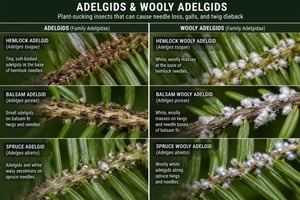
 These insects are closely related to aphids, with the woolly variety resembling woolly aphids. They primarily attack conifers, leading to needle loss, gall formation, branch dieback, and long-term health concerns.
Out West, the Cooley Spruce Gall Adelgid is fairly well-known, especially for the cone-like galls they form on spruce and Douglas fir trees.
 Common Signs of Sap-Feeding Tree Pests
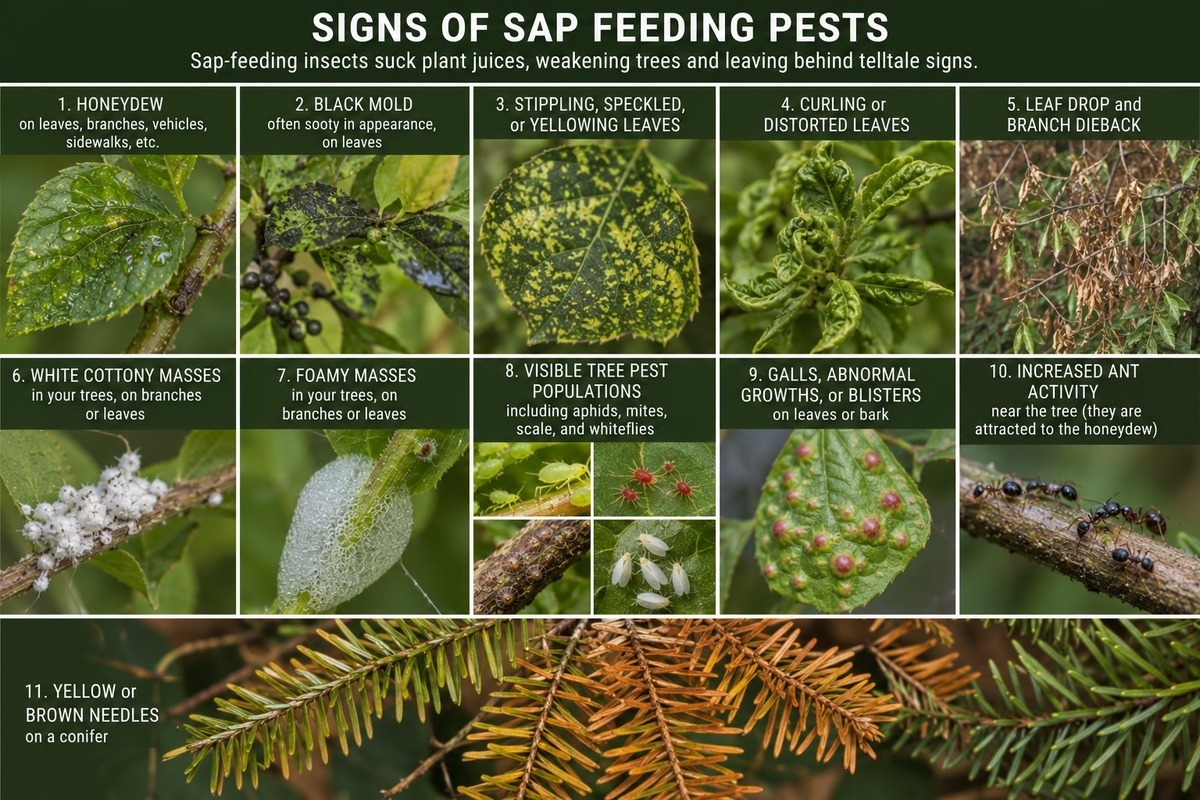
When it comes to identifying tree pests, sap feeders leave very distinctive signs, helping you distinguish them from wood-boring pests or leaf feeders. As described above, each tree pest has its own signs, but there are quite a few common indicators that might help you narrow down your infestation to sap-feeders before trees are fully stressed.
For sap-feeding pests, one of the more recognizable signs is honeydew. As you do your tree health and maintenance checks, keep an eye out for black mold, sticky leaves, and ants, as they will let you know that sap-feeding pests are active and allow you to manage the problem before it becomes severe.
While sap-feeding pests can be found on just about any tree, certain trees and growing conditions are more likely to invite an opportunity for an attack. For example, stressed trees are more vulnerable to pests and their damage.
Sap-feeding pests don’t usually kill healthy trees, but as with any tree disease or pest, repeated infestations take a toll. This is especially true of susceptible species or highly stressed trees.
We know how to spot them, a bit how to identify them, but how do you stop them? This is often the most important question. The good news is that, unlike wood-boring beetles, it is possible to manage sap-feeding pests, especially if you catch them early.
For homeowners, landscape managers, property managers, or city foresters, the most important goal and prevention strategy is to maintain tree health. Consider yearly monitoring as part of your tree inventory and keeping a history of tree health so you know where to focus your efforts. Proactive monitoring will allow you to address any problems before they become severe.
Healthy trees are the best way to keep your trees safe from disease and from pests, including sap feeders.
You’ve read our blog, you’ve looked at your trees, and you suspect you might have a problem. Now what?
In Douglas Adams’ immortal advice, “Don’t Panic.” Sap-feeding pests rarely kill healthy trees. They can, however, over time, create significant stress, especially if trees are already struggling with urban or environmental stressors. Still, there are things you can do and, if you need help with any of these steps, call a certified arborist.
1. Identify the pest. How you manage the problem will depend on the pest. If you’re not sure, call an arborist!
2. Determine the severity of your infestation. A small number of insects may not require any intervention. However, if there’s a lot of honeydew, branch dieback, leaf drop, or general canopy decline, you want to take action, especially if this is a repeat infestation.
3. Work on improving tree health. Healthy trees are more resilient and better at fighting off and recovering from problems. Water, mulch, and reduce urban and environmental stress.
4. Keep an eye on your at-risk trees. Again, severity will determine the course of action: if there’s an increase in honeydew, dieback, canopy decline, or other symptoms, the infestation is worsening, and it’s time to intervene.
5. Contact an arborist if treatment is necessary. If you think the problem is worsening, contact an arborist. Timing is critical for management. When in doubt, reach out!
6. Inspect nearby trees, especially if they’re the same species. Sap-feeding pests, left to their own devices, can spread quickly, especially in monocultures or low-diversity landscapes.
The truth is this: while pests are a problem, they’re usually an indicator of a bigger problem, like drought stress, aging trees, low-diversity, low-quality stock, or trees poorly suited to your location.
At SuperTrees, we start with high-quality stock, and air pruning helps ensure you’re planting trees with strong roots that support resilient growth.
In addition to great trees, we’ve got great people. Our certified arborists can work with you to build a healthier urban forest. We work with everyone from homeowners (at our retail nursery) to landscapers, property and HOA managers, and municipalities (big and small).
We can help with everything from supplemental watering and pest management to tree inventories, canopy diversification, and long-term tree management. In short, we can help you start with the right trees in the right spot and, from there, help manage and monitor their health.
Whether you’re looking to replace older trees at the end of their lifecycles, diversify your canopy, source custom-propagated trees, or diagnose problems, we’re here to help. Reach out to our team today!