tree health
Tree Care
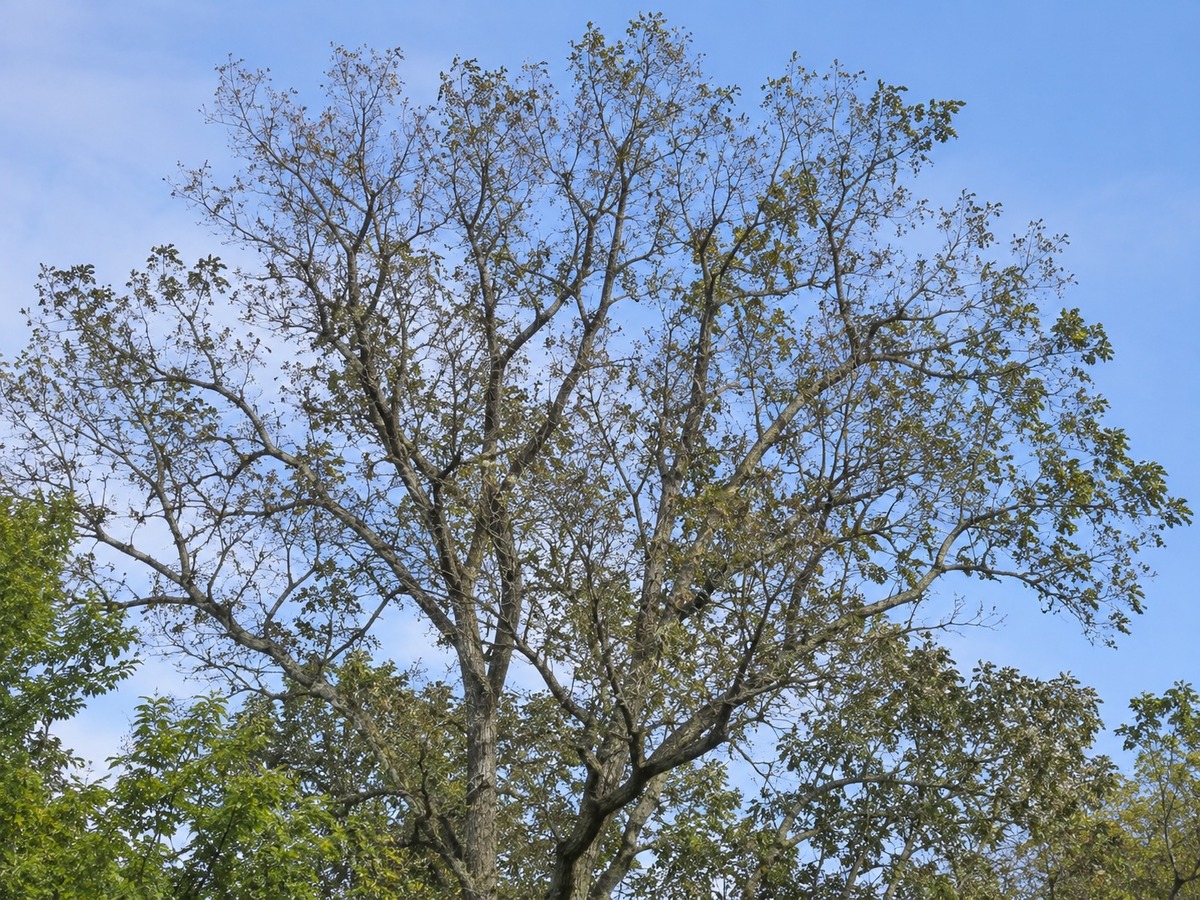

When we look at trees, their canopies, leaves and needles, we see beauty, shade, and, in some cases, protection. For leaf-feeding tree pests, it’s food. And while small infestations may seem innocuous, over time, they can go well beyond cosmetic damage, impacting a tree’s overall health.
Across the Intermountain West and Pacific Northwest, pests like western spruce budworm, sawflies, and leafminers are becoming an increasingly common problem for urban landscapes. We’re even starting to see Japanese beetles in some of these locations.
Understanding how to identify them as well as what damage they can do is an essential part of keeping your trees healthy and thriving.
Quick Links:
Leaf-feeding pests are exactly what they sound like: tree pests that feed on leaves or needles. They’re among the most visible pests out there as they attack the tree in a way that’s usually highly noticeable.
They may chew entire leaves, eat the tissue between the veins, or roll, mine, or weave leaves together to protect themselves while they feed, as tent caterpillars do. Leaf-feeding tree pests include: caterpillars and moth larvae, beetles, sawflies, leafminers, grasshoppers, and other defoliators.
What’s not always as visible as the pests or damage is the impact they have on tree health. Because they feed on and destroy the parts of the tree responsible for photosynthesis and energy production, they severely inhibit the tree’s ability to grow and grow healthy.
Most tree pests, including leaf-feeders, are opportunists. That said, while wood-boring pests are likely to look for already weak trees, leaf-feeding pests will feed on healthy trees. This is particularly important out West, where leaf-feeders are becoming more noticeable.
Various environmental stressors, such as drought, heat, urban growing conditions, and extreme weather/temperature fluctuations, reduce a tree’s ability to recover from repeated or frequent defoliation by leaf-feeders.
When we couple stressed trees with favorable conditions that allow pest populations not only to expand but also to remain active for longer periods, we have a potential recipe for disaster. And, the double whammy is that it becomes a compounding problem. Stressed trees struggle to recover, and defoliation by pests creates additional stress and greater susceptibility to tree pests. It has the potential to create a truly vicious cycle.
Certainly, these tree pests existed before changes in climate created a more welcoming environment, so one advantage we have in mitigating their damage is understanding who they are. Further, because not all leaf-feeding pests damage trees in the same way, knowing a little bit about the most common pests and what they do goes a long way.
 Western Spruce Budworm
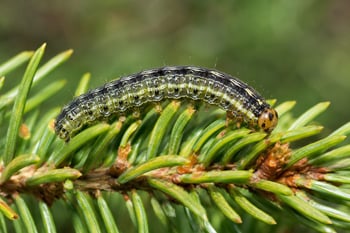
If you have conifers, including Douglas fir, true firs, and spruce rees, then you may have seen the Western spruce budworm. The larvae, which feed on developing buds and new needles, are among the most significant defoliators in conifer-heavy landscapes out West.
How to spot them:
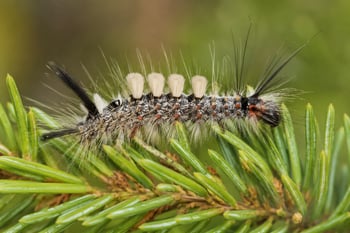 Douglas Fir Tussock Moth
Not the moth itself but the larvae will feast on Douglas and true firs. In outbreak years, the defoliation can be severe and result in overall weakening that leaves the tree vulnerable.
How to spot them:
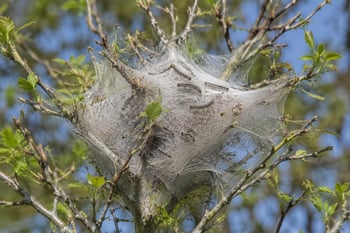 Tent Caterpillars
Among the easiest to recognize based on the dense silk tents they build, tent caterpillars frequently attack deciduous shade trees and fruit trees.
How to spot them:
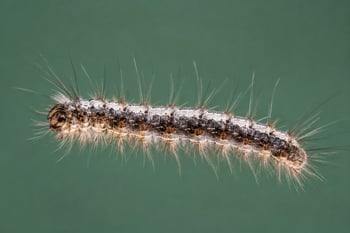 Fall Webworm
These pests also build tents, much like tent caterpillars. The primary difference? The webworm’s tents are less dense and more loosely woven.
How to spot them:
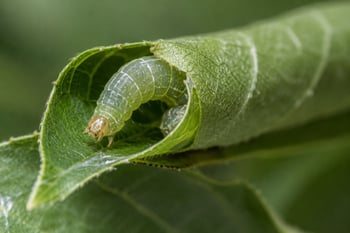 Leafrollers
These pests also attack deciduous trees by rolling or tying leaves together with “webs.” Unlike tent caterpillars or webworms, their “webs” are found between the leaves rather than creating a tent.
How to spot them:
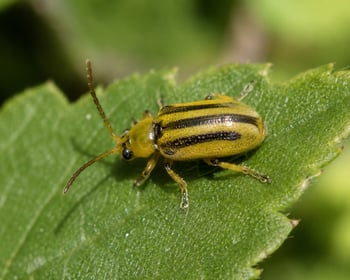 Elm Leaf Beetle
As the name suggests, they feed largely on elm trees where they destroy the leaves between veins, leaving leaf skeletons. Again, the danger here is repeated infestations which can significantly damage trees and make them more susceptible to drought stress.
How to spot them:
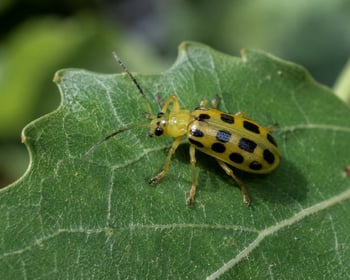 Cottonwood Leaf Beetle
Feeding mostly on cottonwoods and poplars, especially younger trees, both the adults and larvae will devour the leaves, often causing significant defoliation.
How to spot them:
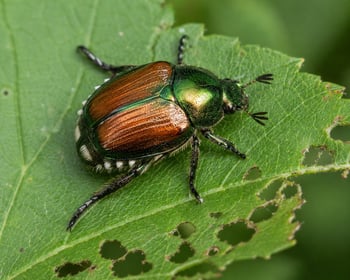 Japanese Beetles
Japanese beetles love ornamental trees, often skeletonizing leaves and damaging the canopy. They are a more recent concern out West.
How to spot them:
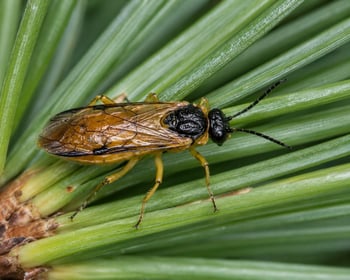 Pine Sawflies
These may, at first, look like caterpillars but that’s the larvae. They feed, in groups, on pine needles and their heavy feeding thins canopies and stresses young and other vulnerable pine trees
How to spot them:
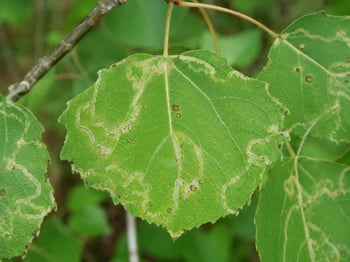 Aspen Leaf and Birch Leafminers
Both create distinctive feeding patterns on leaves that often resemble “mines” or look like racetracks along the upper and lower surfaces of the leaves. While the impact is mostly aesthetic, as with any pest, repeated infections can damage tree health over the long-term.
How to spot them:
Some of these defoliators are not prone to leaf destroying, they’re considered “generalists” and opportunists. In years where there is an outbreak of pests or disease or even environmental stressors like drought.
How to spot them:
As the name implies, leaf-feeding pests attack the leaves of trees, but don’t make the mistake of thinking this is purely aesthetic. The leaves and needles keep a tree alive by producing energy, so regardless of whether there is complete leaf destruction, skeletonized leaves, mined leaf surfaces, or missing buds and needles, the impact is the same; there is less foliage available to produce energy for the tree.
Let’s look at some damage specifics:
While some leaf-feeding pests may feed on any healthy tree (food is food), some trees are more vulnerable to pests and, in some cases, to the damage they cause.
Canopy diversity, as well as proper tree care, can help make your trees more resilient against tree pests, and leaf-feeding pests, over time.
In addition to ensuring canopy diversity, protecting your urban forest or managed landscape from leaf-feeding pests starts with ensuring trees are thriving in low stress environments and they’re being monitored.
Additional strategies include:
The key strategy is always to identify early and act quickly.
 What to Do If You Have Leaf-Feeding Tree Pests
If you’re monitoring your trees, you may discover leaf-feeding pests. If and when you do, the first step is to correctly identify the pest. Not all leaf-feeders require an aggressive response and many healthy, mature trees can tolerate some minor feeding without long-lasting impact.
That said, if you notice leaf-feeding pests, take the following steps:
1. Identify the pest and the affected trees. Contact an arborist if you need help doing this.
2. Monitor the damage. If it’s widespread or severe, contact an arborist.
3. Water and mulch the tree to provide support and ensure it is otherwise healthy.
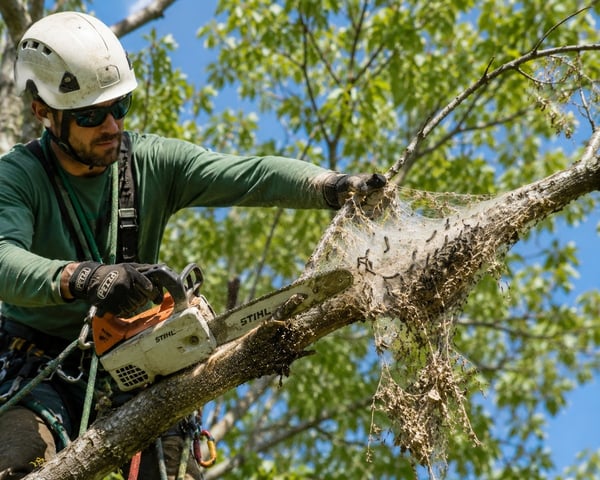
4. Remove local infestations when possible. For example, if there are tents on one branch, you can remove that branch.
5. Contact an arborist or tree service if the defoliation is severe or if the pests continue to return year after year as this can create long-term problems for tree health.
As always, be mindful of stressors like overpruning, or drought as these can impact overall tree health and make the problem worse.
If you suspect you have tree pests and need help with identification, mitigation, or even overall support, please reach out to our tree services team.
As always, tree health starts with strong stock. Young and newly planted trees can be especially vulnerable to regional pests and that’s just one reason we work hard to provide native and regionally adapted cultivars with healthy root balls. This reduces stress at transplant and ensures environmental resiliency.
Whether you're looking for retail or wholesale nursery stock or tree support, we’re here to help. Reach out to our team today and let’s build healthy forests and landscapes together.