tree health
Tree Care
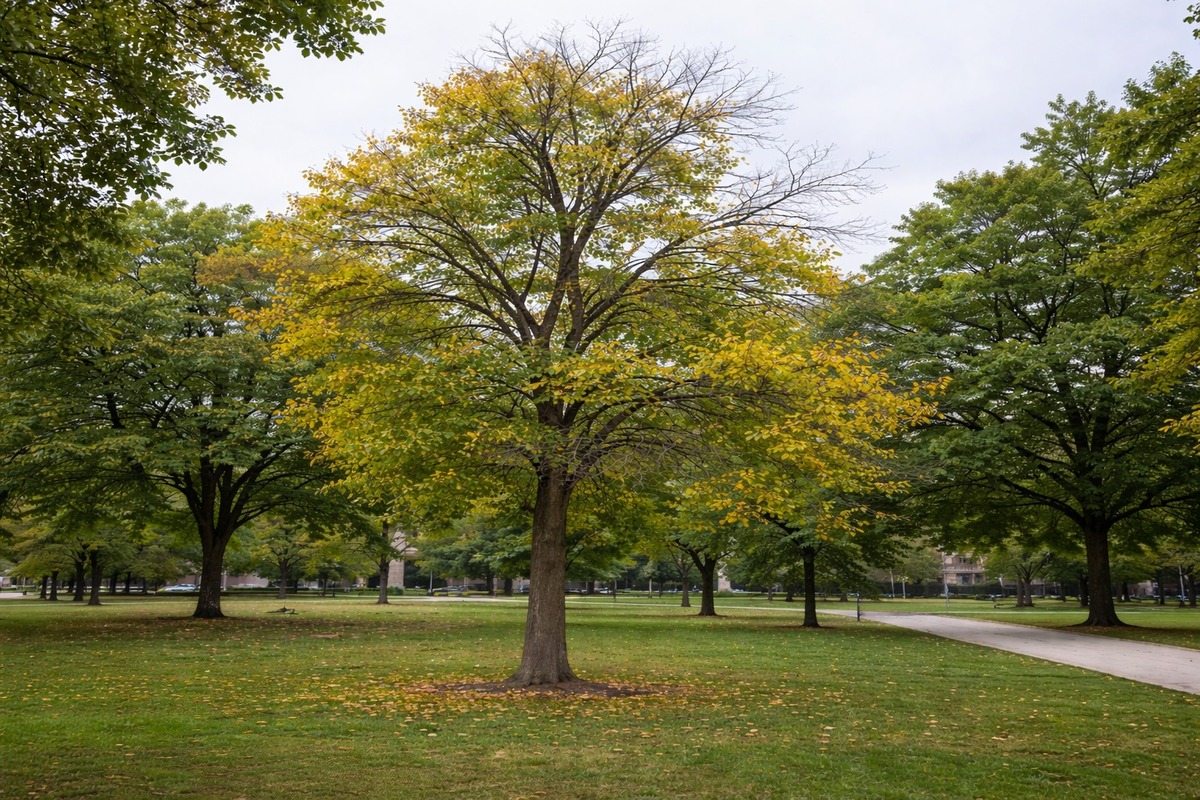

Yellowing leaves. Thinning canopies. Dead branches where there shouldn’t be any. Sometimes tree problems announce themselves clearly; other times, it’s just a sense that something looks off. Recognizing those early warning signs and understanding what they may be telling you is the first step toward protecting tree health and preventing larger issues down the line.
The challenge is not all diseases manifest the same way, nor do they show up in the same season. While one issue might be visible in spring, come summer, a new host of issues may arise. Regardless of the season, the ability to identify tree diseases early and plan thoughtful, effective care can help stop spread and mitigate damage.
Quick Links:
When we talk about tree diseases, we’re really talking about a broad category of issues that interfere with a tree’s expected growth, function, and long-term health. Some problems are caused by pathogens such as fungi or bacteria, others by insects and pests, and some, such as iron chlorosis, are driven by soil conditions rather than infection.
What makes tree disease management especially tricky is that many of these issues overlap, and some pests actively carry or create entry points for disease.
Understanding the basic categories of tree disease helps make seasonal inspections far more effective, since many symptoms are easier to see once leaves are gone, and insect activity has slowed.
 Fungal Tree Diseases
Fungal tree diseases are among the most common issues affecting both ornamental and shade trees. These diseases often thrive in moisture, poor air circulation, or stressed trees, and many overwinter on bark, buds, or fallen debris.
Common fungal concerns include:
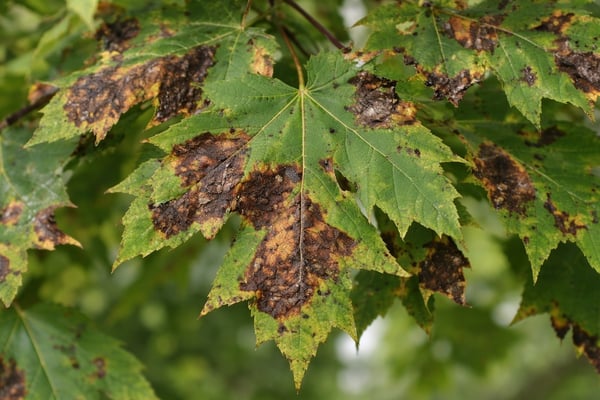
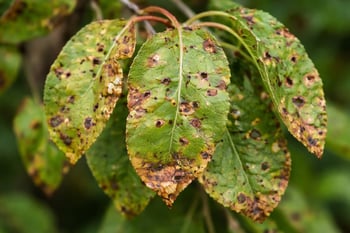 Shot hole fungus (CO, UT, PNW) (pictured)
Bacterial tree diseases tend to spread through wounds, pruning cuts, weather events, and sometimes insects. Unlike fungal infections, bacterial infections can spread rapidly through vascular tissue, making early identification especially important.
Examples include:
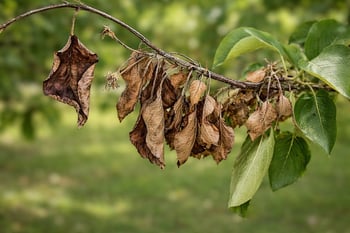 Fire blight (CO, UT, PNW)- (pictured)
While tree pests aren’t diseases, their impact on tree health can be just as severe. And, in many cases, they can introduce or spread disease.
In some cases, pests carry disease-causing organisms, which can quickly turn a pest problem into a disease problem.
It’s hopefully clear at this point that tree diseases are rarely isolated events. They’re often the result of multiple stressors working together, from soil conditions and pathogens to pests and environmental pressure.
When it comes to prevention and treatment, regular monitoring and inspections are critical. Catching a problem early provides the time you need to address problems before pruning, environmental conditions, or even insect activity accelerates their spread.
Tree diseases don’t all reveal themselves at the same time or even in the same ways. Some issues are easiest to spot when leaves first emerge, others during peak growth, and some only become obvious once trees are dormant. Understanding which season reveals which problems helps diagnose issues more accurately and respond at the right time.
Spring is one of the most important seasons for identifying leaf-related and early-season diseases, when new growth is most vulnerable.
Shot Hole Disease (late spring)
Look for small holes or lesions in newly emerged leaves, especially on stone fruits and flowering ornamentals.
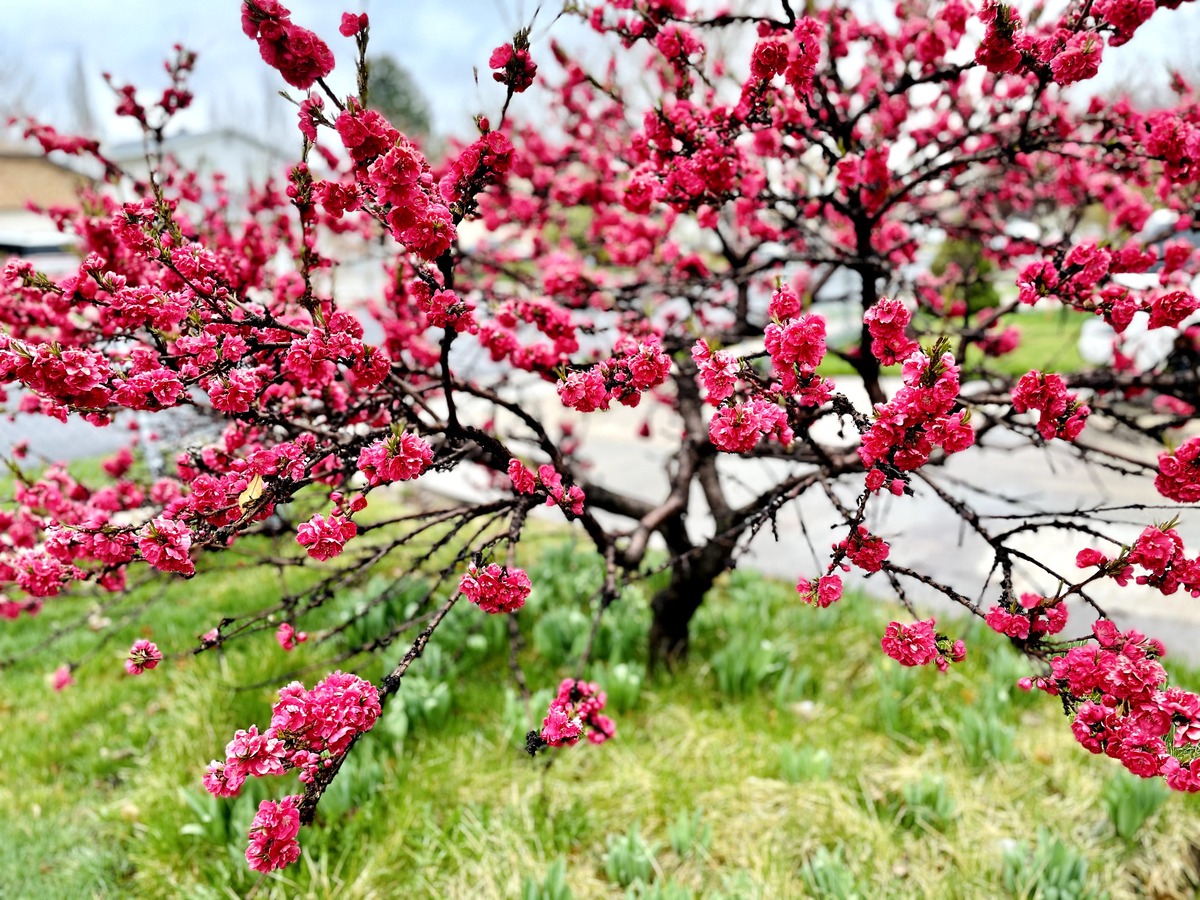
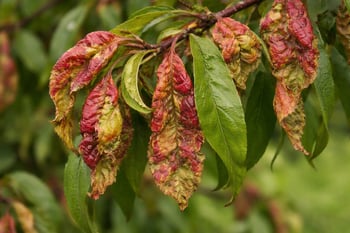 Peach Leaf Curl
Distorted, thickened, or puckered leaves shortly after bud break are the hallmark sign. Once visible, the infection has already occurred. (Pictured)
Rust Diseases
Early leaf spotting or discoloration may appear as leaves expand, particularly on hosts like serviceberry.
Anthracnose (mid spring)
Leaves may emerge deformed, brown, or die shortly after leaf-out. They may also fail to fully leaf out at all. Cool, wet springs often worsen symptoms.
Iron Chlorosis
Interveinal yellowing becomes noticeable on new growth as leaves expand, especially on susceptible species in high-pH soils.
Some spring symptoms are dramatic, and others fleeting, which makes close observation during leaf-out especially important.
Summer reveals diseases that thrive during warm temperatures and active growth, as well as damage from earlier infections.
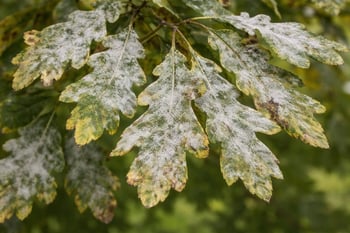 Powdery Mildew
White or gray powdery growth on leaves and stems, often appearing during warm days with cool nights. (Pictured)
Fire Blight
Wilted shoots, blackened leaves, and “shepherd’s crook” branch tips are most visible during active growth.
Cankers (late spring into summer)
Sunken, cracked, or oozing areas on branches and trunks may become more obvious as surrounding tissue declines.
Pseudomonas Infections
While infection often occurs during winter, symptoms may persist into summer, including dieback associated with earlier black lesions or damaged tissue.
Summer inspections help confirm which issues are actively progressing versus those that began earlier in the season.
While many diseases reveal themselves through leaves, winter strips trees down to their framework, which means it the best time to spot structural damage, pest evidence, and chronic issues.
Galls
Swellings on branches—especially on oaks, cottonwoods, and ornamental cherries—are often most visible once leaves drop.
Exit Holes & Pest-Associated Decline
Look for holes, bark splitting, woodpecker damage, and thinning branch structure that signal insect activity such as borers.
Overwintering Damage
Dead wood, cankers, cracked bark, and past infection sites are easier to identify without foliage.
Winter may not show leaf symptoms, but it often reveals the story of long-term stress, decline, and ongoing or repeated disease pressure.
The truth is no single season tells the whole story. Effective tree disease management relies on seasonal observation, pattern recognition, and understanding when specific diseases are most visible. Knowing what to look for and when, can help identify problems earlier, so the response is timely and appropriate.
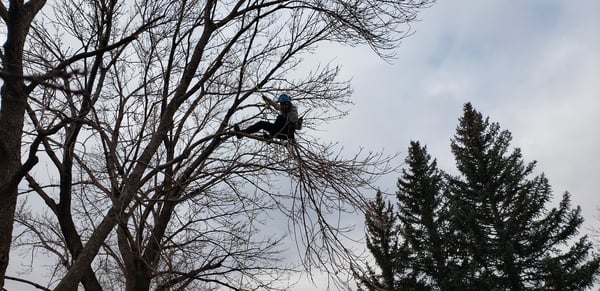 Tree Health Best Practices
 While some seasons are best for spotting issues, the best time for tree health is year-round. It's one of the primary reasons we strongly recommend tree inventories and educating teams and communities, enlisting volunteers, prioritizing inspections, and simplifying reporting of issues.
Consistent care helps trees enter spring healthier, more resilient, and better able to withstand disease, pests, and environmental stress.
Protecting trees from disease is rarely about a single treatment; instead, it’s about consistent care, observation, and proactive decision-making. Following best practices year-round can help reduce risk and catch issues before they turn into costly or irreversible problems that may require tree removal and replacement.
Regular tree inspections and monitoring are essential. Many municipalities, HOAs, and large properties benefit from maintaining a living tree inventory, a working document that tracks species, condition, maintenance history, and emerging concerns. This allows patterns to be spotted over time and helps prioritize care where it’s needed most.
Being proactive matters. Addressing concerns early, whether that’s pruning, soil correction, or pest management, can prevent disease from spreading and protect the broader canopy. When something looks off, calling in certified arborists and experienced professionals sooner rather than later often saves both trees and budgets.
It’s also important to remember that canopy diversity is a powerful tool for disease prevention. A varied mix of species reduces the likelihood that a single disease or pest will impact an entire landscape, helping urban forests remain resilient and adaptable.
Healthy landscapes start with healthy trees. Working with an established, reputable nursery like SuperTrees ensures trees are grown, monitored, and selected with long-term success in mind.
We start with high-quality trees, but also provide access to certified arborists and professional tree services to support you at every stage, from planting to ongoing care. We work from seed to service, and we’re here to help. Reach out today to connect with our team!