tree health
Tree Care
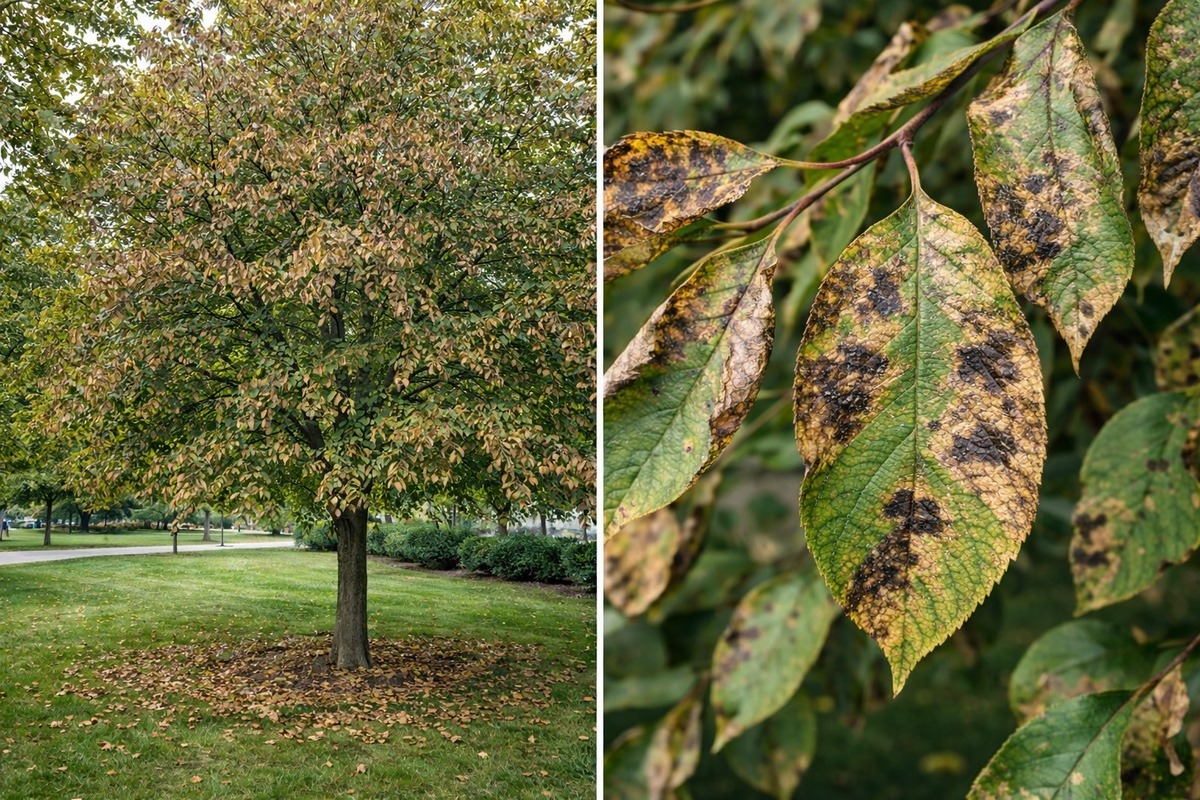

Thinning canopy. Spotty or brown leaves. Leaf drop. You know there’s a problem, but not what it is.
Tree problems rarely show up in isolation. One season it’s leaf discoloration, the next it’s canopy thinning or unexpected dieback. That’s why we’re continuing our series on tree diseases. We’re breaking down common issues, one at a time, so it’s easier to know what you’re seeing and when to act.
In this post, we’re taking a closer look at anthracnose, a disease that often appears early in the growing season and can quietly affect tree health, and spread quickly, if left unchecked.
Quick Links:
Anthracnose, a common tree disease caused by a group of fungi, affects a wide range of deciduous trees, particularly in cool, wet conditions. It primarily targets leaves, shoots, and young twigs, interfering with normal growth and overall tree health.
Unlike bacterial tree diseases, anthracnose is fungal and often emerges during sustained wet spring weather, whether that’s frequent rain or high humidity. While rarely fatal on its own, repeated infections will weaken trees over time, making them more vulnerable to stress, secondary pests, and other tree diseases.
Anthracnose is especially common in urban landscapes, nurseries, and managed tree settings, where environmental conditions and close plant spacing can encourage it to spread. Understanding what anthracnose is and how it behaves is the foundation for effective identification, treatment, and long-term tree disease prevention.
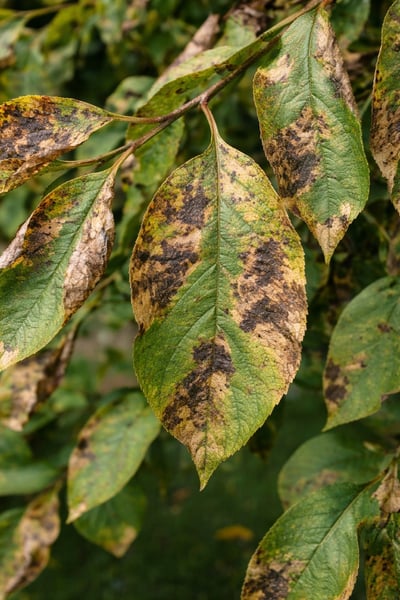 Anthracnose Symptoms: How to Recognize It
Anthracnose often shows up early in the growing season, but its symptoms can vary depending on the tree species and weather conditions. As with many tree diseases, new growth is affected first. Antracnose is, therefore, most noticeable in spring and early summer, especially after prolonged periods of cool, wet weather.
In many trees, anthracnose damage starts low in the canopy or on interior branches where moisture lingers longer. As the season progresses and the weather dries, new leaves may appear healthier, making the disease easy to overlook without close inspection.
As noted, it’s rarely fatal, but repeated infections can reduce photosynthesis, weaken tree structure, and compromise long-term tree health, especially when combined with other stressors. It also makes the tree far more susceptible to other issues and, when planted in close proximity to other trees, becomes a danger to those trees as well.
Early recognition allows for better timing of care, improved airflow, and more effective tree disease prevention strategies later in the season.
Anthracnose is caused by fungal pathogens that thrive in cool, wet conditions. These fungi overwinter on fallen leaves, infected twigs, and other plant debris, becoming active again in early spring, when moisture and favorable temperatures return.
Rain, irrigation splash, and persistent humidity help spread anthracnose spores from infected material to healthy tissue. Trees with dense canopies, poor airflow, or prolonged leaf wetness are especially susceptible, as moisture allows the fungus to establish and spread more easily.
Environmental stress also plays a role. Trees already weakened by drought, soil compaction, poor drainage, or improper planting are more likely to show severe symptoms when exposed to anthracnose.
As most of us know, weather patterns and rainfall can vary widely from year to year, so anthracnose development also varies. Wet springs tend to produce more noticeable infections, while dry seasons may limit disease activity. In regions with regular, consistent rainy seasons, like the Pacific Northwest, trees should be inspected every year.
While understanding what causes anthracnose is key to preventing tree disease, smarter pruning, sanitation, and long-term tree health practices should all be employed as mitigation strategies.
Should you identify anthracnose in your trees, whether urban forests or managed landscapes, treating the problem is primarily about management and mitigation, not eradication. Treatment strategies focus on reducing disease pressure and the factors that allow it to flourish. Ultimately, supporting tree health throughout the urban forest can help prevent repeat infections.
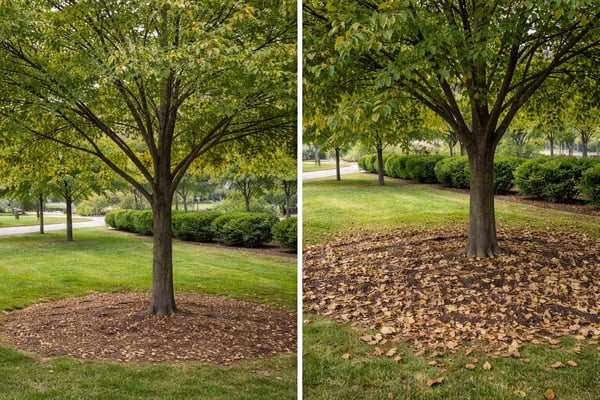 Prioritize Sanitation
Healthy trees are far more resilient to anthracnose.
In high-value trees or recurring problem areas, preventative fungicide applications could be considered.
For urban forests and managed landscapes, anthracnose management should also include:
As we mentioned, anthracnose rarely kills trees outright; the real danger is in repeated infections, which weaken canopy structure and increase vulnerability to other stressors. A consistent, proactive approach helps preserve tree health and canopy longevity.
While anthracnose can’t be eliminated, its impact can be significantly reduced with proactive, well-timed practices. Mitigation focuses on limiting the conditions favorable for fungal growth and fand strengthening overall tree health.
In managed landscapes and urban forests, consistent mitigation efforts help prevent repeated infections, protect canopy structure, and reduce long-term stress on trees.
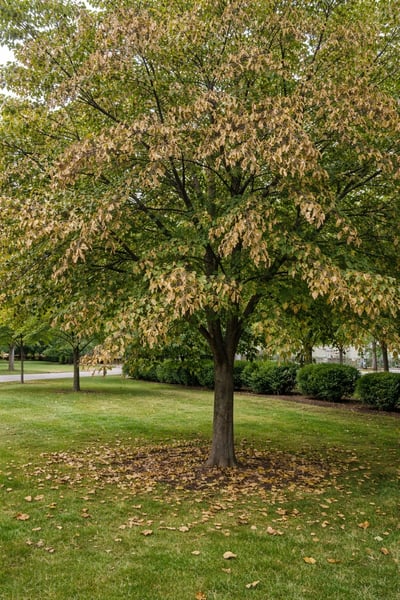 Why Anthracnose Matters in Urban and Community Forests
In urban and community forests as well as managed landscapes, trees are often planted closer together, share similar site conditions, and experience many of the same stressors. This proximity allows anthracnose to spread more easily, particularly during cool, wet springs when fungal activity is highest. Spores can move quickly through shared canopies, leaf litter, and wind-driven moisture, turning what begins as a minor issue into a widespread concern.
Because anthracnose often affects new growth first, repeated infections can gradually reduce canopy density, limit photosynthesis, and weaken trees over time. In parks, streetscapes, campuses, and residential developments, this can translate into declining shade coverage, increased maintenance needs, and reduced overall tree performance.
Left unmanaged, anthracnose doesn’t just affect individual trees; it can influence the health, appearance, and resilience of entire urban forests. Early recognition, thoughtful mitigation, and long-term planning are essential to keeping disease pressure low in shared landscapes where trees depend on one another for canopy continuity and environmental benefits.
If you’re concerned about the health of your trees, whether you think it’s anthracnose or another tree disease, the SuperTrees team in Oregon, Colorado, and Utah has certified arborists who can help! Reach out to our team today, whether you’re planting new trees or caring for existing ones, we’re ready!