Tree Selection
urban forestry
Colorado Trees
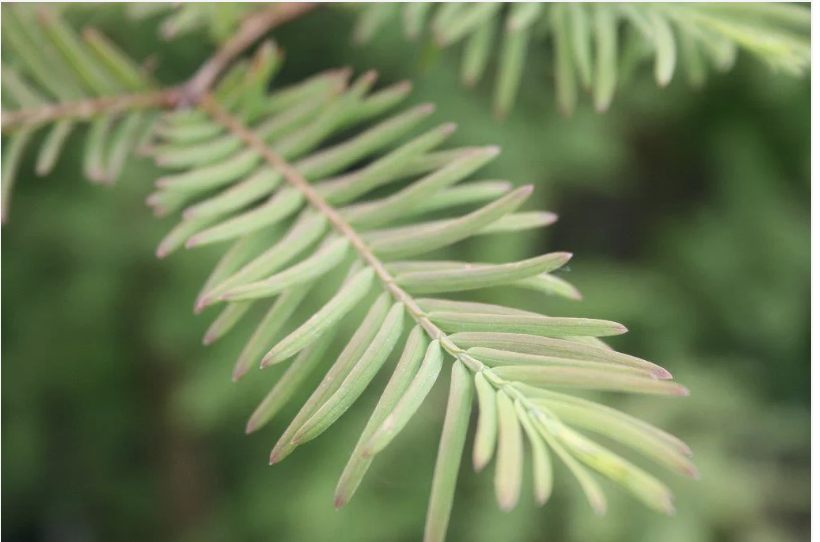

Have you seen a tree that looks like an evergreen until fall? Then, the needles turn yellow and drop. Like many, you’ve probably been really confused or concerned about the tree's health. That same tree may stand bare all winter, only to be labeled “dead” and quietly removed come spring.
What you’re likely dealing with are some of the most misunderstood trees in our landscapes, deciduous conifers. They break the “evergreen rule,” shed their needles on purpose, and then patiently wait for warmer days, often while people debate whether they survived. (They did.)
Let’s clear up the confusion before any perfectly healthy trees get the axe (or saw).
Quick Links:
Deciduous conifers are trees that have cones and needles. Unlike typical evergreens, they drop their needles every fall. This is completely normal behavior, not a sign that the tree is sick, stressed, or dead.
In simple terms:
So while most conifers are evergreens, not all conifers stay green.
Trees like larch, bald cypress, dawn redwood (Metasequoia), and even ginkgo (which is often grouped with conifers due to its lineage) are known for stunning fall foliage. They turn brilliant shades of gold, copper, or amber in fall. Then, they shed their needles or leaves and stand bare through winter.
To an untrained eye, they can look lifeless once winter hits, which unfortunately leads some homeowners and newer land managers to assume the tree has died.
It hasn’t.
It’s just doing exactly what it’s supposed to do.
Understanding what deciduous conifers are and how they behave through the seasons is the first step in appreciating them as valuable, resilient winter trees, rather than mistakenly cutting them down during dormancy.
If you’re concerned, we’ve covered this in a separate blog post: when you should consider tree removal. When in doubt, contact a certified arborist!
When most people hear the word conifer, they automatically think evergreen. Evergreens include pine trees, spruces, firs, and cedars, trees that stay green year-round. It’s a fair assumption, because the vast majority of conifers are evergreen.
The problem is that evergreen and conifer are often used interchangeably, even though they’re not the same thing.
Evergreen describes how a tree behaves through the seasons. In other words, it keeps its foliage year-round.
Conifer, on the other hand, describes how a tree reproduces; it produces cones.
Most of the time, those two traits overlap, so the distinction rarely matters. But when a tree drops its needles in fall, that overlap breaks down, and that’s where confusion sets in, and mistakes get made.
Understanding the difference between how a tree reproduces and how it holds its foliage helps prevent perfectly healthy trees from being cut down simply because they don’t fit the evergreen stereotype.
Deciduous conifers are some of the most distinctive and resilient trees you’ll encounter in landscapes, parks, and natural areas. Many, such as the Dawn Redwood, are considered living fossils, with lineages dating back millions of years. They’ve adapted to survive cold winters, wet soils, and seasonal extremes by shedding their needles or leaves each fall.
What they all share is this: they look much different in winter than most people expect. Once bare, they are, as mentioned, often mistaken for dead by those unfamiliar with their growth cycle. Like other deciduous trees, they’re simply dormant and storing energy for their spring return.
Here’s a closer look at some of the most well-known deciduous conifers you’re likely to encounter.
Larch trees are often the first deciduous conifers people notice, mainly because their fall color is so striking. Their soft, feathery needles turn a vibrant golden yellow before dropping in late fall.
Among the conifers, larches are known for their soft, flexible needles. They’re commonly found in colder climates and mountainous regions, including Colorado and Utah, making them excellent winter-hardy trees. In winter, their bare branches may look stark and twiggy, but come spring, larch trees are among the first to leaf out again.
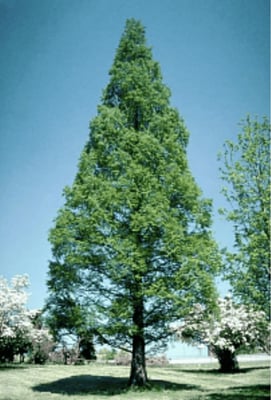
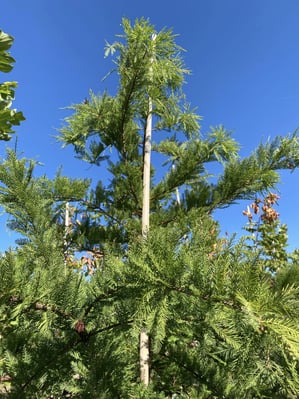 Bald cypress is a true standout, especially in wet or flood-prone areas, as it has a high tolerance for both wet soil and standing water. Beyond that, its fine, feathery needles turn a beautiful rusty orange or copper in fall before they drop.
In winter, bald cypress earns its name; its branches are completely bare, and its unusual “knees” (woody projections from the roots) become more visible. Once spring arrives, bald cypress quickly fills back in with fresh green growth.
The dawn redwood is one of the most fascinating deciduous conifers and easily one of the most misunderstood. Once thought to be extinct, it was rediscovered in China in the 1940s and has since become a popular landscape and urban tree.
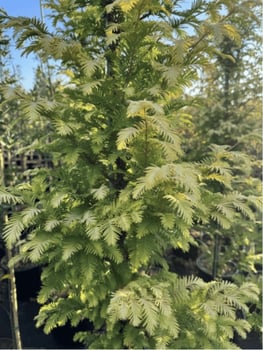 Dawn redwoods, including popular cultivars like Amber Glow Dawn Redwood, are known for their soft, bright green needles that turn a brilliant orange-bronze in fall. It’s also a fast grower with a tall, straight form.
Like the others, it stands completely bare in winter and reliably leafs out again each spring. We just have to be patient and wait.
While not a true conifer, ginkgo trees are often grouped with deciduous conifers because of its ancient origins and unique traits. It’s one of the oldest tree species on Earth and behaves differently from most modern trees.
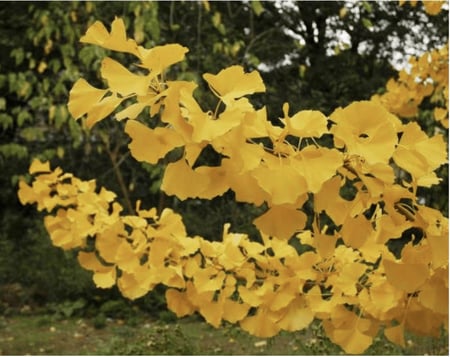 More specifically, Ginkgo trees are known for their distinctive fan-shaped leaves (not needles) that turn a spectacular bright yellow in fall.
Why do we mention them here? It’s not just the lineage. They are also known for a complete leaf drop in a very short window, which stands in stark contrast to their bold fall display.
Despite their delicate-looking leaves, ginkgos are extremely tough and are commonly used as urban trees thanks to their tolerance of pollution, compacted soils, and harsh conditions.
Understanding these species and recognizing their seasonal patterns can help ensure they’re given the time and patience they need to thrive, rather than being mistaken for dead trees during their perfectly normal winter dormancy.
Deciduous conifers offer a unique set of advantages that make them especially valuable in urban forests, community landscapes, and residential settings. While they may surprise people with their winter appearance, their seasonal behavior actually works with urban conditions, providing benefits that evergreen or broadleaf trees alone can’t always deliver.
When planted with the right expectations and education, deciduous conifers can be reliable, resilient, and visually striking additions to the urban canopy.
Key benefits include:
When people understand what deciduous conifers are and what to expect from them, they become powerful allies in building resilient, diverse, and climate-ready urban forests rather than trees mistakenly removed before they ever get the chance to shine.
 Deciduous conifers are generally low-maintenance, resilient trees. Still, like many trees, they benefit from a little seasonal awareness, especially for homeowners or newer land managers who may be unfamiliar with their growth cycle.
The most critical care tip of all is understanding that needle or leaf drop in fall is normal, and a bare tree in winter doesn’t mean something is wrong. If you’re concerned or think you need tree services, it’s always best to reach out to an arborist, especially before you cut something down!
Below are some simple, practical care tips organized by season to help deciduous conifers thrive year after year.
Looking for drought-tolerant Colorado trees? Or drought-tolerant Utah trees? We’ve got you covered!
With the right expectations and a little seasonal care, deciduous conifers prove themselves to be durable, beautiful, and well-adapted winter trees, not trees that need replacing once the needles fall.
You may not expect bare deciduous conifers in winter, but that seasonal change is exactly what makes them resilient, adaptable, and valuable in both urban forests and home landscapes.
When planted in the right place, and with the right expectations, trees like larch, bald cypress, and dawn redwood are long-term assets, not short-term mysteries.
If you’re considering adding a deciduous conifer to your property or managing trees that “don’t stay green,” the SuperTrees nursery team is happy to help. We can walk you through which species makes sense for your site, climate, space, and goals, so you end up with a tree that thrives.
There’s no need for unnecessary alarms each winter; sometimes the healthiest trees are just the ones that look a little different. Ready to get started? Contact us today!