tree health
Tree Care
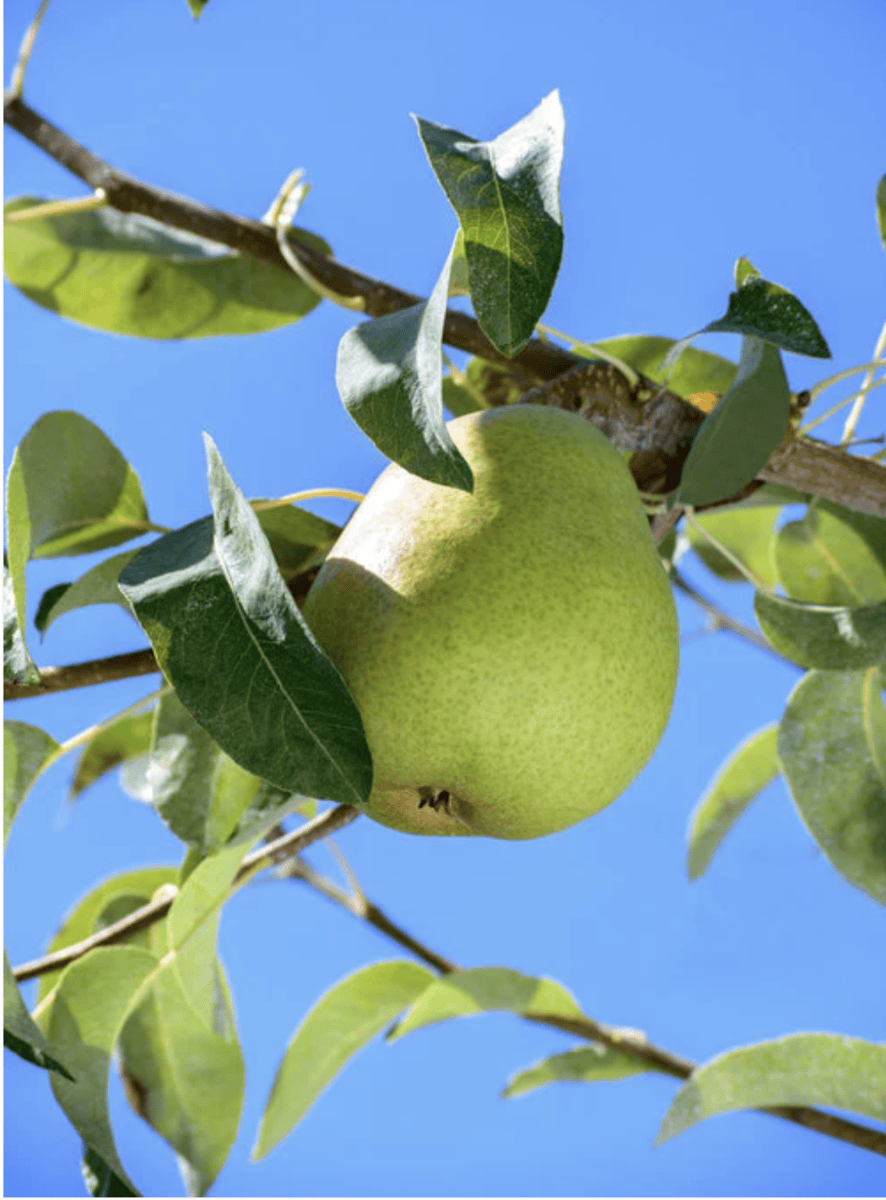

 If you’ve ever tasted fruit from your own fruit trees, then you get why proper care of your fruit trees matters. Healthy fruit trees offer fresh, homegrown fruit, seasonal rhythm, and the satisfaction of harvesting something you’ve grown yourself.
But a productive fruit tree doesn’t happen by accident. Without proper pruning, trees often put their energy into excess growth instead of fruit, leading to smaller harvests and stressed branches. If you’ve ever enjoyed u-pick opportunities at a local orchard, you may have seen up close and personal why fruit tree pruning matters.
Pruning helps focus a tree’s energy where it matters most, encouraging healthier growth, better fruit quality, and more reliable harvests year after year. When done correctly, it’s one of the simplest ways to enjoy more fruit from the trees you’ve invested in.
Quick Links:
If you’ve pruned shade trees or ornamental trees before, fruit tree pruning can feel like a different discipline, mostly because it is. While general tree pruning focuses on structure, safety, and appearance, fruit tree pruning manages growth and production at the same time.
Every cut influences how the tree grows, how much fruit it produces, and how healthy it remains over the long term.
Fruit trees are expected to support heavy crops year after year, and without intentional pruning, that workload can lead to broken limbs, poor-quality fruit, and increased disease pressure. Pruning helps guide the tree’s energy toward strong branches, healthy growth, and consistent fruiting.
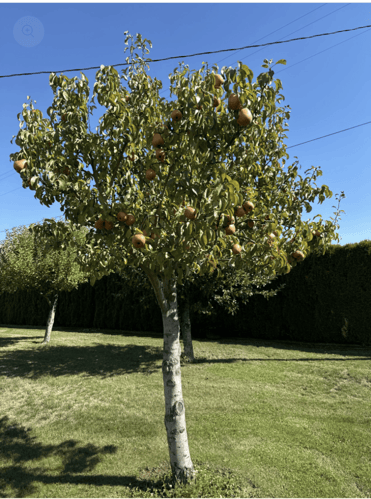 Prune Fruit Trees For Production
Like more traditional pruning, fruit trees still need dead or damaged wood removed, but productive pruning goes further. When fruit trees aren’t pruned properly, they often:
Thoughtful pruning improves fruit size and quality while keeping the tree structurally sound.
Most fruit trees are pruned in late winter. They’re still dormant but nearing spring growth. This means the tree’s structure is easy to see and pruning encourages strong, healthy growth once the season begins.
As the tree is shifting to its growing season, cuts will heal more quickly. Further, pressure from pests and tree diseases is lower than during warmer months. Finally, poorly timed pruning can reduce fruit production or trigger weak, excessive growth.
As we mentioned, fruit tree branches are carrying a heavy load at peak production. That means, as you prune, structuring should be intention to help support the weight of the fruit while also letting in light and air.
You see two common forms in fruit trees:
These structures reduce crowding, improve fruit quality, and make maintenance and harvesting easier.
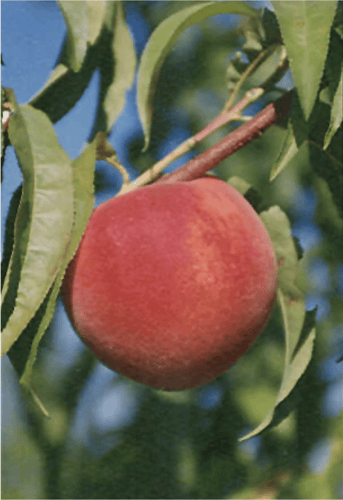 More Growth Doesn’t Mean More Fruit
It’s seems natural to think a bigger tree and more branches produces more fruit. However, excess growth often shades productive wood and diverts energy into non-fruiting shoots. Pruning removes poorly positioned or unproductive branches, so the tree can direct its energy towards stronger limbs that produce better fruit.
Fruit trees should be pruned regularly, so mistakes compound over time. Unlike shade trees or ornamentals, they don’t just “grow out” of bad pruning. Each mistake becomes harder and harder to correct each year, potentially leading to reduced harvests, structural failure, and ongoing disease issues.
Let’s take, for example, an apple tree. .If it’s pruned too aggressively one winter, it’s likely to send out tall, fast-growing shoots in the spring, but those don’t produce much fruit. If those shoots are left to grow, the tree can become overly dense and top-heavy, so fruit is pushed out to weaker outer branches. Eventually, harvests are small, while problems with broken limbs, and disease become more prevalent.
Fruit tree pruning should be done with intention. The goal isn’t to make the tree smaller or neater, but to create a strong, open structure that supports healthy growth and reliable fruit production year after year. While you’ll see some overlap in the strategies applied to shade or ornamentals, the strategies differ a bit
If you remember nothing else, remember this: every cut should have a reason.Think strategically, act intentionally.
We’ve said it before and cannot stress it enough. Before you make a single cut, make sure you have clean, sharp tools. They’ll make cleaner cuts that heal faster and reduce the risk of disease transmission.
You’ll need:
Disinfect tools between trees, especially if disease has been present.
This is pretty standard. Start by removing anything that is a clear problem, so you can see the tree’s true structure before making more strategic cuts.
Start with:
Pruning immediately improves tree health and these cuts prevent wounds that invite pests or decay.
Look at how the tree’s shaped. Identify one of the two forms discussed above—either open center or central leader.
Your goal is to maintain or restore that structure. Stand back and look for the main scaffold branches, the large, permanent limbs that form the framework of the tree. These should be well-spaced and growing at wide angles, not straight up.
Fruit needs sunlight, and trees need airflow. If the canopy is too dense, the tree gets neither.
You want to thin the canopy by removing:
You should be able to see daylight through the canopy when you’re done. This helps improve fruit size, color, and reduces disease threats.
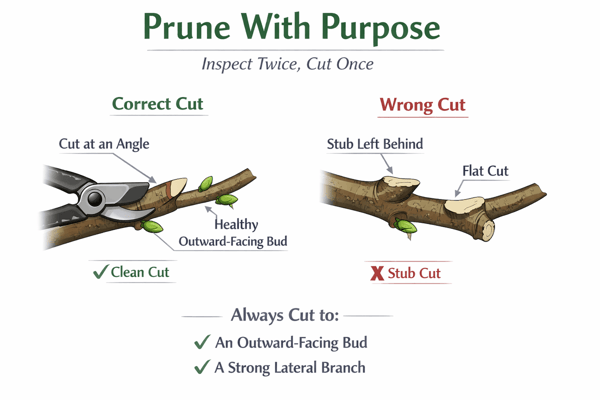 Prune With Purpose
As carpenters say, “Measure twice, cut once.” A similar rule applies here, maybe inspect twice cut once.
When making cuts, be sure to always cut back to:
Avoid leaving stubs, which don’t heal properly. Cuts should be clean and intentional, angled slightly away from the bud so water doesn’t collect on the wound.
As a general rule, never remove more than about 20–25% of the tree in a single season. Over-pruning is an issue for all trees, but it fruit trees it can trigger excessive growth and reduce fruiting.
If you’ve ever been to a u-pick orchard and thought most of the fruit was out of reach, the trees may not have been managed properly. If fruit is only growing at the very top, harvesting becomes difficult and branches are more likely to break under weight. Fruit trees should be pruned to a height you can safely manage.
Gradually reduce height by removing overly tall limbs back to a lower, outward-growing branch. This keeps fruit within reach and distributes weight more evenly, keeping the tree healthier.
It’s hard to start pruning if you don’t have a concept of what the tree looks like once the job is done. When you’re finished:
For many, proper fruit tree pruning looks a bit dramatic at first, but healthy spring growth and better fruit will quickly prove it was the right approach.
 Benefits of Fruit Tree Pruning
For fruit trees, pruning isn’t just about routine maintenance, it’s one of the most important things you can do to improve tree health and fruit quality over time. Done correctly and consistently, pruning helps fruit trees grow, stay productive, and keeps them easier to manage as they mature.
Proper fruit tree pruning is an investment. Each season of good pruning builds on the last, leading to healthier trees, better (and more) fruit, and fewer problems down the road.
Any time you take a lopper or pruning saw to a tree, it can seem intimidating. We get it. Knowing what to do comes from experience and practice. While fruit tree pruning doesn’t have to be complicated, it does need to be done with intention. When you understand why and how to prune, you set your trees up for better health, stronger structure, and more reliable harvests year after year.
Whether you need hands-on pruning and tree services, expert advice, or you’re looking to add high-quality fruit trees to your landscape, that’s exactly where we come in.
And if you want to learn in person, join us at our Riverton, Utah nursery for a free Fruit Tree Pruning class on March 7, 2026. It’s a great opportunity to see proper techniques up close and ask questions specific to your trees.
From education to expert care to the trees themselves, we’re here to help you get it right from the start. Reach out today!