tree health
Tree Care
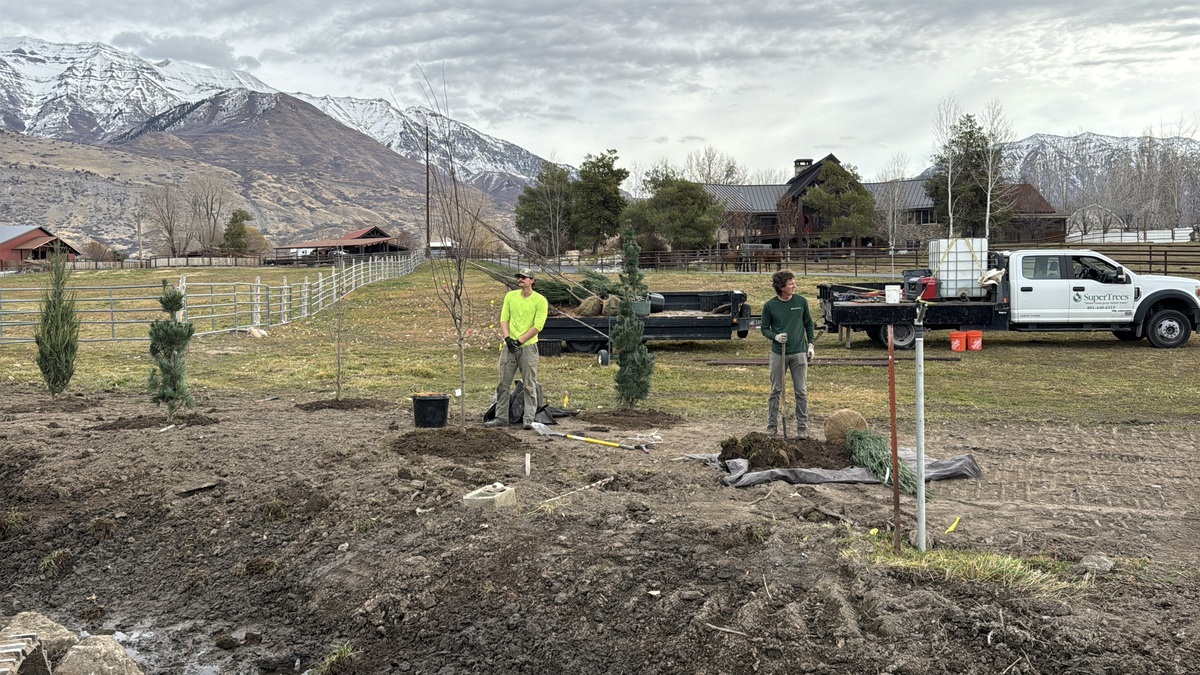

Everyone talks about what trees to plant. Fewer people talk about where to plant.
It's easy to focus on species selection, the right shade tree, the right ornamental, and the right size for the budget, and to treat the planting location as an afterthought. But where a tree goes determines how it grows, how long it lives, and how much work it creates over its lifetime. A tree perfectly suited to your climate can still underperform, decline early, or become a liability if it's sited poorly.
The most expensive tree problems are almost always preventable, so if you want to make better planting decisions from the start, start with siting.
Quick Links:
As arborists, one of the things we talk about off is siting. Choosing the right tree for the right place isn't just about aesthetics or size; it's about understanding the environment the tree is going into and being honest about what that site can actually support.
A tree that thrives in one location can struggle in another just a few blocks away, simply because the conditions are different. Not every factor will be a dealbreaker, but together they paint a picture of what's likely to succeed, and what isn't.
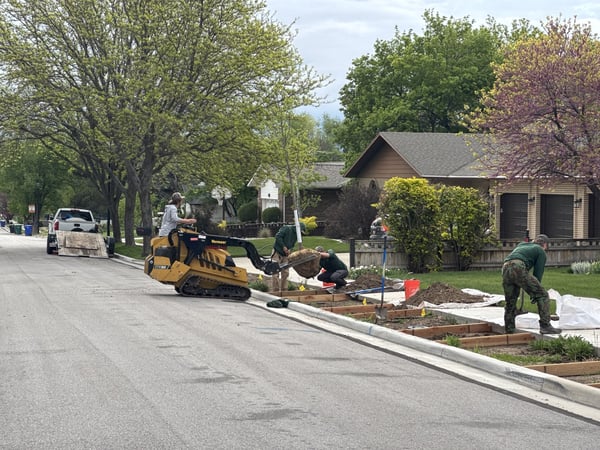 Site conditions to evaluate before you plant trees:
No site is perfect, and the goal isn't to find one that checks every box; instead, the goal is to select native trees or cultivars whose natural tolerances align with what the site actually offers. A tree matched well to its conditions from day one will outperform a mismatched tree every time.
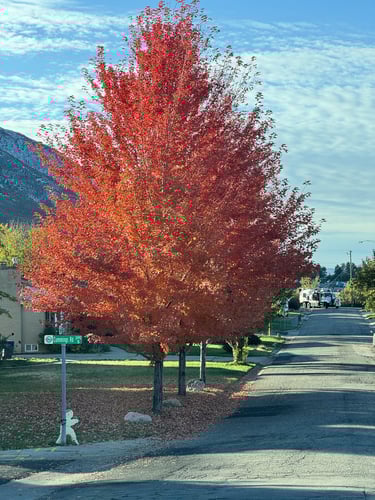 Why Mature Tree Size Matters When You Plant Trees
Let's look more closely at one of the most common mistakes made when planting trees: falling in love with a tree at the nursery without thinking about where it's going to be in 20 years.
A tree that looks perfectly proportioned in a 15-gallon container can become a 60-foot canopy pressing against a roofline, lifting sidewalks, or shading out everything within 40 feet of it. That's not a problem with the tree. That's a siting problem.
When most people think about mature tree size, they think only of height, but canopy spread, root zone diameter, and trunk caliper matter just as much, sometimes more.
A mature oak may develop a canopy spread of 40 to 80 feet, and healthy roots to match. Tree roots commonly extend two to three times the width of the canopy, well beyond what most people picture when looking at a young tree.
If you plant it too close to a foundation, utility line, or hardscape, you're not dealing with a pruning problem; you're dealing with a structural conflict that gets more expensive every year.
Canopy spread also determines what lives, or doesn't, underneath. Shade trees planted too close together will compete for light, resulting in weak structure and canopies that never perform the way the plan intended.
A 2-inch caliper tree planted this spring may have a 30-inch trunk in 40 years. What looks like a spacious spot won't feel so roomy once the canopy matures, especially in managed landscapes and urban forests, where tight site conditions leave little margin for error.
The right shade tree in the wrong spot doesn't just underperform; it can be harmful. It creates work, everything from pruning and root management to hardscape repair and liability. Getting size right from the start is one of the most valuable investments you can make in your landscape.
For property managers and HOA landscapes, mature tree size isn't just a horticultural question; it's a liability one. Branches overhanging roofs, roots encroaching on foundations, and canopies tangled in overhead utilities are among the most common and costly tree-related issues in managed landscapes. And almost all of them were preventable, if we go back to tree selection and siting.
Walk the site before you ever set foot in a nursery. Look up, look down, and look outward:
This is one of the underappreciated advantages of working with a knowledgeable and experienced wholesale nursery. Before you commit to a species, a good nursery will first remind you to check the area (or check it with you) and can tell you how tall and wide a tree is likely to grow, how aggressive the root system tends to be, and how quickly it will get there.
The right tree for a constrained site might be a smaller ornamental, a columnar variety, or a species with a naturally non-invasive root habit, but finding it requires knowing what you're working around first.
Once you've sized up what the site can support, the next question is how much space each tree actually needs. Spacing isn't just about keeping trees from bumping into each other. It's about giving root systems room to develop, canopies room to fill out, and enough light and airflow to stay healthy in the long term.
Get it wrong, and you may end up with trees competing for the same resources, canopies that never develop properly, and maintenance headaches that compound every season.
Most planting plans account for canopy spread, but when trees are planted too close, they don't just overlap; they compete for water and nutrients in ways that accelerate decline. In managed landscapes where soil volume is often constrained by hardscape and utilities, tight spacing compounds an already limited resource.
As we mentioned earlier, space for the mature tree, not the tree in front of you.
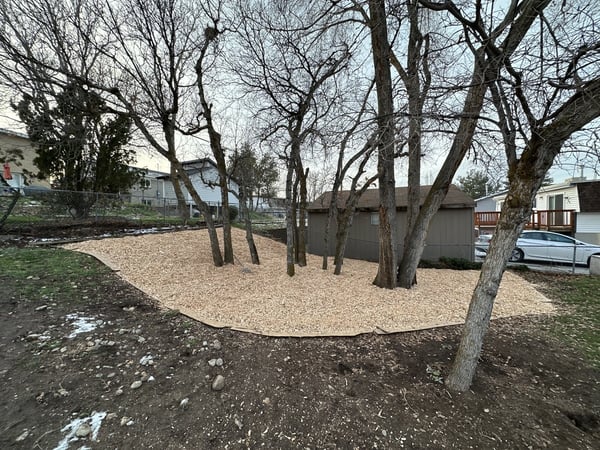 Plant Trees with Microclimates in Mind
When selecting native trees or cultivars, you’re often selecting for survivability in your growing region, but two planting sites can look nearly identical on paper and produce very different results.
The reason is often microclimate or the hyperlocal conditions created by buildings, pavement, topography, and existing vegetation that make one spot significantly different from another just 50 feet away. Microclimates may not show up on a planting plan, but they will show up on the tree.
In urban settings, you can’t completely avoid challenging microclimates. The goal, instead, is to select trees with a natural tolerance for those microclimates. A heat and drought-tolerant tree will outperform a moisture-loving species against a south-facing wall every time.
This is where working with a knowledgeable wholesale nursery pays off. Knowing how a tree performs under heat stress, wind exposure, or poor drainage shapes better planting decisions and delivers better success before the tree goes in the ground.
Time and again, success often comes down to a few things, and the most overlooked siting. Where you plant a tree shapes everything that follows. Soil conditions, spacing, microclimates, utilities, and structures cannot be secondary considerations. They must be a starting point.
The truth is: a well-sited tree will establish faster, require less intervention, and perform better over decades than the same species planted in the wrong spot. In managed landscapes, HOA properties, and urban forests, where trees are assets with real functional and financial value, siting decisions multiply across every tree in the inventory.
Whether you're planning a new installation, replacing trees that have failed, or filling gaps in an existing urban forest canopy, the best time to think about siting is before you select a single tree.
At SuperTrees, we work with property managers, landscapers, HOAs, and city forestry teams across Colorado, Utah, Idaho, Oregon, Washington, and Montana, and we do more than supply trees.
We help you think through what belongs where, why, and what it's going to look like in 20 years. If you have an existing tree inventory and know where your canopy has gaps, we can help you fill them strategically with trees matched to your conditions from day one.
Reach out to our team to talk through your next tree planting project. The right tree, in the right place, starts with the right conversation with the right team.