tree health
Tree Care
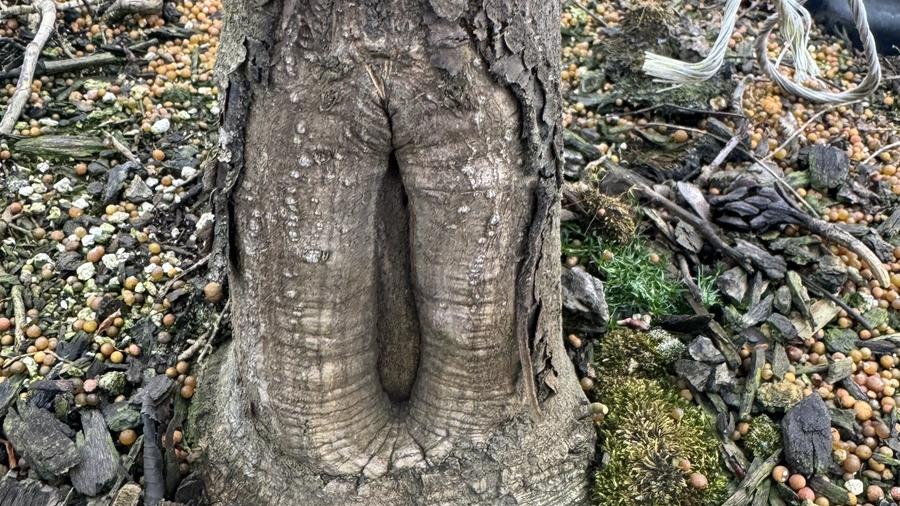

Thus far, many of the tree diseases we’ve discussed first appear on leaves and shoots, but not all do. Some attack the bark itself, creating damaged areas that slowly weaken branches and trunks. These are known as tree canker diseases, and while there are several different types, they all affect the same critical part of a tree’s structure.
Quick Links:
Thus far, we’ve covered singular diseases, but tree canker diseases are a group of tree diseases that damage the bark and underlying tissue of branches or trunks. They are caused by both fungal and bacterial pathogens that enter a tree through wounds, natural openings, or stressed tissue.
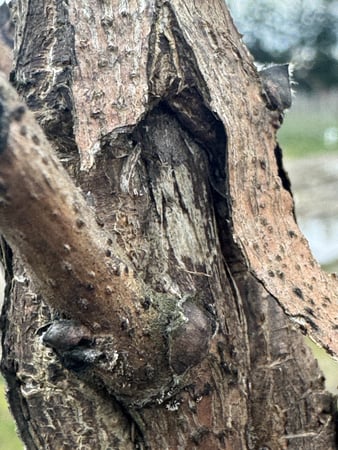
The term “canker” refers to the visible result of that infection: a localized area of dead or damaged bark, which often appears as sunken, cracked, or discolored patches on branches or the trunk. As the disease progresses, the infected tissue can expand, sometimes girdling branches and interfering with the tree’s ability to move water and nutrients.
Because several different pathogens can cause canker disease in trees, the exact symptoms and severity vary, depending on the tree species and the organism involved. However, most canker diseases share one important characteristic: they tend to take hold when trees are already under stress, such as from drought, physical injury, poor soil conditions, or environmental damage.
Understanding what canker diseases are and what a canker looks like is the first step toward monitoring tree health and preventing more serious damage over time.
It’s important first to note that the number of tree diseases that cause cankers is extensive. With multiple variables, from bacterial and fungal pathogens to species and growing regions, covering all of them would be quite lengthy. Instead, we’ll focus on some of the more common canker tree diseases you’ll see in the Intermountain West and Pacific Northwest.
Although these pathogens differ, most canker diseases share an important trait: they tend to attack trees that are already weakened or injured. These infections often begin when pathogens enter trees through wounds, pruning cuts, frost damage, sunscald, or other stress points. Maintaining strong tree health is often the most effective long-term defense against canker disease. Everything from proper tree pruning and siting to tree sourcing and ongoing monitoring can help keep trees healthy and mitigate the risk of tree canker diseases.
 Tree Canker Disease Symptoms: How to Recognize Them
You might be wondering whether, despite their different causes, cankers look the same. The short answer is: not exactly. That doesn’t provide much clarity (we’ll get into it a bit more in a moment), but it’s important to understand that the wide variety of causes and impacted trees means there are variations.
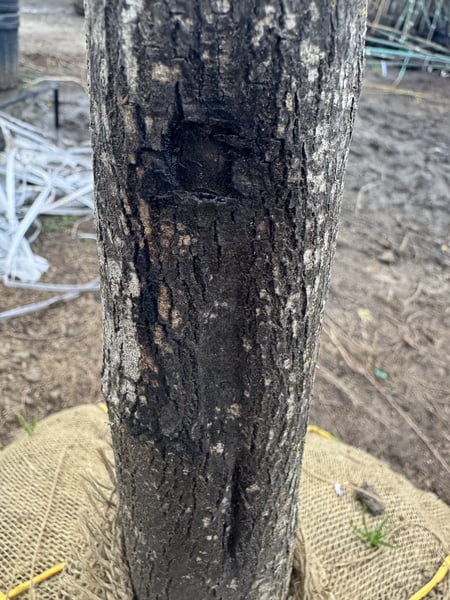
While cankers share some common characteristics, their appearance can vary depending on the tree species and the organism causing the infection. What they all have in common is that they represent areas where bark and the underlying tissue have been killed. These dead areas disrupt the tree’s ability to move water and nutrients through the affected branch or trunk.
Even though different pathogens cause them, most cankers share several recognizable features:
 Why Tree Cankers Can Look Different
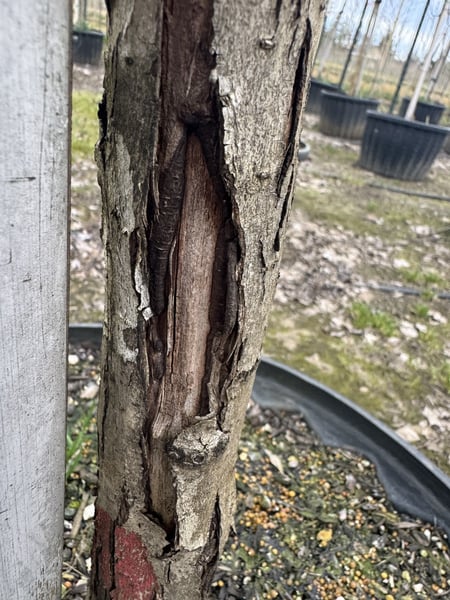
Although these symptoms are common, the exact appearance of a canker can vary depending on the pathogen involved. Some cankers, such as those caused by Pseudomonas and Thyronectria, form long, narrow lesions along branches. Others create more circular or target-shaped wounds, such as Nectria canker, in which the tree repeatedly forms callus tissue around the infection.
Some fungal cankers produce visible fruiting bodies on the bark, such as the reddish structures seen in Nectria or Thyronectria cankers. Bacterial cankers, on the other hand, often produce sticky sap or bacterial ooze, as seen in diseases like fire blight or bacterial canker on stone fruit trees.
Because the symptoms can overlap with mechanical injury, sunscald, or winter damage, accurate identification often requires examining both the bark damage and the tree's overall condition.
For homeowners, landscapers, and property managers, the most important step is recognizing when bark damage appears abnormal and monitoring the tree for branch dieback or expanding lesions, which may signal an active canker disease.
Tree canker diseases are caused by fungal or bacterial pathogens that infect the bark and underlying tissues of a tree. These organisms typically enter through wounds or weakened areas, such as pruning cuts, storm damage, insect feeding sites, frost cracks, or sunscald.
Once inside the tree, the pathogen begins killing localized areas of bark and cambium, resulting in the dead tissue we recognize as a canker. In many cases, the organisms responsible are naturally present in the environment and only become a problem when a tree is under stress. As such, there is no way to prevent them entirely, but understanding the causes can help mitigate what is within your control.
Common factors that increase the risk of canker diseases include:
We cannot stress enough that tree care, maintaining overall tree health and reducing stress are among the most effective ways to prevent canker diseases from developing or spreading.
If you discover a canker on a tree, the first and most important step is to positively identify the underlying cause. Because cankers can be caused by several fungal and bacterial pathogens and can sometimes resemble physical injury or environmental damage, a correct diagnosis is important before taking action. In most cases, consulting a certified arborist or tree professional is the best course of action before taking any steps.
Once the cause is understood, treatment typically focuses on removing infected tissue and reducing the conditions that allowed the disease to develop.
In some cases, healthy, established trees can compartmentalize smaller cankers and continue to grow normally. However, when cankers begin to girdle branches or spread into the trunk, professional evaluation is especially important to determine whether more aggressive treatment, or tree removal, is necessary.
 How to Mitigate Tree Canker Diseases
Because canker diseases often take hold when trees are stressed or injured, mitigation focuses on reducing the conditions that allow pathogens to enter and spread. While not every canker can be prevented, consistent care can significantly lower the risk.
In managed landscapes and urban forests, these preventative practices help keep trees healthier and less vulnerable to the pathogens that cause canker diseases.
In urban and community forests, trees often face a combination of stressors, including compacted soils, heat, limited rooting space, mechanical damage, and repeated pruning. These conditions can make trees more vulnerable to the pathogens that cause canker diseases.
When susceptible species are planted close together or when trees experience repeated stress, cankers can gradually weaken branches, reduce canopy performance, and increase maintenance needs across a site.
While a single canker may not always threaten the entire tree, repeated infections can lead to branch dieback, structural decline, and reduced long-term tree health, especially in managed landscapes where trees play an important role in providing shade, enhancing aesthetics, and delivering environmental benefits.
If you’re dealing with canker diseases or simply want to start with healthier, more resilient trees, SuperTrees can help. From selecting and planting the right trees at our retail or wholesale nursery to providing professional tree services, diagnosing tree diseases, and helping remove and replace declining trees to improve canopy diversity, we work with property managers, homeowners, and cities across the West to support stronger urban forests.
Reach out to our team to learn how we can help with your landscape or community tree plan!