Tree Selection
Nursery
Colorado Trees
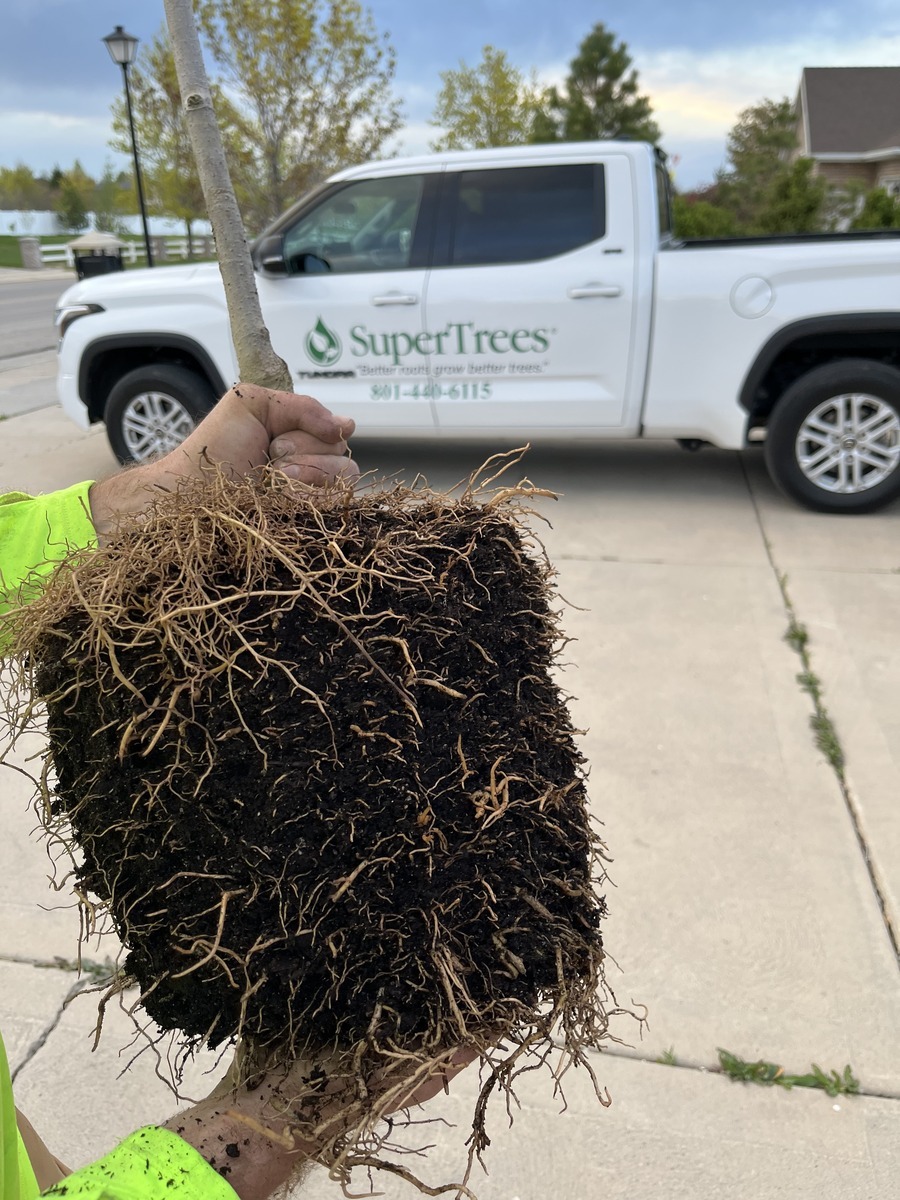

You might think providing tree species, quantity, caliper, and container size is a detailed way to show what your city needs and wants in a tree. But even a tree that looks great on arrival may have problems hidden “below ground.”
Municipal buyers should understand how caliper, container, and root balls connect, and how what happens at the nursery can dictate how well your urban forest grows. Root health is the secret to success, starting with the grower, and ending at the canopy.
Quick Links:
Trees are an investment, and so ensuring they establish well, survive, and thrive is a priority. Establishment isn’t a standalone factor; no single aspect of tree health determines successful establishment. Still, what happens below ground is among the most important factors.
Newly planted trees rely on their roots to extend into the surrounding soil and access the water and nutrients that enable canopy growth. That root system becomes the anchor that provides long-term stability and resilience.
Because root quality is central to tree health, starting with healthy roots increases your chances of long-term survival.
So, what should you be looking for in a nursery tree? A healthy nursery tree should have:
This is really where the nursery or wholesale nursery grower you work with matters because tree production matters. That’s also why SuperTrees uses air pruning containers to guide roots toward openings in the container.  When root tips reach air, they dry out, encouraging branching farther back along the root. When this repeats throughout early growth, the tree develops a dense, fibrous root system and reduces the likelihood of circling roots.
When inspecting the roots of delivered trees, you should see fine, branching roots throughout the root ball rather than thick roots circling the center, as is common in container trees.
Root development is key to healthy trees, which is why we use air pruning technology. With careful nursery management, smart species and site selection, proper planting, and appropriate aftercare, municipal trees can start with a strong foundation and grow into resilient urban forests.
While root quality tells buyers what’s happening below ground, tree caliper is a standardized way to describe trunk size above ground. Both are important when evaluating nursery stock.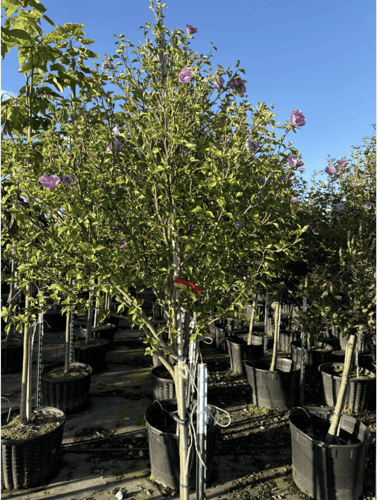 Tree caliper, described in inches, is the diameter of a nursery tree’s trunk. Nursery standards measure roughly 6 inches above the soil line.
For example, a 2-inch caliper tree has a 2-inch diameter roughly 6 inches above the soil line. This matters because it contrasts sharply with diameter at breast height (DBH), which urban foresters use to measure municipal trees. DBH is typically closer to 4.5 feet above ground.
One of the most important decisions city foresters can make is where they buy their trees. Finding high-quality nurseries is essential, and consistent reference points help.
Tree caliper helps teams compare stock, specify needed planting sizes, and evaluate rootball quality (in comparison to caliper). Nursery stock standards use trunk diameter to set minimum rootball dimensions. For a 2-inch caliper tree, the root ball diameter should be 20 to 24 inches—based on the nursery standard of 10 to 12 inches of root ball width per inch of trunk caliper.
However, caliper does not measure tree health or quality. Two trees with the same caliper can still have very different root systems and growing histories. Once in the ground, they may establish very differently. More specifically, a larger caliper doesn't mean stronger, better-distributed roots or fewer defects.
Larger-caliper trees often take longer to establish. When choosing tree caliper, consider your watering and maintenance budgets, as larger-caliper trees will need more care. The goal for municipal procurement should be to choose a caliper appropriate for the site and for your resources.
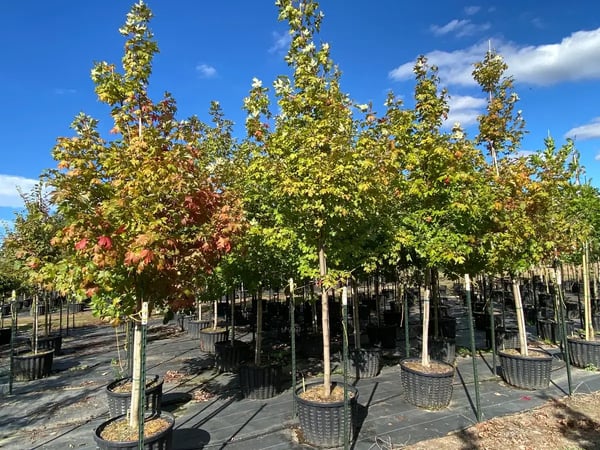 Understanding Tree Container Size
Caliper describes trunk size, and container size describes the growing space provided for the root ball. Evaluate these measurements together, as a tree needs enough room to grow to support its trunk size.
Container-grown nursery stock is typically sold by container class such as #15 or #25. They used to be the gallon size of the containers, but over time manufacturers have made the pots smaller and so they had to call them #15 because it’s no longer 15 gallons. These dimensions may vary, so when working with a wholesale nursery, ask about volume, width, and depth.
A larger container offers more space, but it doesn’t necessarily mean a healthier root ball. A tree kept too long in a conventional container may develop circling roots, while a recently transplanted tree may not have rooted into the extra room yet. That's why inspecting the root ball is essential. It should be well developed, hold together when handled, and be free of defects.
While container size is important, container design also matters. As noted above, air pruning encourages more developed root branching. So, in addition to asking “What size container?” consider asking “Does this tree’s caliper, rootball, and development suggest well-grown stock?”
When selecting trees for municipal projects, choosing your nursery partner is a key decision. Nursery production influences everything from how roots branch and how much of the root system remains at harvest to how trees are handled during planting and how well they establish.
Each production method offers benefits, but root quality also depends largely on the grower’s practices. In short, know your nursery. Still, understanding production methods can help you better understand how your nursery partner views tree growth and health.
|
Production method |
How it affects roots |
Benefits |
|
Air-Pot® grown |
Air-prunes root tips, encouraging branching and reducing circling. |
Produces a fibrous root ball that remains intact for planting. |
|
Conventional container-grown |
Retains roots within the container; timely repotting and root management help prevent circling. |
Keeps the root system intact during transport and offers flexible planting schedules. |
|
Balled and burlapped (B&B) |
Field-grown trees are dug with a soil ball, leaving some roots behind. |
Allows larger trees to be supplied with soil protecting the retained roots. |
|
Bare-root |
Trees are lifted and supplied without soil, typically while dormant. |
Makes roots easier to inspect and trees lighter to transport and handle. |
|
Grow Bags |
Trees are grown in a bag where the fabric restricts how big the roots can grow. This encourages branching. |
Produces a contained root ball within the grow bag, vs. B&B, where you may lose some root density. |
When choosing vendors, choose a wholesale nursery whose production practices support healthy roots.
 Why the Root Flare Matters
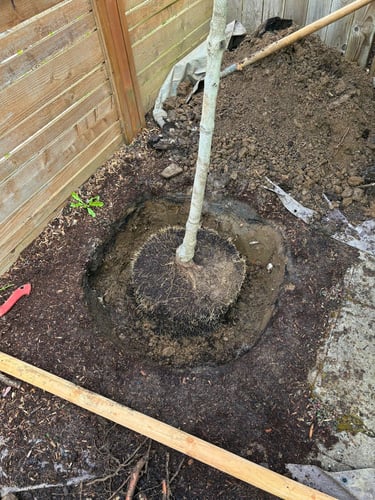
The root flare is where the trunk broadens and transitions into the main structural roots. It helps crews plant the tree correctly and helps buyers determine nursery planting depth.
Why does that matter? Don't bury the root flare under excess soil or any other growing medium (including mulch); it can limit oxygen to the roots and trap moisture, which may contribute to decline.
Root flare inspection should be part of nursery stock evaluation. On young trees, look for the uppermost structural roots near the root ball’s surface, as a flare may not be fully developed. You should also talk with growers about the planting depth both in the ground and when trees are grown in containers.
Before accepting any nursery stock, cities should inspect trees and their root balls. This can reveal problems that a sturdy trunk or filled-out canopy can hide.
What should you look for? Here are a few red flags:
Any of these warning signs should result in refusing to accept the tree and triggering additional inspections.
At this point, you might be wondering how to ensure you get healthy trees, specifically trees with healthy roots. Municipal tree procurement specifications define the stock your city will accept and how you plan to evaluate it.
Clear requirements written into your bids help growers understand your expectations, help you compare bids, and help your team reject trees that don’t meet clearly defined quality standards.
Include root quality in these specifications alongside species, caliper, and container size. In short, the clearer you are, the better you can protect your city’s investment.
Here’s a few tips for writing better procurement specifications:
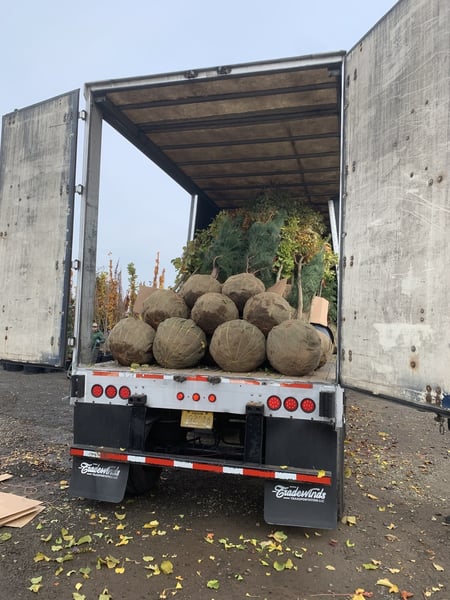 Require meaningful inspections: Surface-level inspections won’t be helpful in the long run. A tree’s canopy can look good, but that doesn’t reveal the roots. Include nursery visits and root ball inspection before shipment.
Design your tree procurement specifications to protect the investment you’re making in your urban forest. Working with a wholesale tree grower nursery can help ensure your tree vendors know everything about the tree from planting to arrival on your site.
They’re equally invested in the tree's health and in ensuring it arrives healthy and stays healthy once it’s in the ground.
When you think of your urban forest, its canopy, and the time it takes to grow a mature tree, you can begin to understand the investment you’re making every time you buy a tree. You can control what shows up on planting day, but root health will define how that tree establishes and grows for years to come.
Choosing a wholesale nursery partner that prioritizes healthy roots can give your future urban forest a stronger start. At SuperTrees, we grow our container trees in air-pruning pots to ensure dense, fibrous, healthy root balls.
With decades of experience and a team of certified arborists, we can help your team select the best trees for your urban tree projects, even your most challenging sites. And our team is always here to help, even after the trees are in the ground, with supplemental tree care.
Planning your next multiyear or multiphase project? Get in touch with our team today. Interested in our wholesale availability list? Follow the link below!