Tree Services
Pruning
urban forestry

Smoked meats. Smoky eyes. Smoked cocktails. Smoked glass. Smoke shows.
The truth is, whether it’s the mystery or beauty, smoke is a winner.
The same is true for American smoketree. Both beautiful and versatile it can make an amazing addition to your urban forest, providing visual appeal in challenging sites or a stunning smokey show in streetscapes. Ready to learn more?
Quick Links:
 The American Smoketree Family
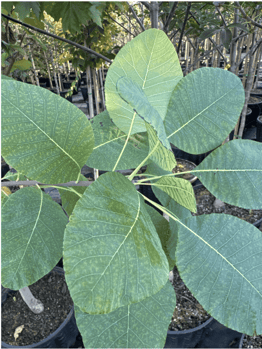
The American Smoketree (Cotinus obovatus) belongs to the cashew family, which also includes sumacs, pistachios, and cashews. The Cotinus genus includes small deciduous trees and shrubs known for their airy flowers and signature smoky appearance.
A rose by any other name? As you might expect, the American smoketree has several other names, including American smokebush, chittamwood, Texas smoketree, and wild smoketree. All of these are used to describe the tree, not specific cultivars. While it is native to the United States, it’s non-native in Utah and Colorado, though it thrives there.
While smoketree and smokebush are often used interchangeably, they sometimes refer to two different species, first of which is American smoketree (Cotinus obovatus), which can grow to 20-30 feet.
The other species is the smokebush (Cotinus coggygria), a smaller species often grown as a multi-stemmed shrub. The smokebush is also called the European or Eurasian smoketree.
When looking at cultivars, it's important to know whether you’re looking at the European or American species, or the Grace smoketree, a hybrid of the two. Royal Purple, Golden Spirit®, Winecraft Black®, and Young Lady are all cultivars of the Eurasian species, or the smokebush.
Cotton Candy™ ‘Northstar’, however, is a cultivar of the American smoketree (Cotinus obovatus).
The main difference between the two species is whether you want a shrub or a tree. For this spotlight, we’ll focus on the American smoketree.
 A Standout Specimen: American Smoketree
In urban landscapes, finding trees that meet your goals while also adding unique features or a distinct identity to a street, park, or setting can be challenging. This is where the smoketree stands out.
With its unique branching structure and blue-green leaves, the smoketree grabs attention year-round. The real attention-getters, though, are its summer flowers and the fine hairs that remain after flowering. These fine hairs give the tree its name. After flowering, the branching flower clusters form airy pink and purple flumes that resemble a smoke cloud surrounding the canopy.
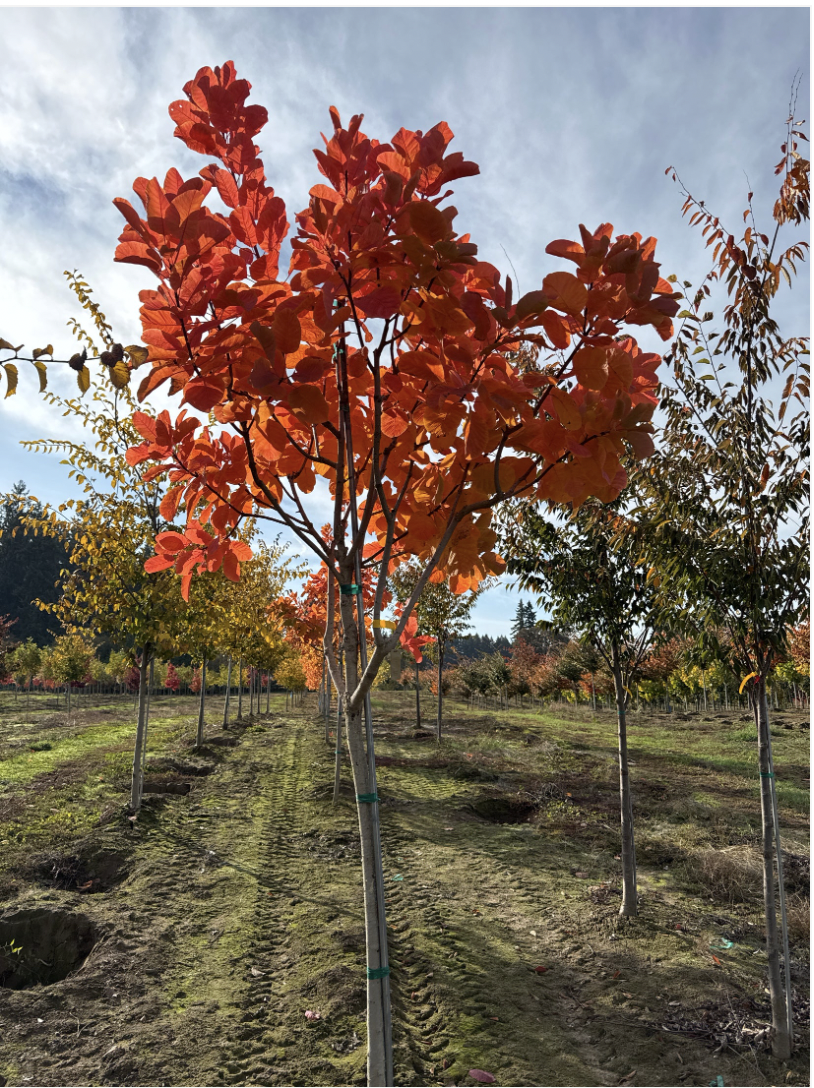
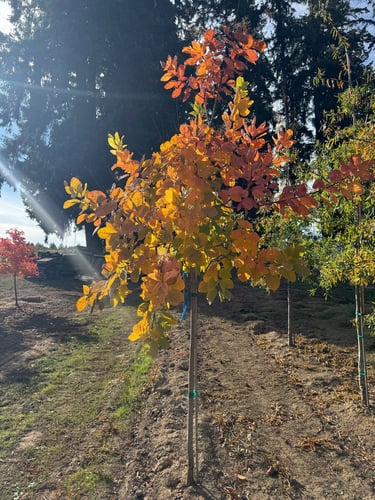
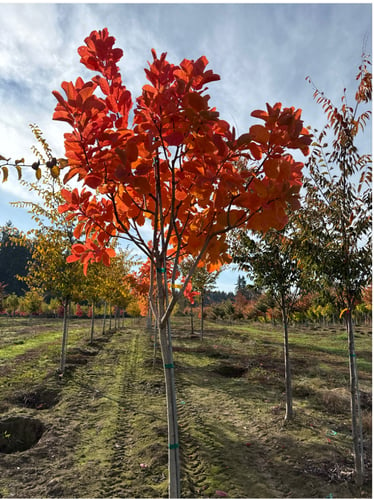
One summer, fall color comes to life on the American smoketree, with brilliant hues ranging from yellow and orange to scarlet and purple, and some trees displaying several colors. In high-visibility landscapes like parks, streetscapes, and public spaces, its seasonal display makes a powerful focal point.
Depending on your site goals, the American smoketree can also provide a decent canopy and reach about 20-30 feet tall. It’s a great candidate for parks, medians, and beds where a full-sized canopy tree would create conflicts. It’s a perfect companion to add layers and flair to the urban landscape.
While the American smoketree is best known for its smoky summer plumes and standout fall color, it’s also remarkably adaptable, making it well suited for many urban planting sites in Utah and Colorado.
Its moderate size, heat and drought tolerance, and distinctive rounded canopy make it a strong choice when your master tree plan prioritizes visual impact and species diversity.
Let’s get to the essential growing details and quick facts for American smoketree.
 American Smoketree Traits That Make It Urban-Ready
We’ve talked a bit about its beauty and ability to act as a focal point, but does that mean urban-ready? American smoketree can do much more than look pretty (and it does that well).
Adaptable to variable soils: One issue many urban foresters face when selecting trees is finding species that can grow in a variety of soils. American smoktree can grow in everything from clay and loam to sandy and rocky soils. While they need good drainage, they tolerate a broad range of soil pH levels, including alkaline soils common across Utah and Colorado. For you, this means a flexible tree you can swap into a variety of planting sites.
Heat and drought-tolerant: Across the Intermountain West, drought tolerance is essential. After establishment, the American smoketree tolerates both heat and drought. It’s an excellent candidate for both water-conscious landscapes and exposed sites. Note: During establishment and extended drought, it will need a supplemental watering plan.
Looking for more drought-tolerant Colorado trees?
Looking for more drought-tolerant Utah trees?
Limited tree disease or pest problems: When stressed, the American smoketree may show some leaf spots, rust, or wilting, but it’s a largely reliable tree. Generally dependable with few serious pest or disease risks, well-drained soil and proper placement can limit concerns.
Manageable size at maturity: Many communities and urban forestry teams want to add shade without significant maintenance or space challenges that require frequent pruning. At 20-30 feet, American smoktree achieves this without reaching the size of a full-sized canopy or shade tree. It may cause fewer conflicts when planted near buildings or other infrastructure.
Lower long-term maintenance: We mentioned structural pruning early on to help the tree branch and clear space, but that early work will pay off later by reducing the need for large corrective cuts. Its slow growth rate, moderate mature size, and limited pest and disease risk translate into lower long-term maintenance needs over its lifetime.
Canopy diversity is about species diversity, but it’s also about different sizes, tolerances, growth habits, and roles within the urban forest. Ultimately, the goal is to create a strong, healthy, resilient urban forest that is less vulnerable to pests, disease, and environmental stressors. American smoketree is a less common species that adds the diversity you need while helping achieve several tree goals.
Let’s start with its size. For planting sites that can’t accommodate a large canopy or shade tree, the American smoketree can help fill spaces, especially when paired with a layered canopy that includes smaller ornamental trees and larger shade trees. It adds height variety while filling gaps.
Its adaptability to environmental and soil conditions makes it a reliable choice when other species may fail. If you’re struggling with these conditions, American smoketree can handle them. It can help your team reduce reliance on species that struggle with heat, drought, pests, disease, or even just challenging soil.
For cities in Utah and Colorado, American smoketree can help you plant a varied, resilient urban forest, especially when site conditions are challenging. The smoketree is about more than just adding a new species to the list; it’s about finding a tree that can help you meet urban challenges and add more than species diversity to your forest.