urban forestry
Colorado Trees
Utah Trees
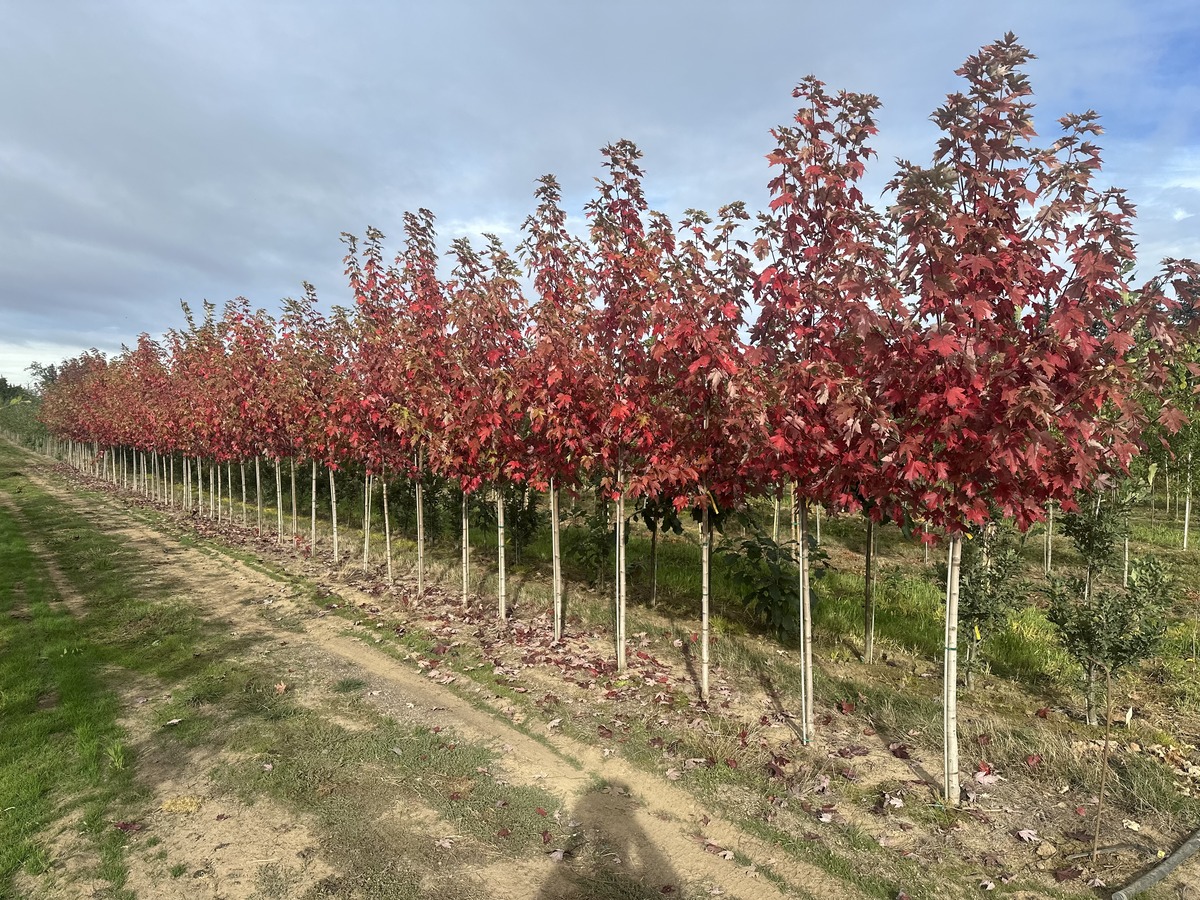

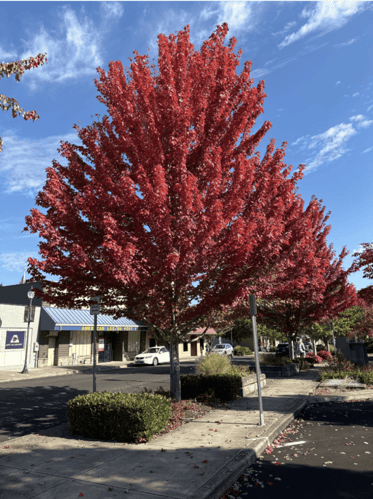
You’ve heard the idiom “You can’t see the forest for the trees,” meaning someone focuses on the details instead of the bigger picture. We like to think Autumn Blaze® Maple plays a role in that.
Some trees blend into the landscape, and the Autumn Blaze® Maple lives up to its name. Its broad canopy is a summer shade superstar, but when fall comes? That’s when it lights up the landscape with crimson and scarlet.
Beyond its colors, it’s a reliable performer and a valuable part of the urban forest.
Quick Links:
 The Maple Family
Maples are among the most recognizable trees, often the first people learn to identify by leaf shape. Members of the Acer genus are also known for their winged seeds and, to a trained eye, their opposite branching.
Widely planted as shade trees, deciduous maples offer hundreds of cultivars with different sizes, forms, growth rates, fall colors, and environmental tolerances. That variety gives urban foresters options for a broad range of planting sites.
So where does Autumn Blaze® Maple fit? Autumn Blaze® Maple (Acer x freemanii ‘Jeffersred’) is a Freeman maple, a red-and-silver maple hybrid. It combines the silver maple's fast growth with the red maple's standout fall color and improved branching.
The result is a large, fast-growing shade tree with a dense canopy and long-lasting crimson and scarlet foliage. For urban foresters, this means a highly desirable specimen for parks, campuses, streetscapes, and other open areas where it can thrive.
 A Standout Specimen: Autumn Blaze® Maple
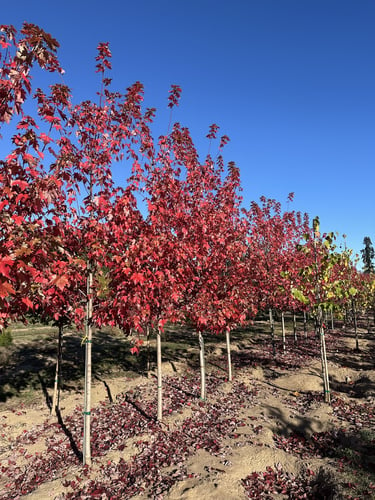
The Autumn Blaze® Maple is a large shade tree that often grows 50-60 feet tall and 40-50 feet wide. For Pacific Northwest cities looking to build canopy quickly, this fast grower may be an excellent choice.
It’s a substantial shademaker with a dense canopy of deep green foliage in spring and summer, and its fast growth lets cities reach canopy and heat-reduction goals faster than with some slower-growing species. The key is giving this maple the conditions and room it needs to grow both its canopy and its roots.
Beyond its size, the Autumn Blaze® Maple commands attention for its fall foliage. Intense shades of orange-red, crimson, and scarlet add value in high-visibility landscapes, and they last longer, extending seasonal impact.
After the leaves drop, it provides a strong silhouette through winter. On more mature maples, the bark also adds texture and winter interest, making the Autumn Blaze® Maple a true urban forest standout, especially in the Pacific Northwest.
 Quick Facts and Details: The Autumn Blaze® Maple
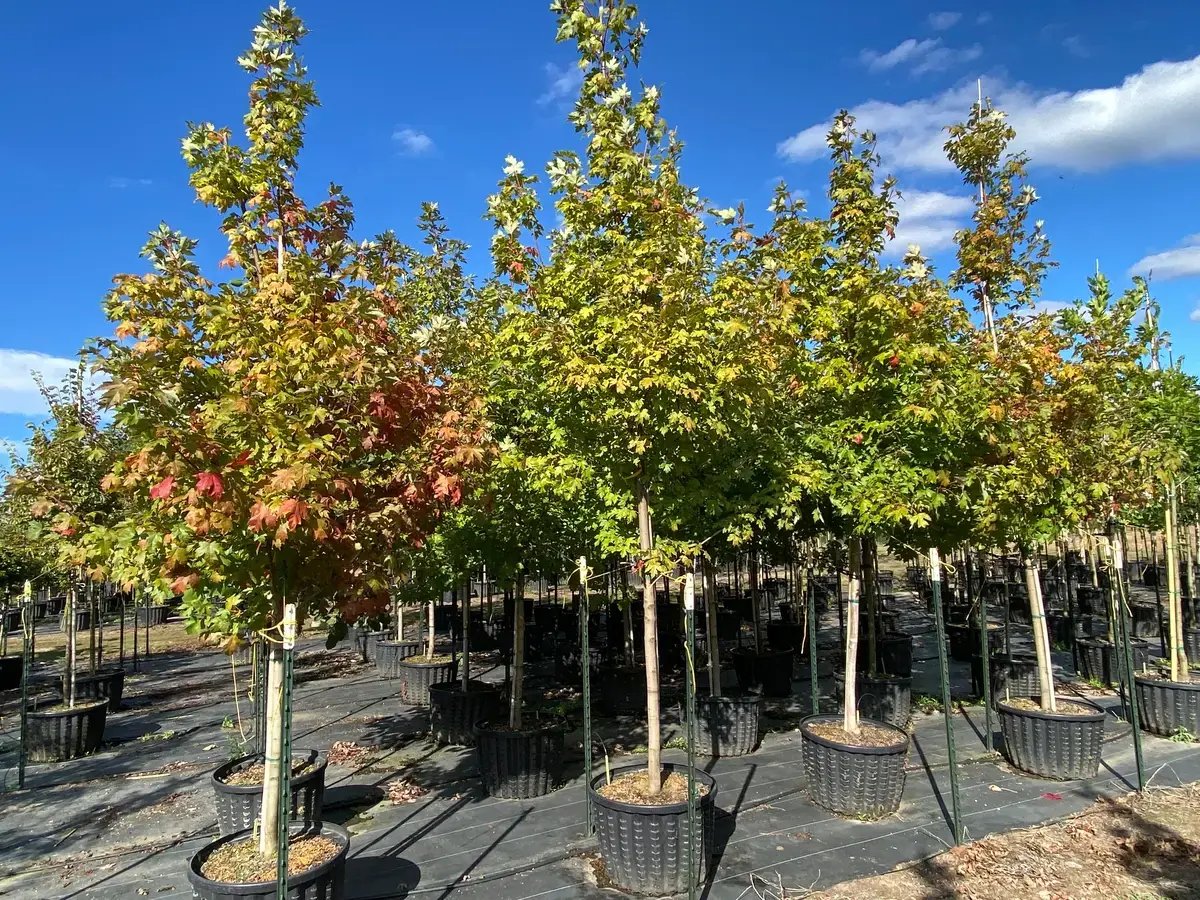
The Autumn Blaze® Maple stands out for its rapid growth, broad canopy, and eye-catching fall color.
But there’s more to consider, especially when you're evaluating candidates for parks, campuses, and other spacious urban sites in the Pacific Northwest.
Quick Facts & Growing Details
 Autumn Blaze® Maple Traits That Make It Urban-Ready
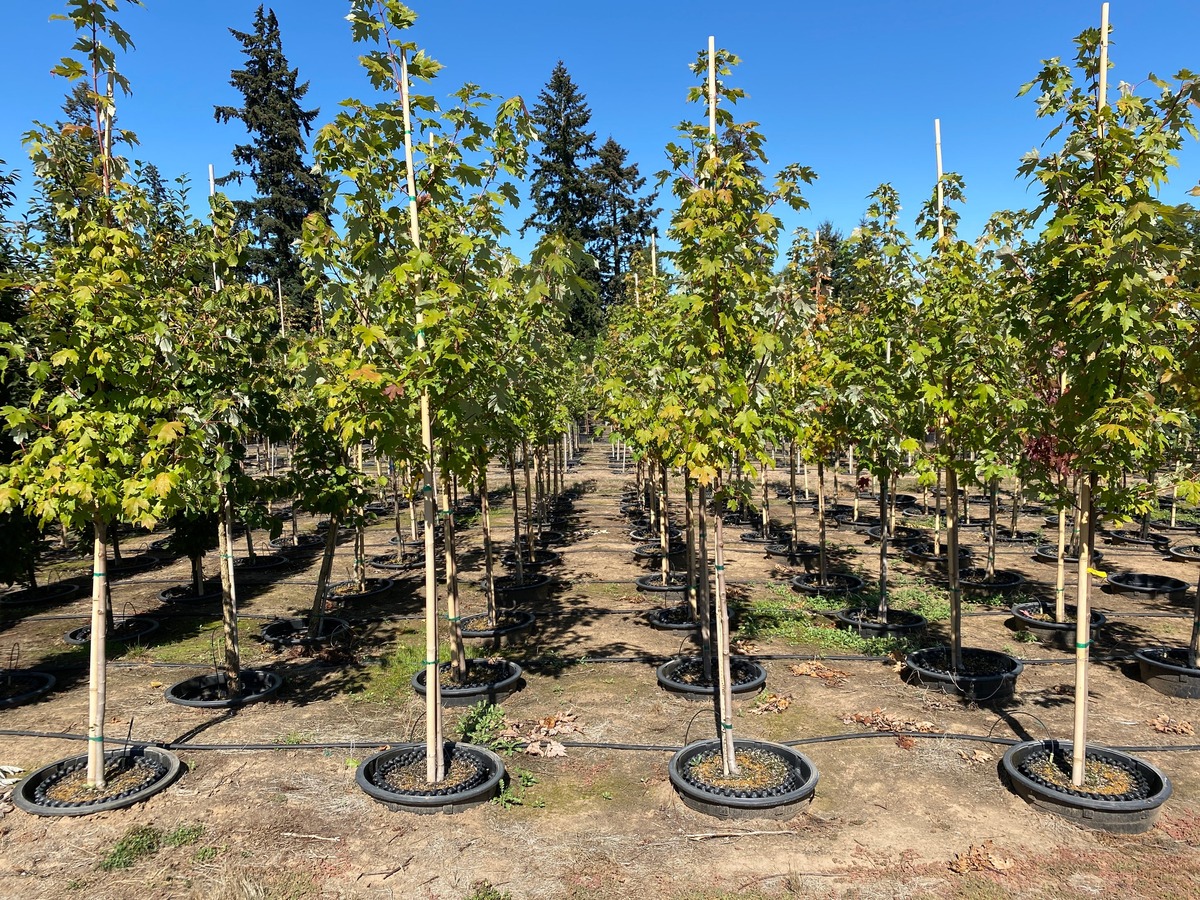
Not every tree is ready for center stage in an urban setting. Urban trees need to establish reliably, withstand variable and challenging growing conditions, and benefit both the forest and the community.
The Autumn Blaze® Maple does this and more.
One major urban challenge is soil. Across a city and multiple sites, soil content and quality can vary. Autumn Blaze® Maple prefers moist, well-drained soil and can handle a range of urban soil conditions. In the Pacific Northwest, where regular rain can saturate soil, finding trees that thrive in those conditions can be a challenge. With proper drainage, the Autumn Blaze® Maple can handle it.
Once established, the Autumn Blaze® Maple is moderately drought tolerant, though it still appreciates the Pacific Northwest’s rainy season. As with any young tree, it needs consistent watering and winter watering during establishment.
When selecting trees for urban spaces, foresters often focus on survivability and future needs. The Autumn Blaze® Maple performs reliably. It’s not known for recurring or severe pest or disease issues, and regular, consistent care can help ensure long-term health and performance.
At 40-60 feet high with a 30-50 foot canopy, Autumn Blaze® Maple is a shade powerhouse without the height of some larger shade trees. While it’s not ideal for narrow planting strips or areas that need clearance (like near power lines), it thrives where it has room for its canopy and roots. In campus and park settings, it can become a focal point, especially in fall.
The same qualities that make Autumn Blaze® Maple desirable can also lead to overrepresentation in the urban forest. That doesn’t make it less valuable or a bad fit for areas where increasing shade and reducing exposed paved surfaces are priorities, but it does mean teams must be mindful.
Start with existing tree inventory data first, especially if considering a large project. Adding more maples to an array where the genus already dominates may increase vulnerability to pests, disease, and other stressors.
While the Autumn Blaze® Maple isn't known for severe or devastating pest or disease outbreaks, the risk isn’t worth it, especially when other options exist.
That said, Autumn Blaze® Maples are a great option when used selectively and especially when paired with slower-growing, longer-lived trees. Because the maple’s canopy begins producing benefits while those other species mature, it's also ideal for a phased planting program. Pairing trees with different growth rates, mature sizes, water needs, and pest susceptibility can help create a stronger, more resilient urban forest.
When creating a strategic master tree plan, Autumn Blaze® Maple should be viewed as a valuable part of the plan, but it’s not the default for every open site that needs shade. Balance it with other species and match it to its site: good soil volume, good drainage, overhead and root space, and rapid growth that delivers the benefits your community needs.
When you're working to provide the canopy diversity needed for a resilient urban forest in the Pacific Northwest, this tree has a place; it’s just not everywhere.
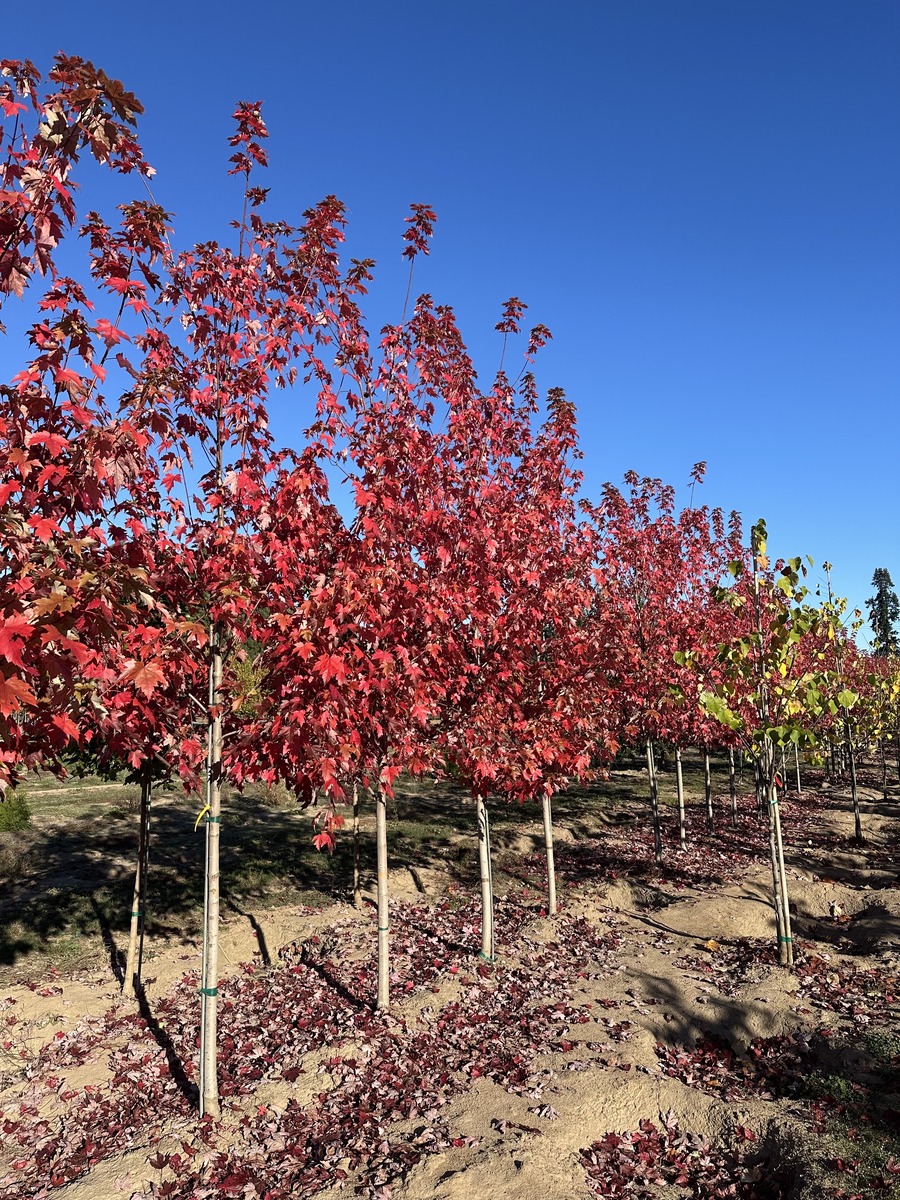 Summer Shade and Stunning Fall Color: Autumn Blaze® Maple
Autumn Blaze® Maple brings something special every season: rapid spring canopy growth, summer shade, stunning fall color, and a striking winter silhouette. In Pacific Northwest cities with space for its canopy and roots, it can be an invaluable part of the urban forest. Again, this works best when maples don’t already dominate the landscape.
Site selection matters for tree success, but tree health starts before the trees arrive. Before anything arrives on site, it starts with a master tree plan, an urban forest assessment through a tree inventory, and, potentially, identifying where Autumn Blaze® Maple might fit or where a suitable alternative might be better.
Our team is here to help with every step of the process. Early conversations allow your city to secure priority trees for upcoming planting seasons instead of filling gaps with what’s left at the nursery. For multiyear, multiphase projects, planning helps ensure the right species, sizes, and quantities.
Working with a wholesale nursery grower can help you understand the propagation and procurement process so you can build an urban forest that meets your goals. Contact our team to discuss your needs, your goals, and where we can help.