Tree Selection
urban forestry
Colorado Trees
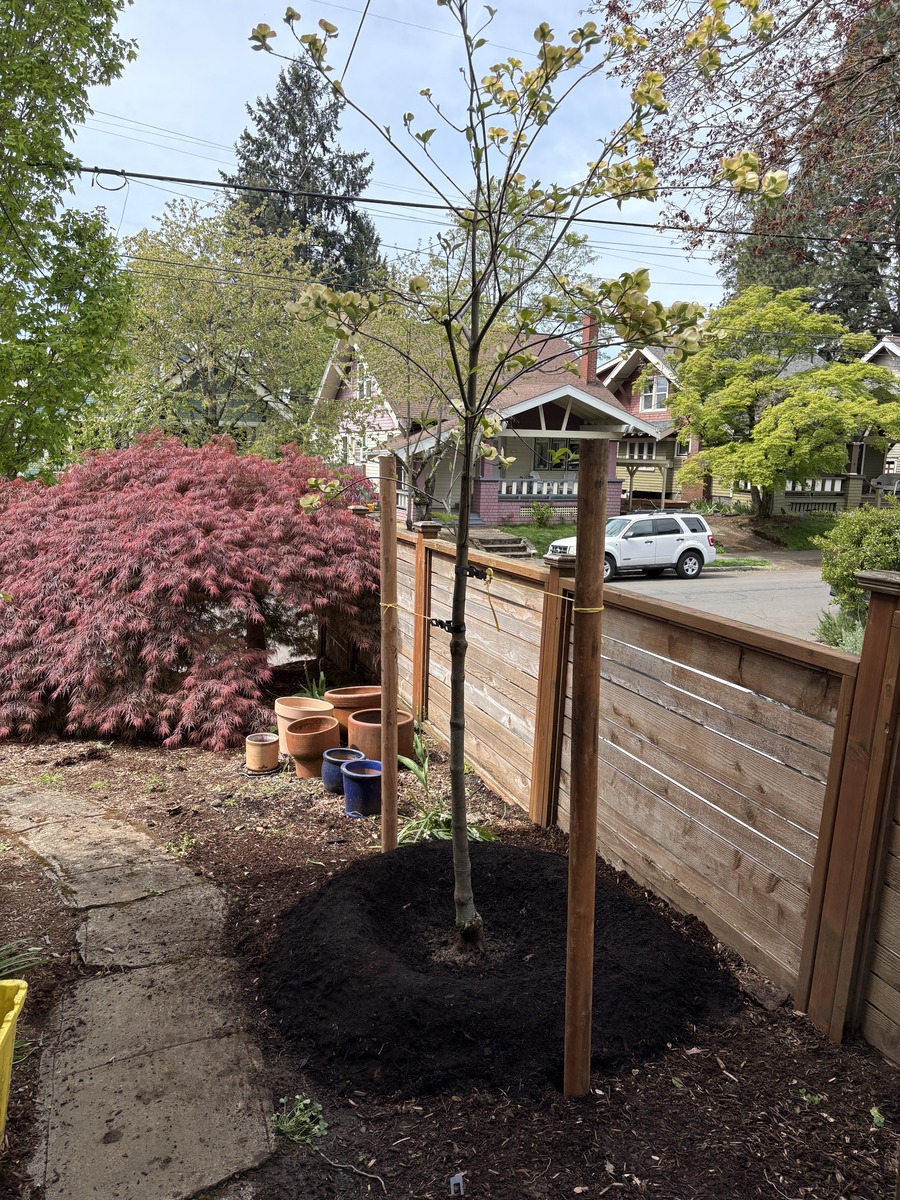

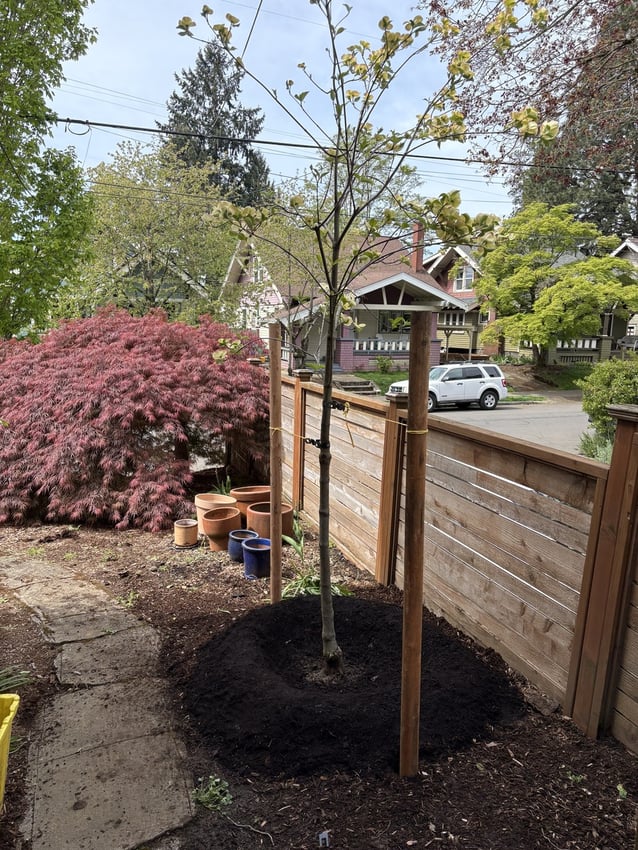 Tree planting. We do it to beautify our landscapes, to honor friends or family, to improve our environment, to harvest fruit, and sometimes to provide homes for wildlife. We do it for holidays like Arbor Day or Earth Day, to provide windbreaks for our home or privacy screens. To be honest, we could probably do a post on the countless reasons to plant a tree, as there’s no shortage of those, but it can be devastating to plant a tree only to see it fail.
When we buy a tree, we often think, dig a hole, and put it in the ground, but when it comes down to how to plant a tree, there’s a bit more to consider here, and we’re going to cover not only the basics, but some tips from our team.
Quick Links:
Remember that dig a hole and drop it in theory? The first thing anyone from our team will tell you is that tree planting starts well before a shovel hits the dirt. You’ll hear us, and nearly every other arborist, say “Right tree, right place,” so let’s dig (pardon the pun) into that first.
Choosing the right tree and planting it in the right place are two of the most important decisions you’ll make, especially when it comes to ensuring the tree will thrive.
Start with the tree itself. Not every tree species belongs in every landscape or yard.
A local nursery can help you choose native trees and regionally adapted cultivars, which will perform better as they’re already adapted to your local climate, soils, and stressors, like wind, freeze-thaw cycles, drought, or, in the case of the Intermountain West, all 3.
Next, think about what you want the tree to do:
Depending on your goals, you’ll be looking at different species, and you’ll have different long-term expectations.
Next, consider maintenance. Some folks want to plant it and, after it’s established, forget it (let it do its own thing). And, some trees will fit this bill; they’re low-maintenance once established. On the other hand, some trees require regular pruning, pest management, or seasonal cleanup (e.g., fruit drop and leaf litter).
Knowing what you’re willing to commit to is important. It’s easy to fall in love with a tree that looks great at the nursery, but it can quickly become a headache and more work than you bargained for if it doesn’t match the level of care you’re prepared to provide.
Consider Canopy diversity. Overplanting a single species, or even a single genus, can create major problems down the line. For example, you can plant any number of maples, and because they are different species, they might look diverse. It’s not.
Even trees of the same genus can invite the problems found in monocultures. Tree diseases and pests, such as the emerald ash borer, can spread quickly through uniform plantings. Diverse planting strategies are critical in any managed landscape, neighborhood, or city. Not only does mixing species build resilience and protect your investment over time, but it also changes the landscape's appearance.
Now, let’s talk about “right place.” You fall in love with a tree at the nursery, bring it home, and realize the place you need to fill does not match the conditions this tree needs to thrive. Any tree, no matter how resilient, will struggle if it’s planted in the wrong conditions.
Before planting, you’’l want to take a close look at the planting site:
Any tree planted in the wrong conditions will be stressed, and much like humans, trees don’t like stress; it impacts their overall health, too.
Matching your new tree to your site is what makes the difference between a tree that merely survives and a tree that truly thrives.
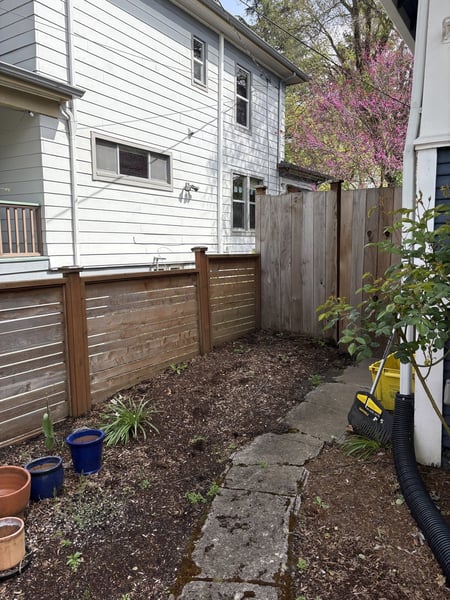 How to Plant a Tree: Site Preparation
You’ve looked at your landscape. You’ve talked to your local retail or wholesale nursery. You’ve got your tree. Let’s dig.
Wait. Much like chefs have mise en place, you’ll also want to do a bit of site prep before tree planting. Here are a few things to consider:
While you may not be digging too deep, it’s still smart to be sure you’re not digging where there are underground utilities. Calling 811 will mark gas, electric, water, and communication lines. It’s fast, simple, and keeps everyone safe.
The temptation is to just start digging, but while grass may seem harmless, it’s also one of the biggest competitors for water and nutrients, and newly planted trees simply don’t have the root system to compete.
Don’t just dig. Remove any grass, weeds, and vegetation that might compete with your new tree.
Ideally, you’ll want to clear a circle roughly 2–3 times the width of the root ball. This creates a better rooting environment for the tree and sets you up for proper mulching.
As we mentioned above, understanding what kind of drainage your tree needs is essential to its success. It can truly make or break a newly planted tree. A simple test?
Leave it for 24 hours. If water is still there, drainage is slow and will likely be an issue. Some trees love wet conditions. For those that don’t, consider planting your tree slightly higher or adjusting the site by creating a raised area or redirecting water before planting. If this isn’t an option, consider a different site.
Successful trees establish well, and that means making it easier for roots to expand. We’re not looking to create a completely different soil environment.
You may want to lightly water the area a day or two before planting if the soil is very dry. This way, water won’t run off, and you’ll encourage root-to-soil contact after planting.
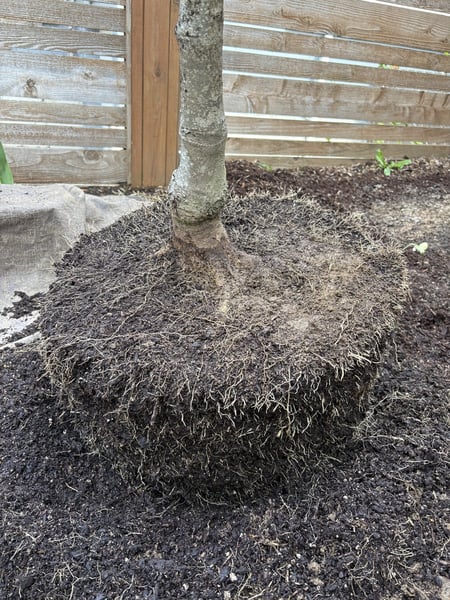 Understand Root Structure and Its Role In Tree Planting and Health
Most of a tree’s beauty and functionality are above ground, but underground is where long-term health happens. It’s the roots that are responsible for water and nutrient uptake, anchorage, and overall stability. How roots develop early on is essential to consider when planting.
Healthy trees rely on a robust network of horizontal roots that spread outward. In fact, leaving room for roots is essential as they often extend well beyond the canopy. These are the roots doing most of the work, not the taproot (the underground equivalent of the trunk). This is why planting depth and soil conditions are so important. Roots need oxygen, space, and room to grow into the surrounding soil.
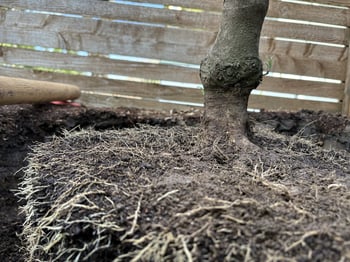
Perhaps one of the most important features to identify at planting is the root flare. This is the point where the trunk widens and transitions into the roots. The root flare should sit at or slightly above the planting site. Planting too deeply can suffocate the roots, impairing establishment and increasing vulnerability to disease and tree pests that prey on weaker trees.
Poor root structure, such as circling or girdling roots, can limit growth and stability over time. This is why SuperTrees grows its trees using air pruning, which allows healthy root balls to grow and helps quick establishment once they’re in the ground. Getting the roots right at planting sets the foundation for everything that follows.
Tip: If a potted tree is root-bound or has circling roots, correct them before planting. Loosen or cut the outer roots; we recommend using a reticulating saw and cutting two inches in toward the trunk and then down through the bottom. Do this on all sides until the roots are free. Remove the bottom portion if needed. You want to encourage roots to grow outward instead of continuing to circle.
Now, let’s get down to the nitty-gritty. Here are step-by-step instructions on how to plant a tree.
Once you’ve prepped the site, tree planting becomes a pretty straightforward process. The goal is simple: set the tree at the correct depth, create good root-to-soil contact, and support early establishment. These steps keep it simple and effective.
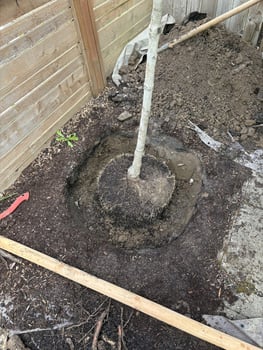
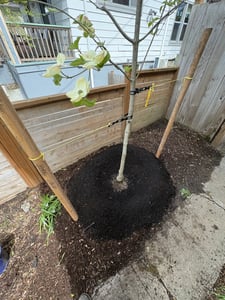
How hard can tree planting be, right? Even though the planting process seems pretty straightforward, it is what puts a tree in position, literally and figuratively, to stay healthy.
When we get called in for tree problems, these are some of the mistakes we often see that have the biggest long-term impact.
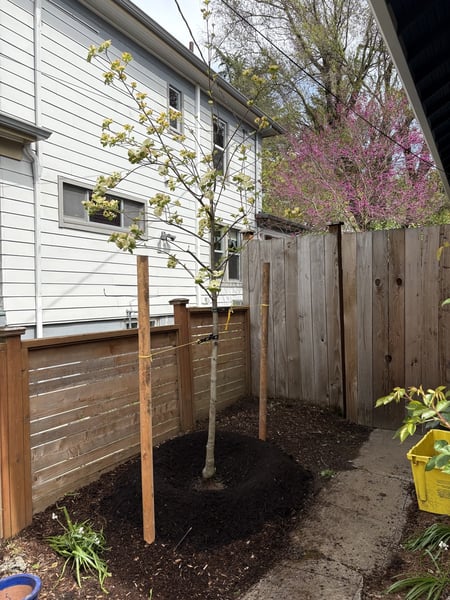 Everyone wants healthy trees, and how we start them out matters. From planting to establishment, avoiding these mistakes goes a long way toward reaching your tree goals and giving them a healthy start.
If you’re looking for help with choosing your trees, we’re here to help. Whether you’re a homeowner near Riverton, Utah, or a managed landscape or an urban forestry team across the West, we’re ready with a selection of over 25,000 trees and a team to help you both plant and care for your new trees.
Reach out today and let’s get planting!