Tree Selection
urban forestry
Colorado Trees
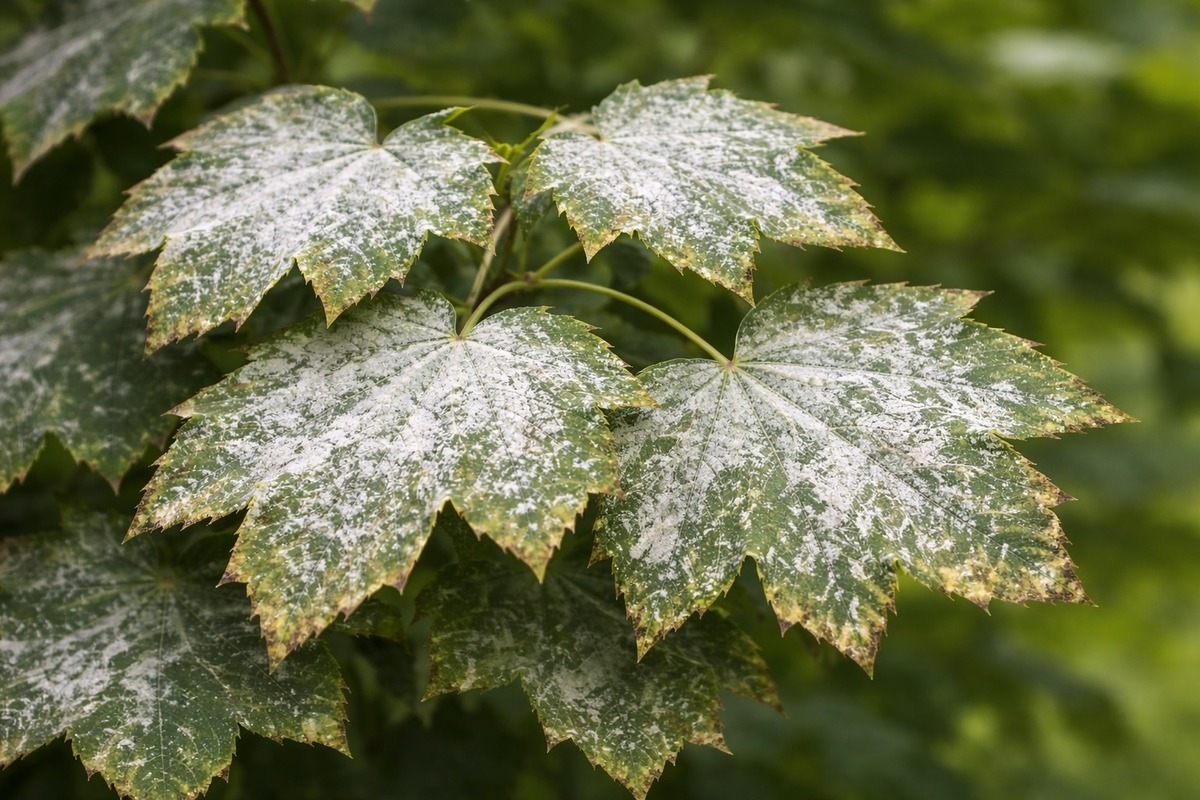

The one good thing about tree diseases, if you’ve noticed from our series, is that often, the name tells you what you’ll see. Like rust fungus, powdery mildew looks like…well, powder.
If you've noticed a white or grayish dusting on the leaves of a tree, almost like someone shook a bag of flour over the canopy, you've likely encountered powdery mildew. This makes it one of the most recognizable tree diseases.
Like other fungal tree diseases, the appearance can be alarming, especially when it spreads across multiple trees at once. But here's the reassuring part: powdery mildew is common, widespread, and often manageable when caught early and addressed properly.
Quick Links:
Powdery mildew is a fungal disease caused by a large group of related fungal pathogens in the order Erysiphales. If this sounds familiar, it’s because powdery mildew acts a lot like rust fungus.
To start, neither is a single organism, and both involve hundreds of species that are highly host-specific, targeting particular tree genera or species. Where do they differ? In the western United States, powdery mildew frequently targets different trees than rust fungus. It’s often found on oak trees, maple trees, dogwoods, lilacs, sycamores, and on ornamental trees commonly used in managed landscapes.
Unlike some other tree diseases that work their way into a tree's vascular tissue, powdery mildew is primarily a surface infection. The fungus infects the outer layer of leaf cells, drawing nutrients from the tissue while producing the characteristic white, powdery growth visible on the leaf surface. That coating is actually a dense layer of fungal mycelium and spores, and, sadly for other trees, those spores are ready to move.
What makes powdery mildew particularly persistent is that it spreads readily through the air and does not require standing water to germinate, unlike many other fungal tree diseases. It thrives in warm days, cool nights, and shaded or humid conditions, all of which are common in densely planted urban landscapes and community forests throughout Colorado, Utah, Idaho, Oregon, Washington, and Montana.
While it typically affects foliage rather than structural wood, repeated infections over multiple seasons can weaken trees and make them more vulnerable to other stressors.
Powdery mildew is one of the more visually distinctive tree diseases once you know what you're looking at. The defining feature, as the name suggests, is a white, powdery, or talc-like coating on leaf surfaces. Unlike rust fungus, which tends to appear in orange or yellow patches on the undersides of leaves, powdery mildew typically shows up on the upper surface of leaves in pale white or grayish patches.
Symptoms generally appear during the growing season and are often most obvious in late summer, though early signs can appear much sooner.
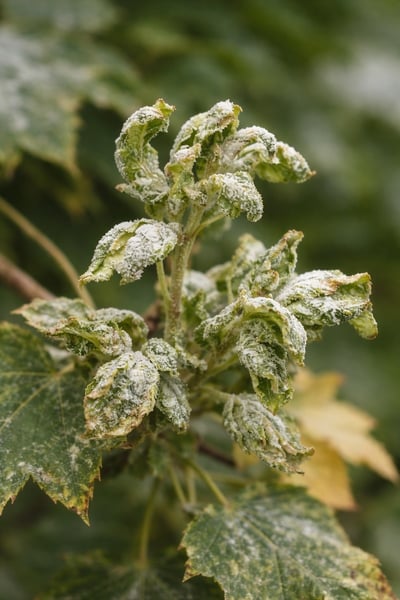 Common Powdery Mildew Symptoms:
It's worth noting that powdery mildew can superficially resemble other issues — including salt spray, chemical residue, or even certain nutritional deficiencies. Correct identification matters. If you're uncertain, your local nursery, certified arborist, or state's cooperative extension service (such as Colorado State University Extension or Oregon State University Extension) is an excellent resource for confirming a diagnosis before taking action.
As noted above, powdery mildew is caused by fungal pathogens that infect leaf tissue and reproduce through airborne spores called conidia. One of the things that sets powdery mildew apart from many other tree diseases is that it does not require wet leaf surfaces to germinate. In fact, free moisture on leaves can actually inhibit spore germination in some species. Instead, the fungus thrives in conditions with:
Because powdery mildew spreads so efficiently through the air, outbreaks often appear across multiple trees at the same time. Spores don't need a wound or opening to enter; they can infect healthy leaf surfaces directly, making tree disease prevention about management and conditions rather than containment after the fact.
Another essential fact is that, like other fungal diseases, it does survive on fallen leaves, bark, and buds, setting the stage for reinfection the following spring. This is why sanitation and clean-up practices matter year-round, not just during peak growing season.
Susceptibility also varies significantly by tree species and variety. Some tree cultivars of commonly planted trees, including certain oaks and maples, have been developed with improved mildew resistance, which is worth factoring into purchasing decisions when working with a wholesale tree nursery.
Treating powdery mildew starts with understanding what you're actually dealing with. Because the fungus colonizes leaf surfaces rather than internal wood, treatment is aimed at limiting spread and protecting new growth, not reversing damage that's already visible.
In other words, you cannot cure it, but you can mitigate it. A white-coated leaf will not turn green again, but a well-managed tree can still produce healthy new growth and maintain its structural integrity.
For property managers, landscapers, and city forestry teams, the goal is practical management rather than eradication.
1. Confirm Identification First
Before taking any action, verify you're actually dealing with powdery mildew and not another issue. Look for:
2. Remove and Dispose of Infected Material
When practical, removing heavily infected leaves and pruning affected shoot tips can reduce the spore load in the immediate area. Dispose of infected material. Do not compost it or add it to mulching, as this can allow the fungus to persist and spread.
3. Clean Up Fallen Leaves
Powdery mildew can overwinter on leaf litter. End-of-season clean-up is an important and often overlooked step in breaking the disease cycle and reducing the likelihood of reinfection the following spring.
4. Improve Airflow and Light Penetration
As with many tree diseases, canopy density creates conditions that favor infection. Strategic dormant season pruning can help open up the canopy, improve airflow, and reduce warm, still, humid pockets where powdery mildew thrives. This is one reason dormant-season pruning is emphasized as much for disease prevention as for tree structure.
5. Consider Fungicides When Warranted
In high-value trees or recurring problem sites, fungicides may be appropriate. Options include:
To be clear, fungicides protect new growth and slow the spread; they do not repair already-infected leaves. They are always a mitigation strategy, not an eradication of the fungus.
Timing matters: applications are most effective twice a year, in late fall and early in the growing season, before significant infection occurs, or at the first sign of symptoms. Always follow product labeling, and when in doubt, consult a certified arborist or your local tree nursery.
6. Reassess Planting Design
If powdery mildew returns reliably year after year on the same trees, the treatment question becomes a landscape planning question. Are susceptible species repeated throughout the site? Is canopy density or shade contributing to conditions that favor infection? Working with a knowledgeable tree nursery can help you identify better-suited species and varieties going forward.
Long-term powdery mildew mitigation is primarily about reducing the conditions that allow the disease to cycle and build. In managed landscapes, prevention is less about eliminating the fungus entirely because it's naturally occurring and will always be present at some level. Instead, the goal is to keep disease pressure below the threshold where it causes meaningful harm to tree health.
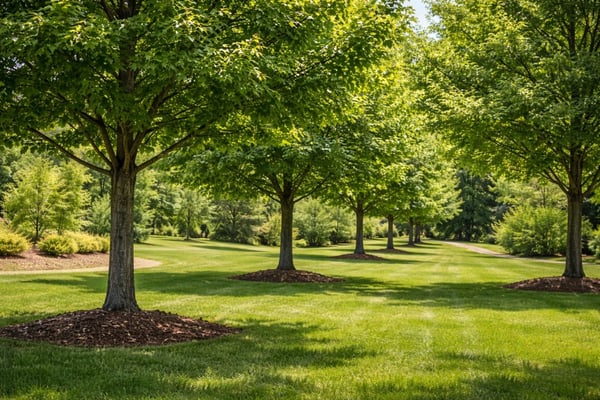 Mitigation strategies include:
Reputable tree nurseries that also offer tree services are good starting points for species-specific guidance and regionally appropriate variety recommendations.
In natural forests, powdery mildew is part of the background ecosystem. It’s always present, but rarely dominant. In urban and community forests, the conditions we create for trees can tip the balance.
More specifically, close tree spacing, repeated use of the same susceptible species, shaded understory planting, and limited airflow all create environments where powdery mildew can become a recurring and cumulative problem.
For property managers overseeing HOA landscapes, parks, or institutional campuses, powdery mildew may first show up as an aesthetic issue. Infected trees will look dusty and lackluster by late summer. But the longer-term concern is the impact of repeated infections on tree health over time. Chronic powdery mildew can contribute to:
City foresters and community tree managers face an additional layer of complexity: when the same susceptible species are planted repeatedly across a block, neighborhood, or parkway system, a single disease outbreak can affect dozens or hundreds of trees simultaneously. Canopy diversity isn't just an aesthetic goal; it's a practical strategy for preventing tree diseases.
The right approach to powdery mildew in urban forests is proactive: thoughtful tree selection, smart spacing, routine monitoring, and partnerships with experienced tree nurseries and arborists who understand your unique regional conditions.
SuperTrees has been helping cities and communities across the West make these kinds of long-term, informed decisions for decades. Whether you need help selecting disease-resistant species for a new planting, managing recurring tree health issues, or developing a canopy diversity strategy that reduces disease pressure across your landscape, our certified arborists are here to help. Reach out to our team today!