tree health
Tree Care
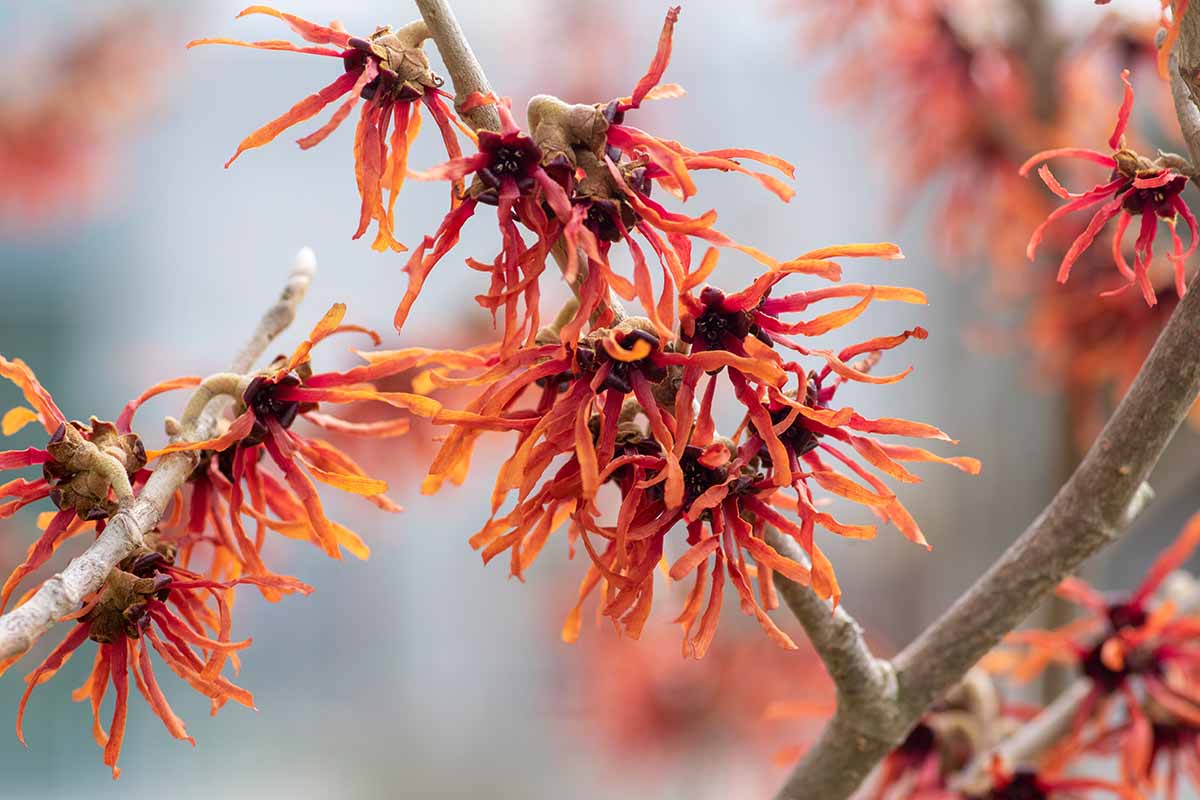

Witch hazel may not be the loudest tree in the nursery yard, but it’s one of the most distinctive. With unexpected bloom timing, strong native roots, and a versatile role in diversified planting plans, it offers both beauty and reliability, especially when thoughtfully sited.
As part of our ongoing tree spotlight series, we’re taking a closer look at species that bring long-term value, resilience, and strategic diversity to managed landscapes and urban forests.
Quick Links:
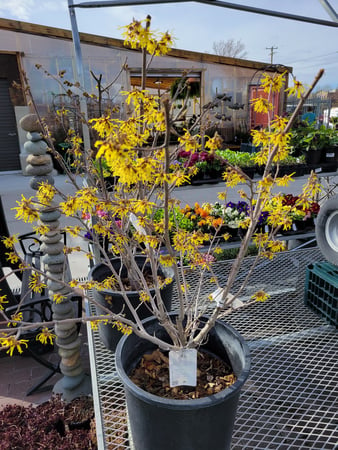 Witch hazel belongs to the Witch Hazel family (Hamamelidaceae), a unique group of ornamental trees and shrubs known for their fringe-like flowers, strong seasonal interest, and architectural branching.
What makes this family especially interesting is its timing. Many members bloom when little else is happening in the landscape, think late fall, winter, or very early spring. This offers both color and wildlife value outside of the typical growing season. Ribbon-shaped petals, rich fall foliage, and textured bark are common traits across the group.
Beyond Witch Hazel (Hamamelis virginiana), the family includes a few other standout landscape trees, including ones we’ve discussed, like Persian ironwood. It also includes flowering shrubs such as Dwarf Fothergilla and Chinese Fringe.
In short, the Witch Hazel family comprises plants prized for their multi-season performance, adaptability, and subtle yet striking beauty, which make witch hazel itself such a compelling addition to any landscape.
Witch Hazel is best known for doing the unexpected. While most deciduous trees are shutting down for winter, witch hazel stays on the scene with ribbon-like yellow blooms in late fall, sometimes even into early winter. When the rest of the landscape feels quiet, it’s putting on a subtle but unforgettable show, almost a last bow or an encore.
Up close, the flowers look almost like strips of crepe paper; they’re thin and spidery, and the petals curl and twist. From a distance, they seem to glow against bare branches. On mild days, they release a light, clean fragrance that is a nice reminder that while seasons are changing, beauty will remain.
That said, it’s important to note that even while it’s a standout against a potentially bland landscape, it doesn’t dominate a space. Think of it as a tree that brings character. It feels thoughtful. Intentional. It’s a tree for people who appreciate seasonality and nuance and is sure to grab attention and remind folks that there’s a plan, especially in managed landscapes.
For spaces begging for an ornamental, witch hazel works perfectly at the edge of a landscape, along a naturalized border, or tucked where fall light can catch its leaves as they turn a clear golden yellow.
While witch hazel is often celebrated for its late-season blooms and native character, it’s also a dependable and adaptable performer in well-planned landscapes. For urban foresters, property managers, and homeowners alike, understanding its growing characteristics helps ensure it’s placed where it can thrive.
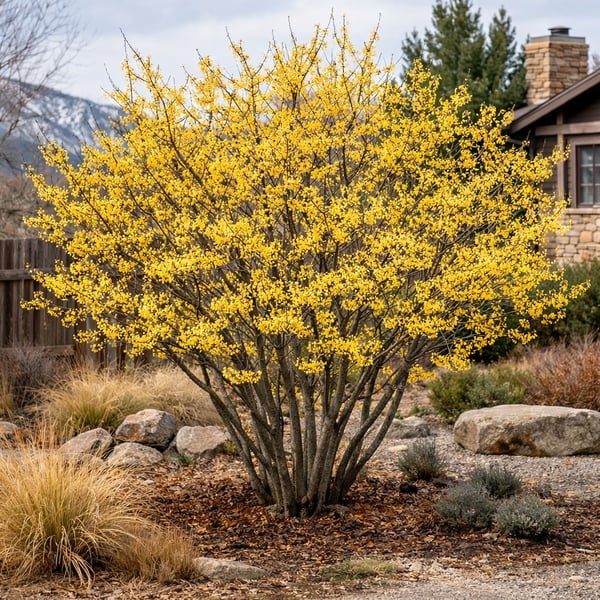 Quick Facts & Growing Details
Botanical name: Hamamelis virginiana
Common name: American witch hazel
Family: Hamamelidaceae (Witch Hazel family)
Mature size: Typically 15–20 feet tall and wide; can be grown as a large multi-stem shrub or small understory tree
Growth rate: Moderate
Sun requirements: Full sun to partial shade (flowers best with more sun, tolerates woodland conditions)
Soil preferences: Well-drained soils; adaptable to loam and slightly acidic soils
Moisture needs: Moderate; prefers consistent moisture during establishment but tolerates periodic dryness once established
Cold hardiness: Generally hardy to USDA Zones 3–8
Foliage: Medium green in summer, turning clear golden yellow in fall
Bloom time: Late fall to early winter, often October–December
Flower characteristics: Bright yellow, ribbon-like petals with light fragrance
Native range: Eastern North America. American Witch Hazel is suitable out West, but siting is important.
Urban suitability: Best suited for naturalized landscapes, park settings, woodland borders, and diversified planting designs rather than tight streetscapes
Maintenance needs: Low; minimal structural pruning required
Pest & disease issues: Generally minimal, contributing to long-term reliability
Primary uses: Ornamental specimen, woodland edge tree, native understory tree, seasonal interest feature, biodiversity-supporting landscape addition
Urban landscapes ask a lot of trees. Compacted soils. Reflected heat. Inconsistent irrigation. Snow management. Limited rooting space. Not every ornamental can handle that pressure.
Witch hazel, particularly Hamamelis virginiana and well-sited hybrids, offers several traits that allow it to perform reliably in managed environments when placed thoughtfully. Working with a wholesale nursery can help ensure you plant and place this ornamental properly.
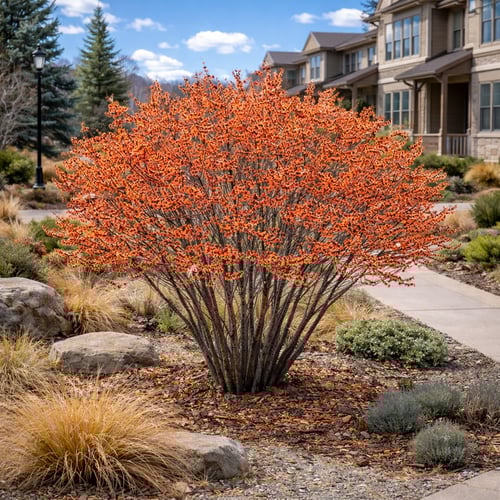 Witch Hazel’s Strategic Role in a Diverse Tree Plan
In urban forestry and managed landscapes, canopy diversity isn’t just a design preference; it’s a risk management strategy. Over-reliance on a narrow group of species increases vulnerability to pests, disease pressure, and climate stress. Integrating regionally appropriate understory and specialty trees strengthens long-term canopy resilience.
Witch hazel, particularly Hamamelis virginiana, plays a valuable supporting role in diversified planting plans.
In a diverse tree plan, witch hazel isn’t meant to dominate the skyline; instead, it’s meant to strengthen the system, adding seasonal complexity and structural layering that supports long-term landscape health.
Witch hazel is a tree that quietly proves its value over time.
In spring and summer, Hamamelis virginiana offers clean green foliage and refined branching that adds depth without overpowering surrounding plantings. In the fall, leaves turn a clear golden yellow. And then, just as the landscape begins to shut down, witch hazel blooms. Its ribbon-like yellow flowers appear in late fall to early winter, bringing subtle fragrance and texture when little else is happening.
Even in winter, its architectural form provides visual interest, especially when thoughtfully placed.
Beyond beauty, witch hazel delivers:
But placement is essential.
Witch hazel performs best in well-drained soils with appropriate light exposure and protection from harsh urban stressors. In Western climates, understanding soil preparation, irrigation, and microclimates can make the difference between a struggling tree and a long-term asset.
Working with a knowledgeable wholesale nursery that understands regional conditions and can support projects from seed to service ensures that witch hazel is sited correctly and positioned to thrive for decades.
Ready to talk about witch hazel or other trees for your managed landscape, HOA? Get in touch with our team.